



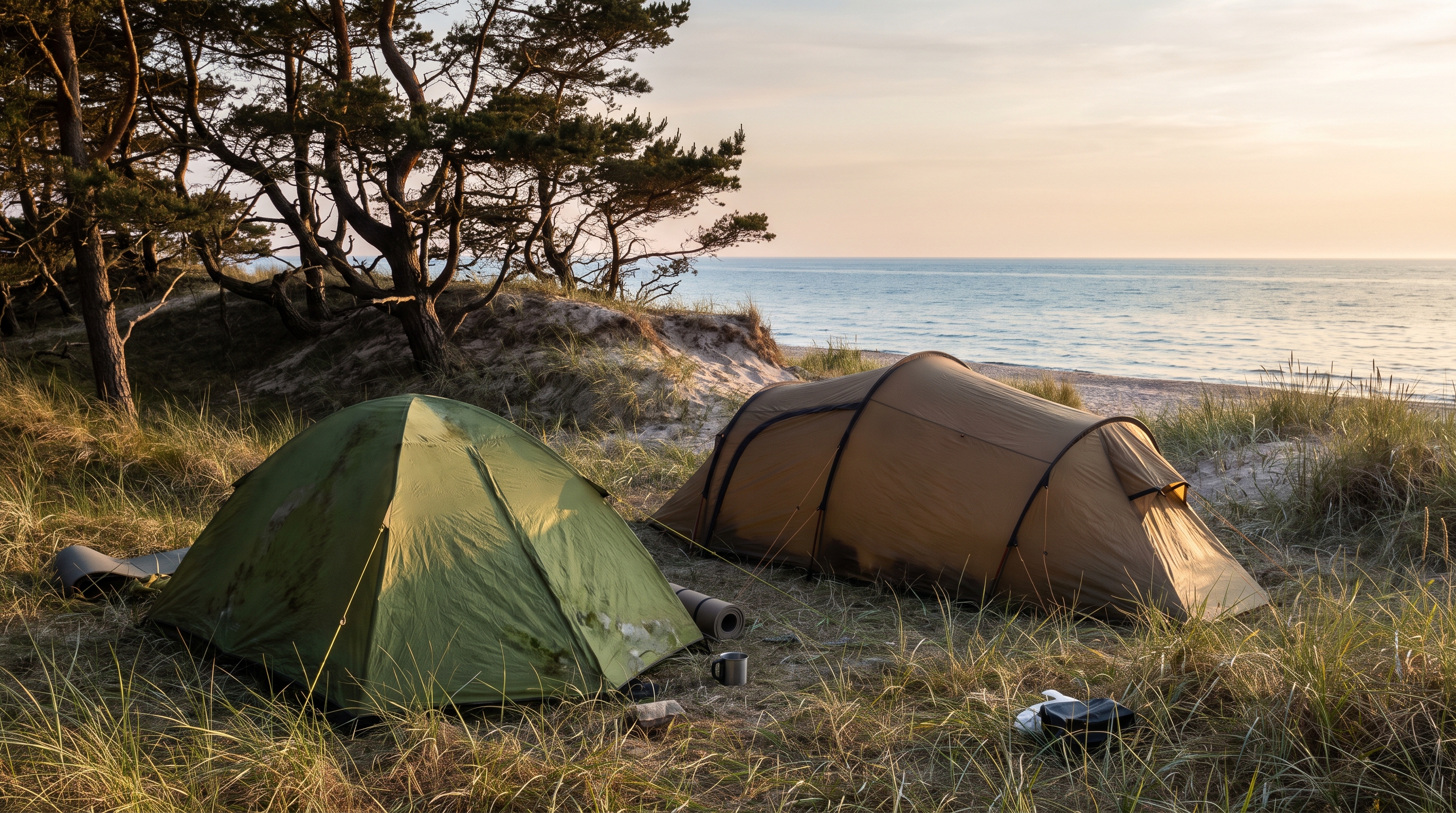
On the Baltic, wind comes with the territory , and it’s exactly what puts your tent to the test. A good, well-pitched tent is the difference between restful nights and drama at three in the morning. Here’s everything: choosing the right tent, pitching it in wind, and staying warm and dry inside.
Which tent suits you?
- Dome tent: free-standing, quick to pitch, low and therefore wind-friendly , the easy all-rounder for weekends and spot camping.
- Tunnel tent: lots of space and a big porch for wet gear, but it needs good guying. Great for families and longer stays.
- Pop-up tent: up in seconds, but delicate in wind and hard to guy , more for the calm fair-weather day.
- Geodesic / multi-pole dome: very storm-stable, but pricier and heavier , when it really blows, the safest choice.
Look at the water column (rain protection), a porch for wet kit, and good vents against condensation.
Pitching in wind
- Spot: behind a dune, hedge or windbreak, not out in the gust. Point the door away from the wind, the low rounded side into it.
- Pegs: normal pegs hold badly in sand , use wide sand pegs or beach stakes and angle them against the pull.
- Guying: use all the storm lines, one more rather than one fewer, and pitch early before the wind picks up.
- Extra hold: in sand, buried pegs (laid crossways) or a sand-filled bag as an anchor help.
Mum says: Buy a set of proper sand pegs straight away. The thin wire hooks from the packet are often useless in Baltic sand.
Warm & dry: insulation and condensation
- Floor: a footprint under the tent protects the floor, inside a tent carpet or blanket keeps the cold out.
- Airing: leave the vents open and air it briefly in the morning , this prevents the condensation that otherwise drips from the inner wall.
- Keep a gap: don’t push the inner tent against the flysheet, or moisture wicks through.
- Wet stuff out: wetsuit and wet things belong in the porch, never in the inner tent.
Care: so the tent lasts
The big one: never pack it away wet. If there’s no choice on departure day, dry the tent fully at home right away, or you get mildew stains and the coating suffers. Clear sand from the zips, check seams and poles, re-proof when needed.
Mum says: Pack a bit of duct tape and a pole repair sleeve just in case , a kinked pole on a Friday evening otherwise ruins the whole weekend.
In short: the right tent
- Dome for easy, tunnel for space, geodesic for real wind.
- Mind the water column, porch and ventilation.
- Pitch sheltered, door away from the wind, use proper sand pegs.
- Footprint and tent carpet against cold, air it against condensation.
- Never pack it wet, keep repair tape and a pole sleeve with you.
Note: as soon as our shop and partner links are live, you’ll find concrete recommendations for the tent, sand pegs and the rest here. Until then: the content stands on its own, even without a single click.