



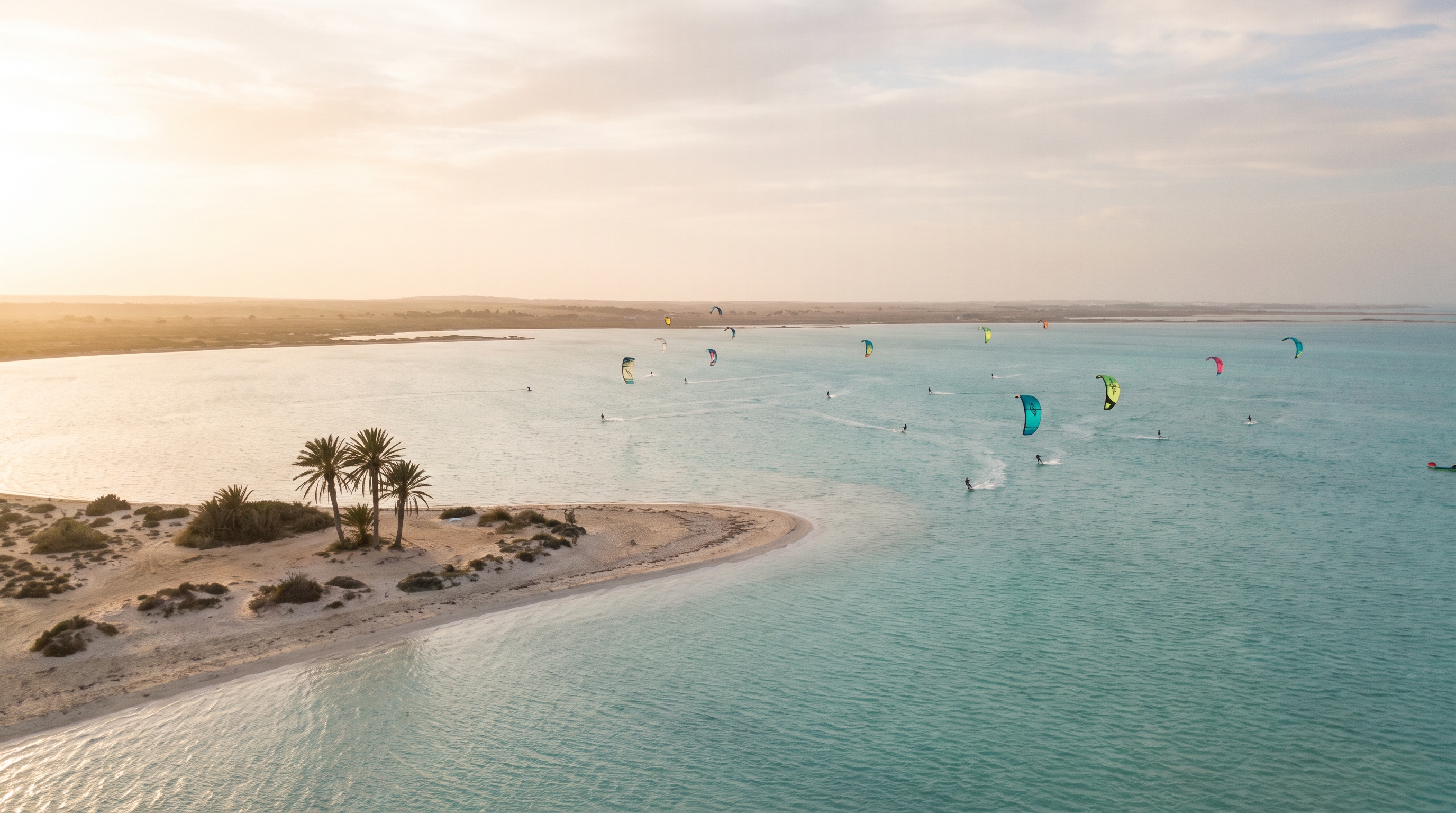
When the Baltic takes its winter break, Djerba is the warm place we long for. In the southeast of the island lies North Africa’s largest lagoon, a vast, standing-depth shallow water cut off from the open sea by a spit of land. A beginner’s paradise, warm water, sunshine, exactly what you need in February.
| Spot | Djerba lagoon, southeast of the island (Tunisia) |
| Wind | Mostly 15 to 25 knots, most consistent April to July and September to November |
| Water | Around 40 km² of standing-depth shallows (about 5 by 8 km), standing depth almost everywhere |
| Level | Beginner to advanced, a true learning paradise |
| Sports | Kitesurfing, wing foiling, windsurfing, SUP |
| Water temperature | Summer 27 to 30 degrees, winter 17 to 20 degrees |
| Getting there | Direct flight to Djerba, about 3 hours from Germany |
| Best time to travel | April to October, peak season May to November |
North Africa’s largest standing-depth water
A spit of land separates the lagoon from the open sea and creates a shallow-water area of around 5 by 8 kilometres that is standing depth almost everywhere. You walk far out, the water comes up to your hips, and you practise in complete calm. With 40 square kilometres there is no shortage of space. The wind is most consistent in spring and autumn, often at 15 to 25 knots.
Our take: Djerba is our classic for the winter escape. Three hours by plane, then you are standing in warm, hip-deep water under the sun. Anyone wanting to learn to kite in a week is in exactly the right place, and those who already ride simply enjoy the open space. In the evening the white alleyways, mint tea, calm.
Getting there and the best time
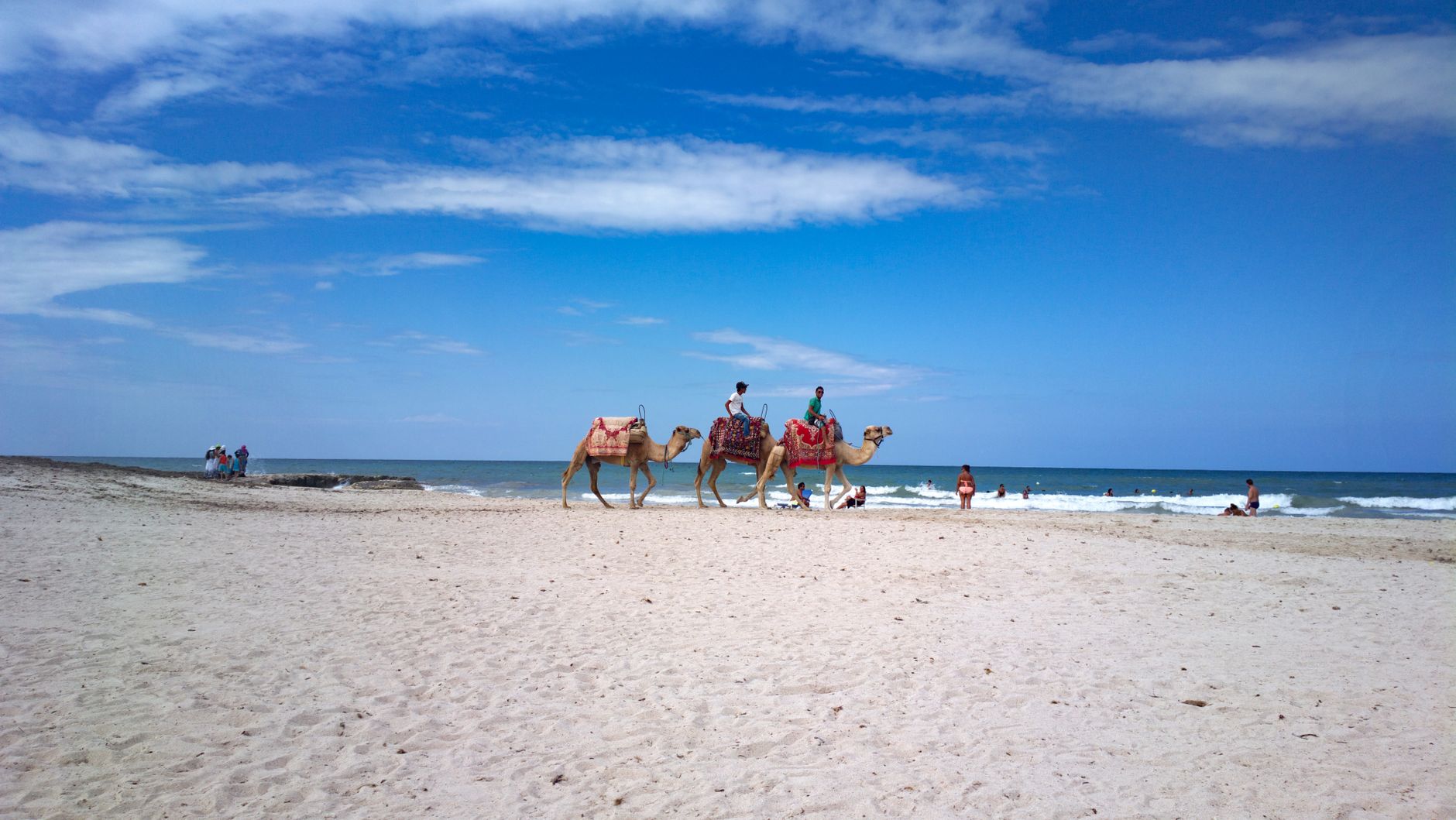
Djerba has its own airport, about three hours from Germany. The best time to travel is April to October, with peak season from May to November. In summer the water is bath-warm, in winter a thin wetsuit is enough.
Find more spots in our spot overview.