



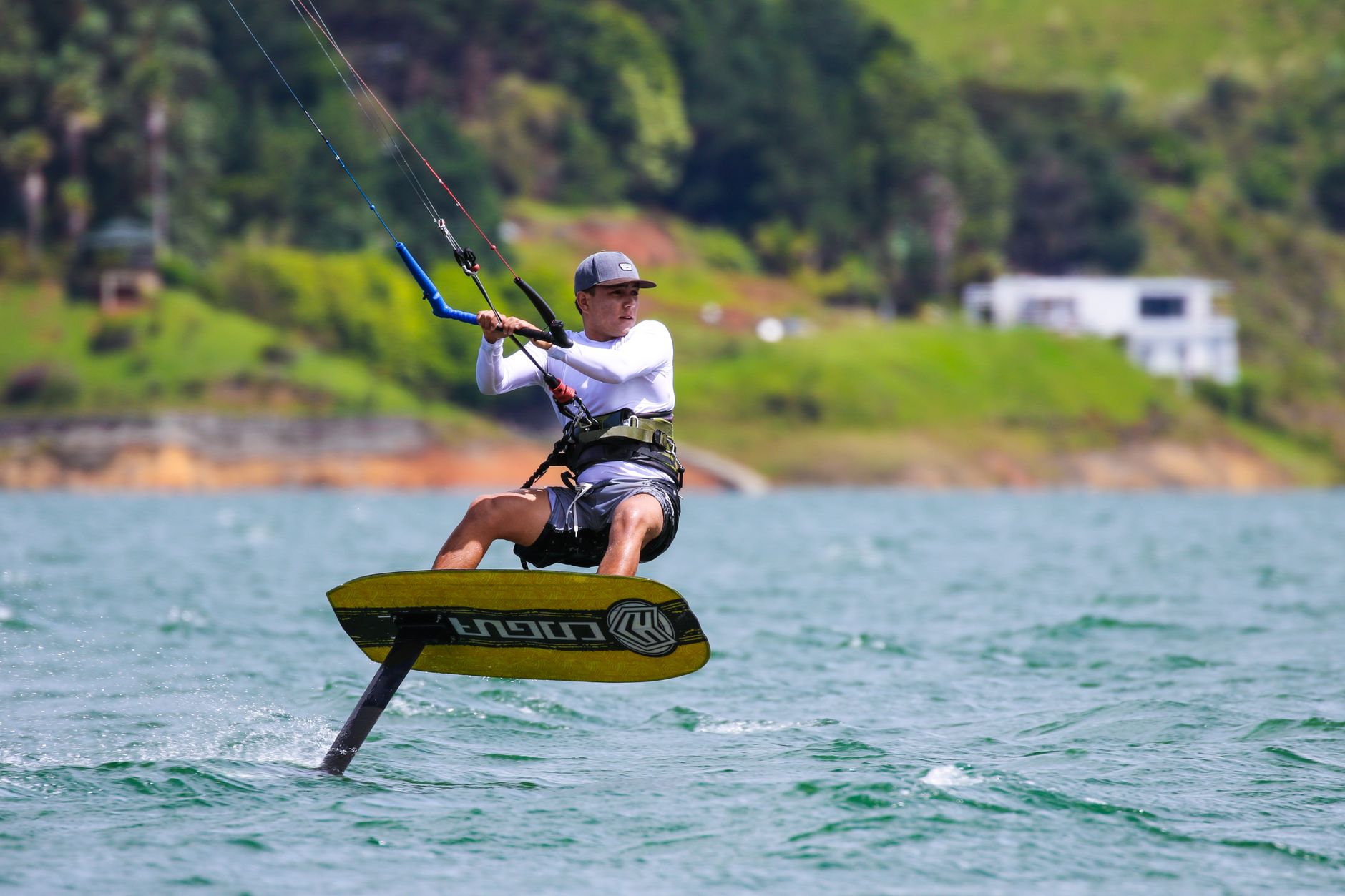
Learning to kite foil opens a new world: lift off silently and glide even in light wind, where normal kiting would long have had too little. Getting started is more demanding than with kiting, but huge fun. Here come the first metres in the right order.
Prerequisite: you should kite confidently
Kite foiling is not a beginner sport. Before you go on the foil, you should master the kite blind, be able to water start safely and hold height. Anyone coming from wing foiling already has the foil feeling, anyone coming from kiting has the kite control. The two together make getting started considerably easier.
Step 1: the right gear
For the start what counts is a large, high-lift front wing that lifts off early and slowly and forgives a lot. Add a stable foil board with some volume and a kite that pulls even in a lull. Which sizes suit your weight is in our kite foiling packing list with a weight table. Helmet and impact vest are a must when foiling, a fall onto the foil really hurts.
Step 2: touch-and-go in shallow water
Practise first in shallow water in moderate wind. Set off as in normal kiting and load the board quite deliberately, without wanting to lift off, touch-and-go: lift briefly, set down again. That way you learn how the foil builds pressure without losing control right away.
Step 3: the first lift-off , and stay calm
As you shift your weight gently onto the back foot, the foil lifts you. Important: stay calm and do not overreact. If the nose rises too high, weight slightly forward. Keep the kite steady in one position instead of working it. The first flights last seconds, with every attempt they get longer.
Safety first
- Helmet and impact vest are a must, not optional.
- Keep your distance, the foil is sharp and reaches far under water, stay clear of others.
- Shallow water to practise, but deep enough that the foil does not hit the bottom.
- After the session rinse foil and screws with fresh water, otherwise the salt seizes up.
Fastest with a course
Foiling is best learned with guidance, it saves gear, frustration and protects you and others. Take a course at a school with foil experience, and use the wind check to find a calm day with light, steady wind.