



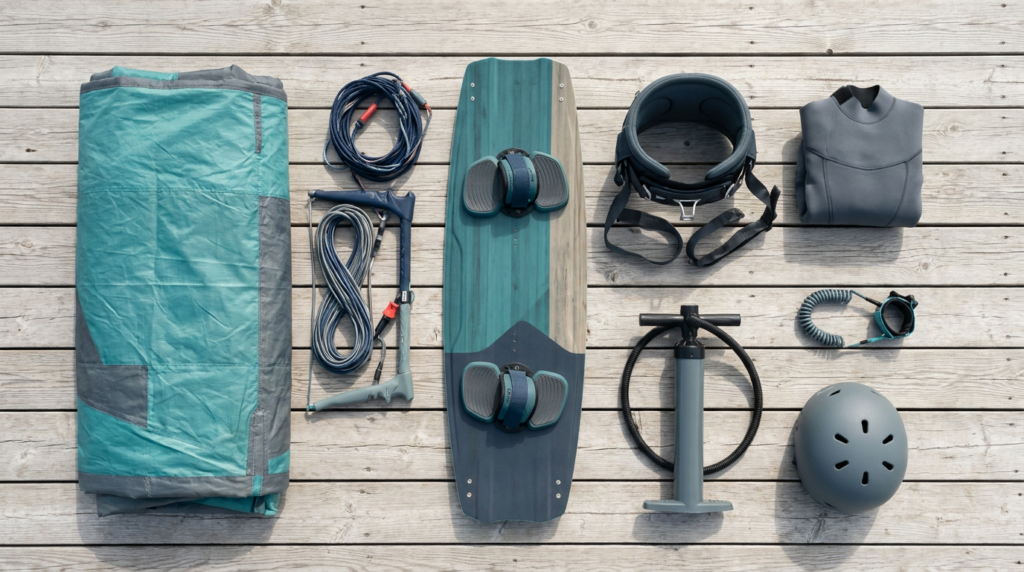
In kitesurfing, good care isn’t a luxury, it’s safety and saved money. Salt, sand and UV are the three enemies of your gear. Invest a few minutes after every session and you’ll ride safely for longer and replace things far less often. Here is the honest care and maintenance routine, part by part and properly broken down: what to use, what to watch for, how to dry, and where to store it over winter.
The 5-minute routine after every session
- Rinse: rinse everything salty with fresh water, bar, lines, harness, wetsuit. Salt eats material and fittings.
- Get the sand out: especially from valves, the depower line and the knots on your lines.
- Dry: airy and in the shade, never in blazing sun, UV makes canopy and neoprene brittle.
- Don’t pack it wet: never leave anything damp and rolled up, or you risk mould and mildew stains.
The kite: rinse, dry, store
- What to use: fresh water and at most a soft sponge. No harsh cleaners, no pressure washer.
- What to watch for: sand out of the valves, check canopy and seams for small tears, bladders and valves airtight. Catch small holes early with repair tape or a canopy repair kit.
- Drying: air-dry completely, both sides, in the shade. Only roll the kite up once it is truly dry, better to wait an hour longer than to pack it damp.
- Storage (winter): rolled loosely (not tight), cool, dark and dry. Not in a hot garage, in the car or next to the heater, and safe from mice.

Bar & lines: this is about safety
The bar is your safety system, so don’t cut corners. The lines deserve special attention, literally everything hangs on them.
- What to use: fresh water, pulling each line through your hand and undoing knots. No fabric softener, no oil, that makes them slippery.
- What to watch for: check the lines for wear, frayed or thin spots, especially at the knots and where they run over the bar. Are all lines the same length (trim if not)? Do the quick release and safety trigger smoothly?
- Drying, how long: let bar and lines dry completely before you coil them, usually one to two hours hung up airily. Coiled wet, the lines grow mould and the material ages faster.
- Don’t leave it wet: never put it back in the bag wet and bundled up, that’s the most common mistake.
- Storage (winter): coiled neatly, dry and cool, don’t kink the lines sharply. Replace frayed or unevenly stretched lines, a set of spare lines is cheaper than an accident. Test the safety before the new season.
The twintip board
- What to use: fresh water, plus the right Allen key or screwdriver for the screw check.
- What to watch for: are the fin and pad screws tight? Rails and underside for dings and cracks, are the pads still firmly seated?
- Drying & sealing: dry it off, seal small dings promptly with repair resin before water gets into the core.
- Storage: dry and not permanently in blazing sun (pads and topsheet suffer). A little thread locker stops screws from getting lost.
Harness & small parts
- What to use: fresh water, clear sand off the buckles and Velcro.
- What to watch for: hook and spreader bar secure, buckles and seams intact, the Velcro still grips.
- Drying & storage: dry it airily, then store dry. Keep leash and safety knife handy and working.
The wetsuit: the most care-intensive
- What to use: cold to lukewarm fresh water, now and then a mild wetsuit shampoo. No regular detergent, no washing machine, no tumble dryer.
- What to watch for: rinse inside and out, rinse the zip too. If it smells musty, wash it early, don’t wait.
- Drying, how long: on a wide hanger (not thin wire), inside-out first, then turned around, airy and in the shade. Never in blazing sun, on the heater or in the dryer, that destroys the neoprene. Let it dry through completely, often overnight, a damp suit smells and ages.
- Storage (winter): hung on a wide hanger, not folded tightly for months (crease folds tear). Dry, cool and dark.
How to get rid of stubborn wetsuit smell is in Removing musty smell from your wetsuit. Which thickness you actually need is shown by the wetsuit calculator.
Storing it away: the winter check
- Dry everything completely first, never store any part damp.
- Packing: roll the kite loosely (not tight), coil bar and lines neatly, wetsuit on the hanger.
- Storage spot: dry, cool, dark and frost-free, not next to the heater and not in the damp corner. Safe from mice.
- In spring: go over everything once, retighten screws, check the lines, test the safety, then into the season safely.
In short: what really matters
- After every session: rinse with fresh water, dry in the shade, get the sand out.
- Only pack up once everything is truly dry, never leave it wet and rolled up.
- Check bar, lines and safety regularly, replace when in doubt.
- Check board screws, seal dings early.
- Rinse the wetsuit cold, dry it gently and completely, care for it with shampoo.
- Store dry, cool and dark over winter, go over everything once in spring.
Note: as soon as our shop and partner links are live, you’ll find concrete recommendations for care products, repair kits and accessories here. Until then: the content stands on its own, even without a single click.