



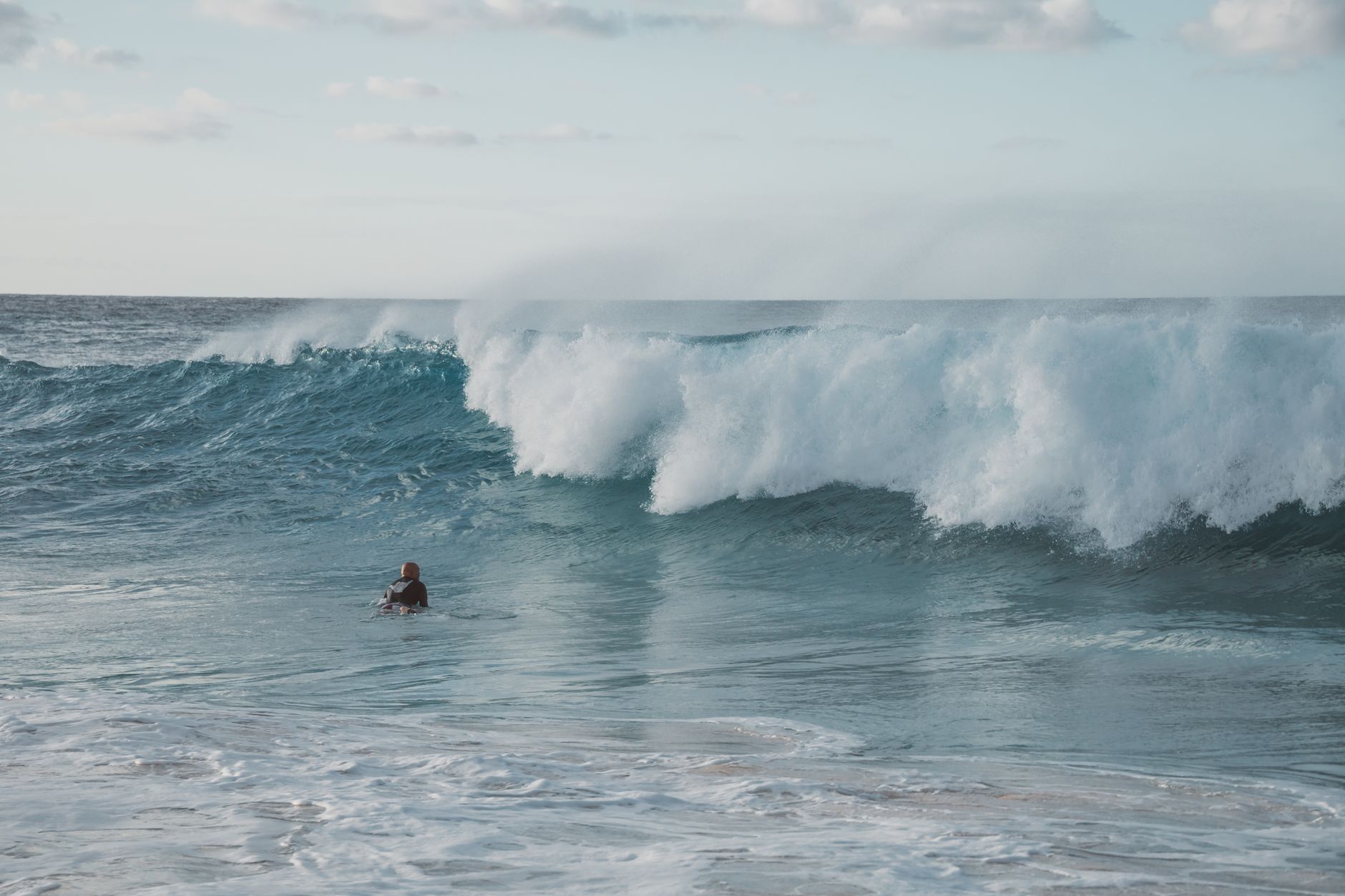
Learning to surf is a matter of patience, but the first moment a wave carries you makes up for everything. Here come the first steps in the right order, from the pop-up on the beach to your first green wave, plus the most important rules and an honest word on safety.
Step 1: practise the pop-up on the beach
Before you go into the water, you practise the pop-up on land: from the lying position into a stand in one fluid movement. Lay the board in the sand, mark the correct foot position and repeat the movement until it sticks. These five minutes save you many failed attempts in the water later.
Step 2: first in the whitewater
Nobody starts in the green wave. You start in the whitewater, the already broken wave near the beach. Here it is shallow and safe, you push yourself into paddling, feel the push and practise the pop-up on the moving board. A large, voluminous softboard carries you while doing so and forgives mistakes.
Step 3: paddling and timing
Once the pop-up in the whitewater sticks, timing is added: paddle into the wave early enough so it takes you, and stand up at the right moment. If your weight is too far back, the board brakes, too far forward and the nose dives in. Finding the middle is a matter of practice, with every wave it gets better.
Step 4: out to the green wave
Only when whitewater and pop-up work reliably do you paddle out to the unbroken, green wave. That is the moment you learn to surf for. Take your time, most people underestimate how much strength paddling out costs, especially in the cold Baltic Sea.
Surf etiquette: the most important rules
- Right of way: Whoever is closer to the breaking point of the wave has right of way. Do not drop in if someone is already on the wave.
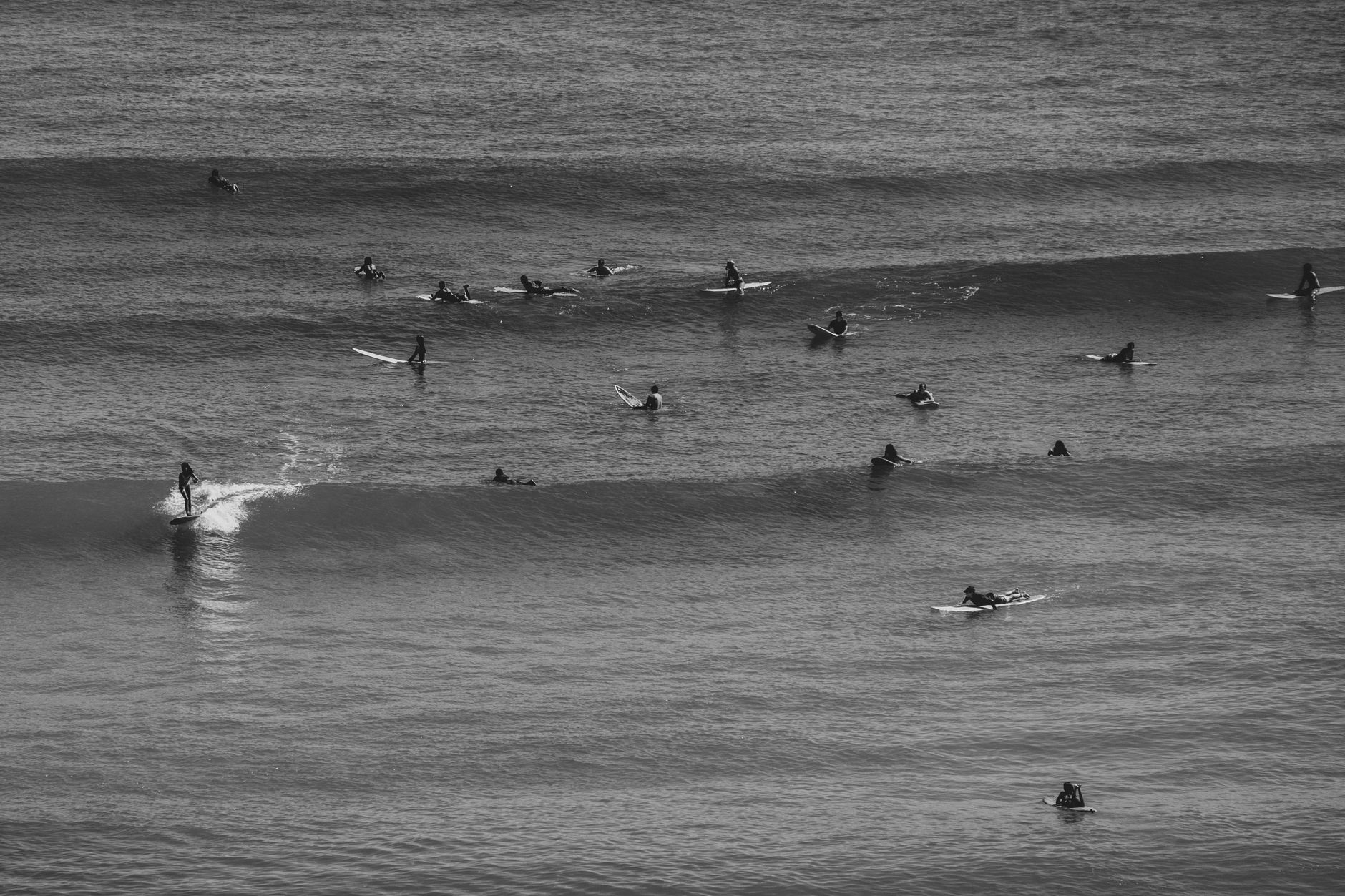
- Do not paddle through: Paddle out around the outside, not through the line-up of waiting surfers.
- Hold on to your board: Never let go of your board, a board shooting away is dangerous for others.
- Respect at the spot: Greet the locals, leave space, stay friendly.
Safety: current and cold water
Waves only exist in strong wind, and that brings current with it. Learn to recognise a rip current, and never paddle against it, but out to the side. On the Baltic Sea the wave season is autumn and winter, and without a warm wetsuit with hood and boots nothing works. Never go alone and judge your strength honestly.
Fastest with a course
Surfing is best learned with someone who can read the waves and the current. A course at a surf school saves weeks and makes it safe. Which board suits you is in our surfboard buying guide, and when the Baltic Sea even has waves at all you can read in Are there waves on the Baltic Sea?