



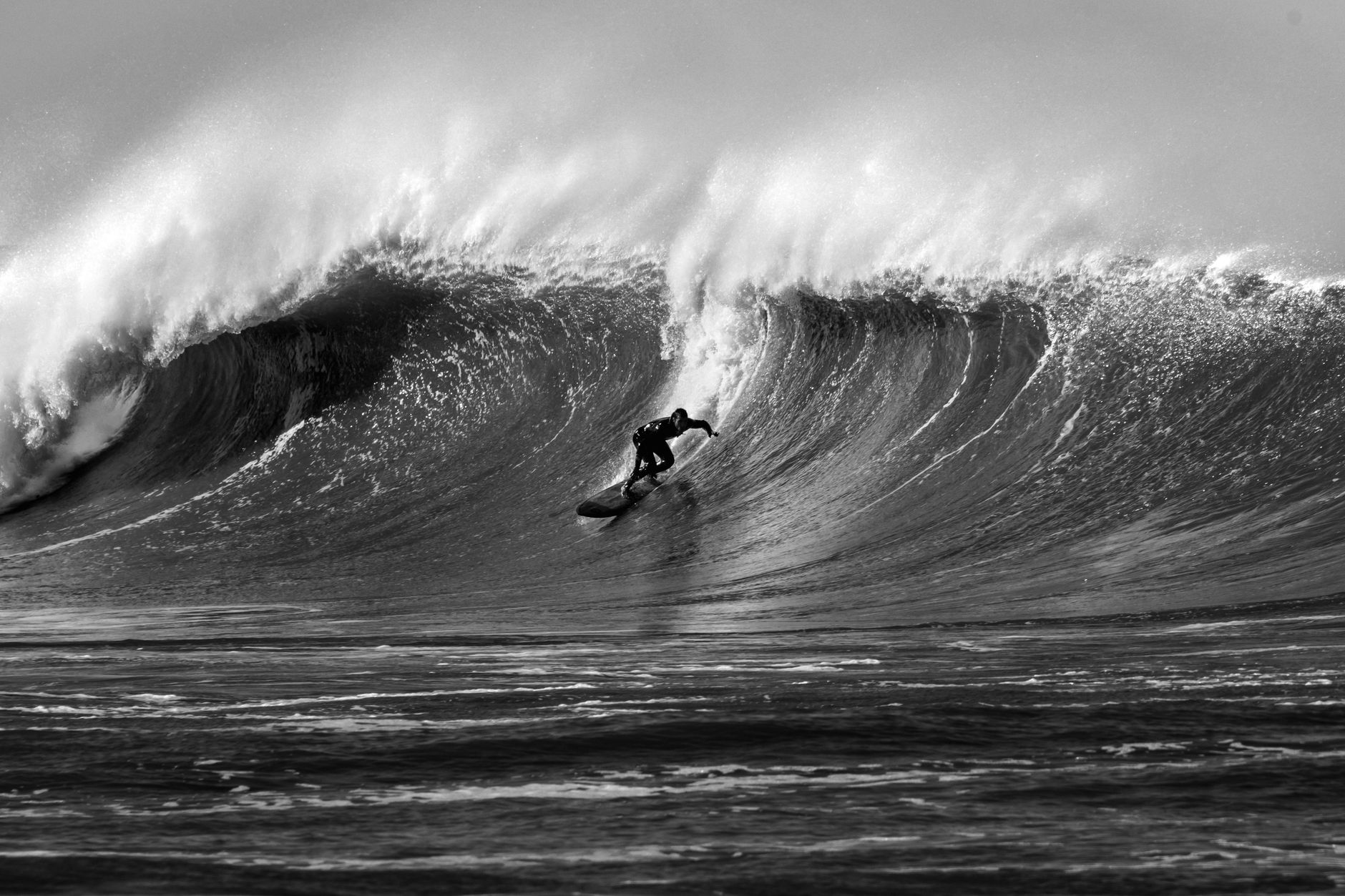
Surfing on the Baltic? To many that sounds like a joke. But it is not. There are indeed waves here, just not every day and not on demand. Anyone who knows when it works catches surprisingly good days. We explain what matters.
Yes, but only when the storm helps
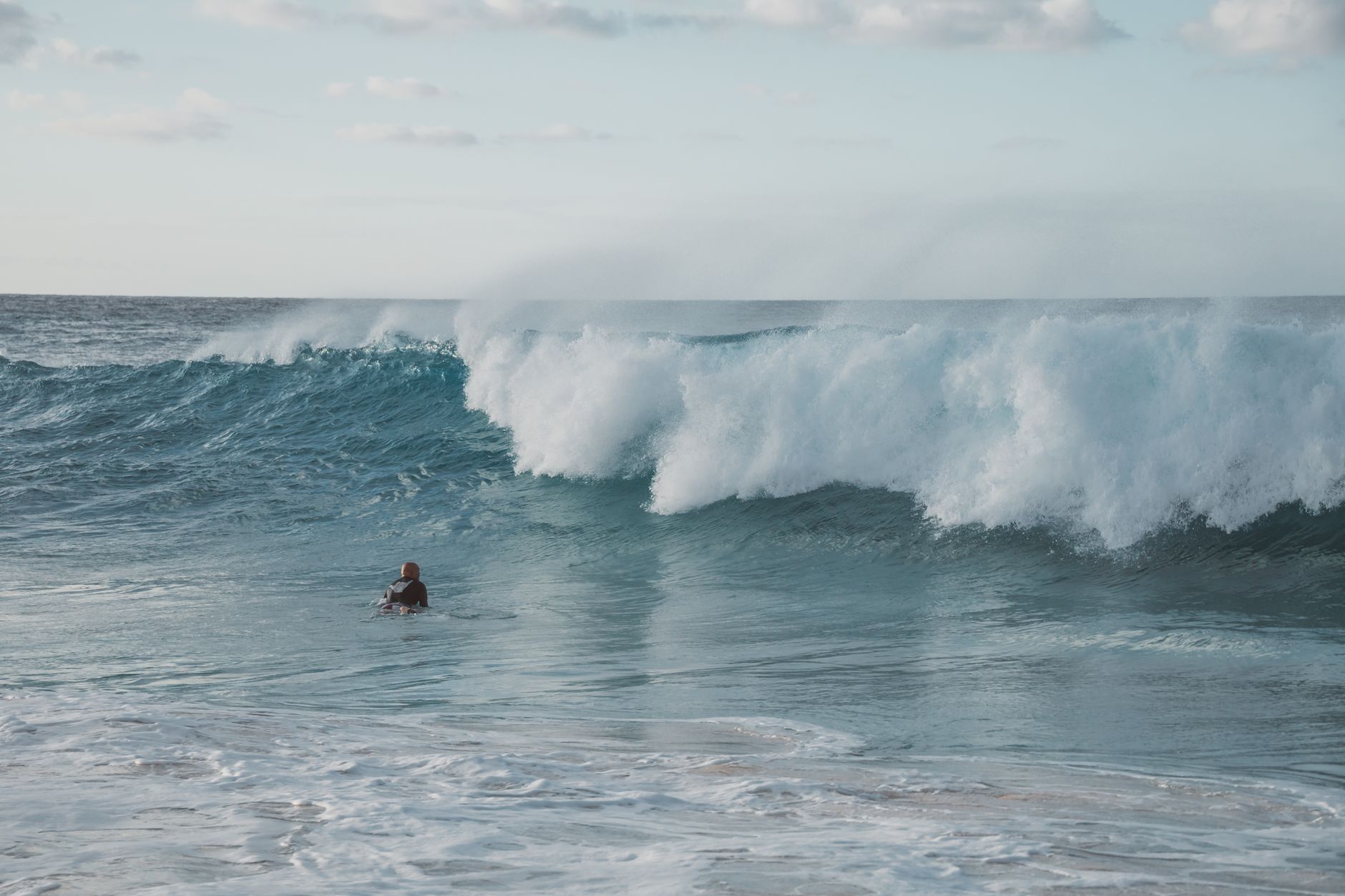
The Baltic is an inland sea; no ocean swell rolls in here as it does in Portugal. Waves only form locally, through strong wind right off the coast. That means the season is autumn and winter, roughly from October to April, when the storms push the water onto the coast. Without a storm the sea stays flat. Off Fehmarn a clean wave builds up in strong north to north-easterly wind, while Rügen delivers with a westerly in autumn.
When it pays off, reading the forecast
So you do not drive out there for nothing, it is worth checking the wave forecast. The key is the period, the seconds between two waves. The longer it is, the more orderly and powerful the wave runs. On the Baltic the periods are short and the waves steep, which makes them quirky, but really fun on good days. Apps like Surfline or Windguru help with the assessment, along with a look at wind direction and strength.
The North Sea, the more reliable address
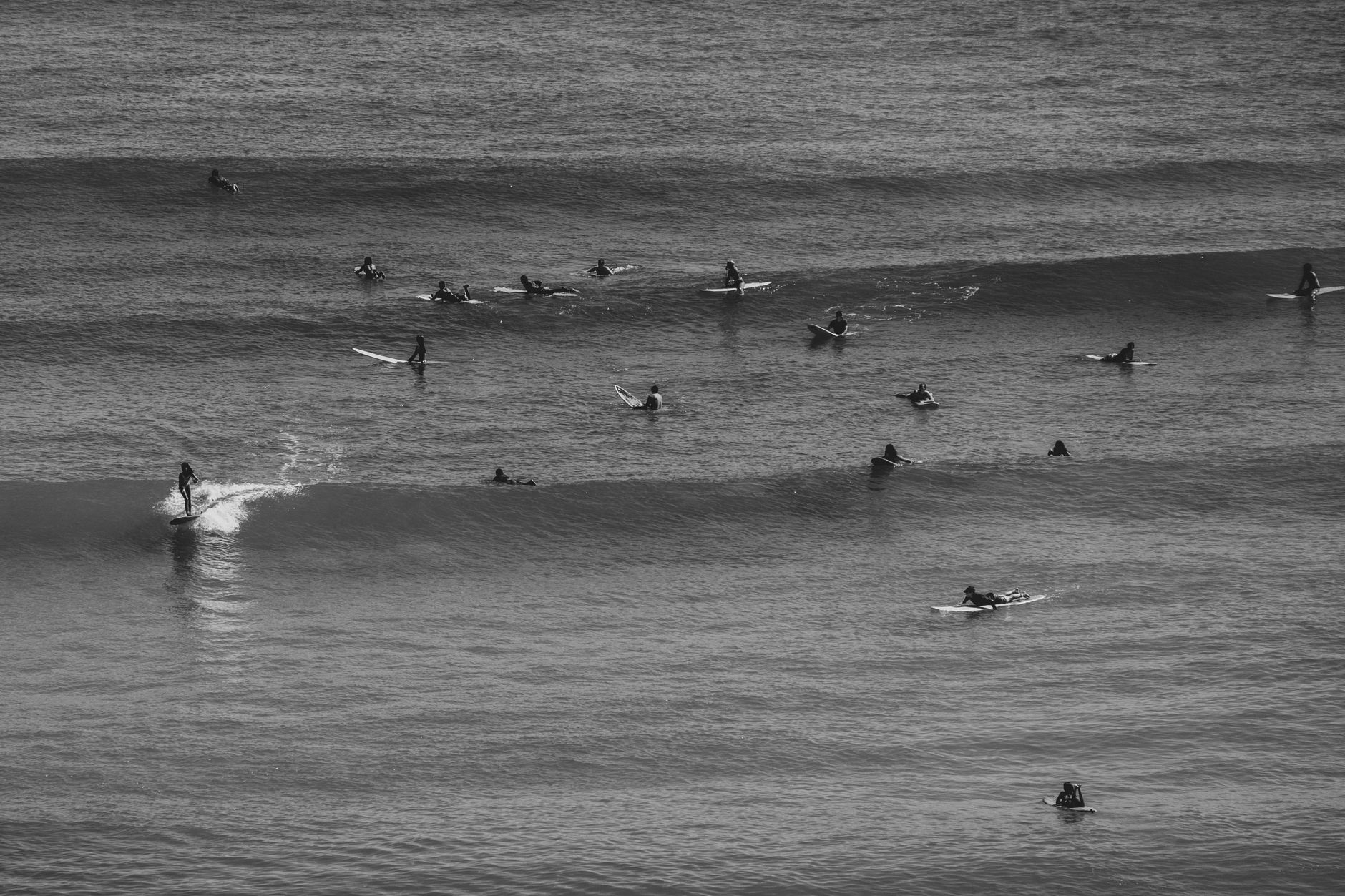
If you want to surf more often and more reliably, head to the North Sea. Sylt is the centre of German surf culture, St. Peter-Ording offers plenty of space and flat areas for beginners. More wave arrives there thanks to the open sea. Unlike on the Baltic, here you have to mind the tides: at low water there are shallow channels to practise in, at high water the wave breaks in front of the sandbanks.
First purchases with examples based on body weights
For learning to surf the rule is: go for a large, voluminous softboard (foam board). It floats well, forgives mistakes and does not hurt when you fall, which is an advantage especially in the short, steep Baltic wave. Guide values:
| Body weight | Board length | Volume (beginner) |
|---|---|---|
| approx. 45 kg | approx. 7’0–7’6 | approx. 55–65 L |
| approx. 65 kg | approx. 7’6–8’2 | approx. 75–90 L |
| approx. 85 kg | approx. 8’2–9’0 | approx. 95–110 L |
| approx. 100 kg | approx. 9’0–9’6 | approx. 110–130 L |
The more volume, the more easily you catch the wave and the sooner you stand. Shorter, thinner boards come later, once you paddle into waves confidently. A warm wetsuit always belongs with it, because the Baltic wave season is autumn and winter.
Surfing on the Baltic is no myth, but an insider tip for the cold season. Pack a warm wetsuit, keep an eye on the forecast, and grab your chance when the storm sends waves. For a reliable wave ride, the North Sea is worth a trip. You will find both in our spot guides.
When exactly, and where, the Baltic has waves
The wave season on the Baltic is autumn and winter, roughly September to March, when strong low-pressure systems sweep across the sea. Waves only form when the wind blows long and strong enough from the right direction over a large stretch of water, the so-called fetch. Your best chance is therefore during and shortly after a storm, with onshore wind. In calm summer weather the Baltic stays mirror-flat.
Where waves run depends on how the coast faces: a beach open to the wind direction gets waves, a sheltered one does not. Exposed stretches on Fehmarn, Rügen and along the open coast of Mecklenburg-Vorpommern deliver in the right storms. More reliable than the Baltic is the North Sea, such as Sylt, which almost always has a ground swell and is worth a trip.
But let us be honest: autumn and winter surfing means cold water and rough conditions. A thick wetsuit with hood and gloves is a must, which one fits is covered in the wetsuit guide. And storm waves are no place for your first attempts: with offshore wind you get pushed out to sea, so then you stay on land. Start in manageable conditions, ideally with a course, and keep an eye on the Wind-Check.