



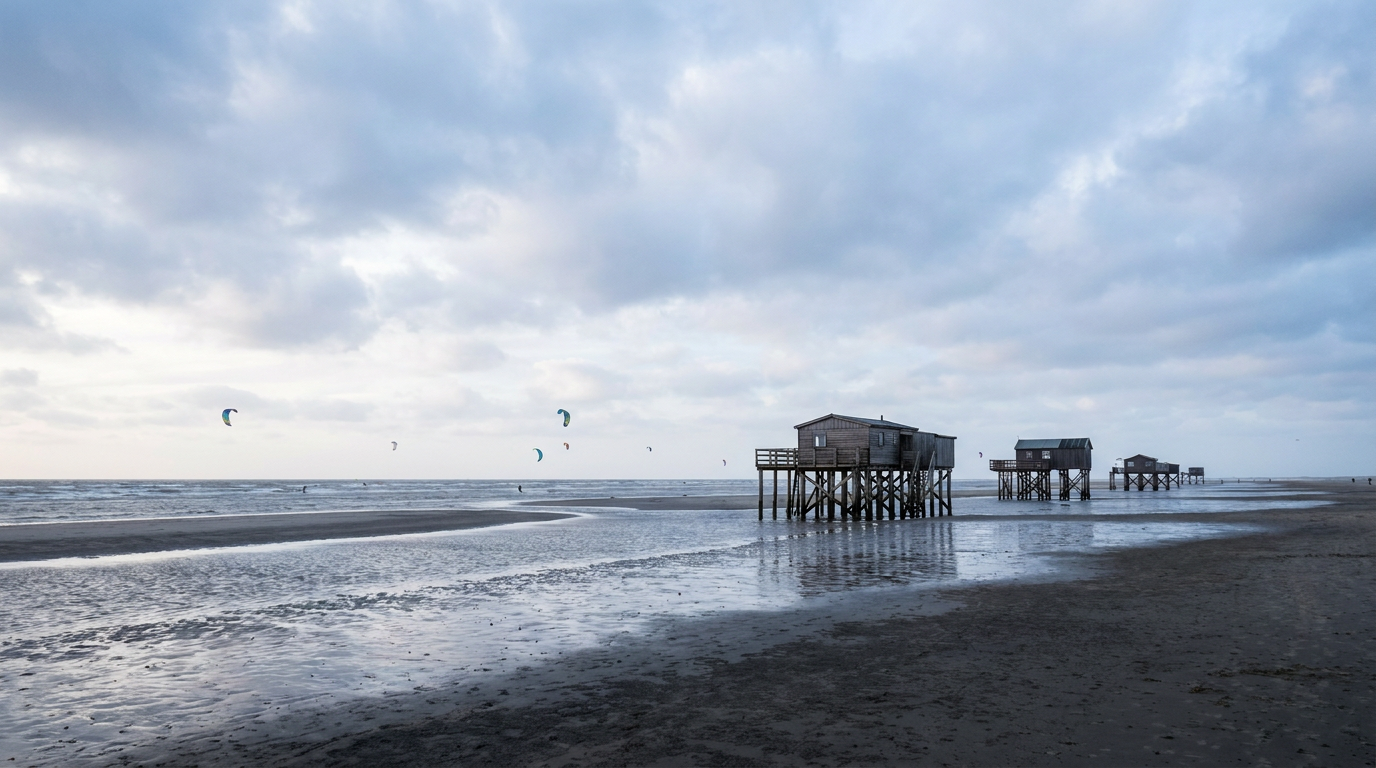
St. Peter-Ording is unlike anything on the Baltic. A sandy beach up to twelve kilometres long, the mudflats, the stilt houses, and a wind that almost always blows. For kiters and wave riders, SPO is a dream, but one with rules of play. Anyone who understands tide and zones has enormous fun here.
A beach as far as the eye can see
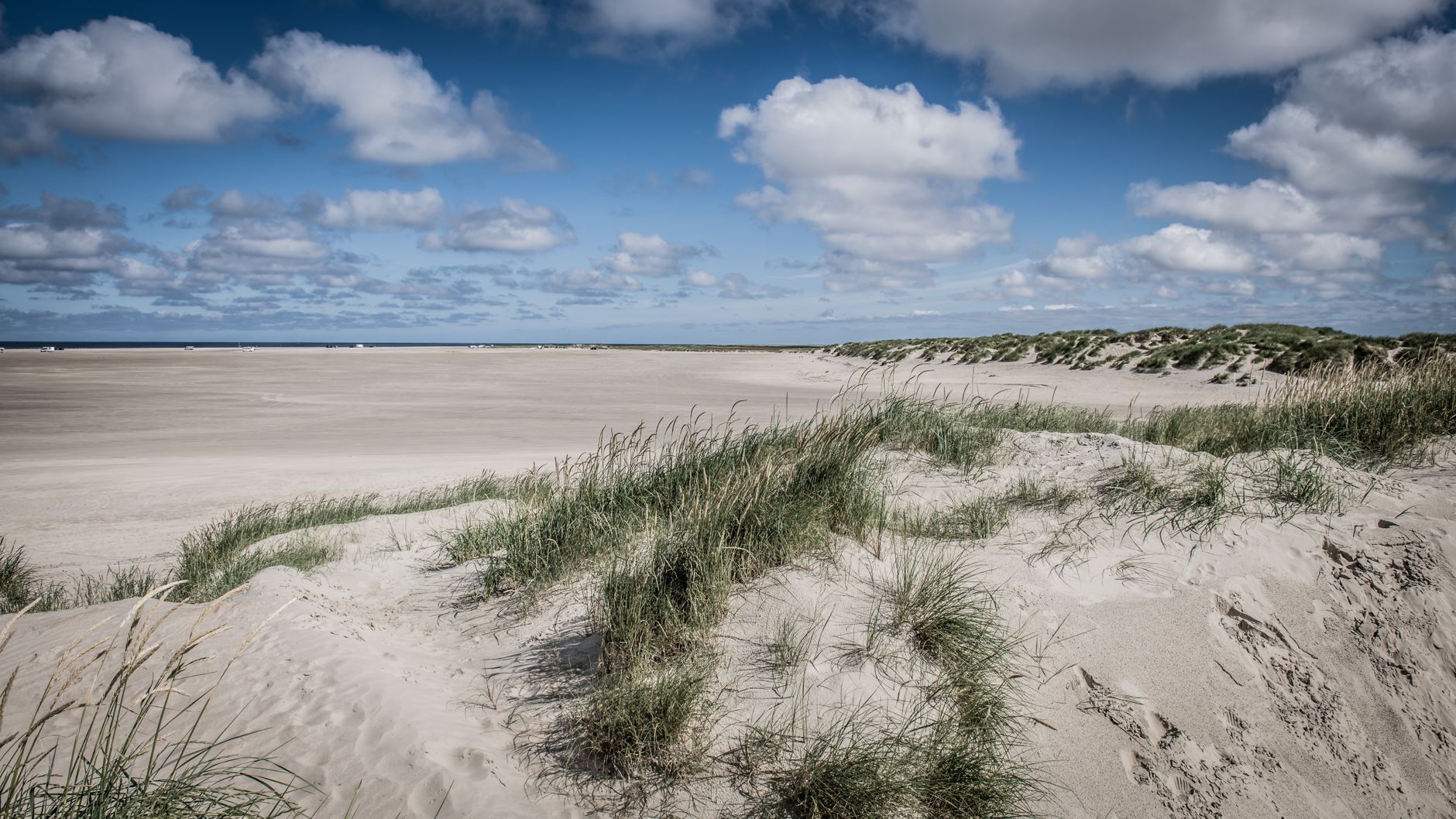
The beach is so vast that everyone finds their place. In the south, at Böhl, there is a large standing-depth spot, ideal for beginners. In the north, near Ording, there is wave for the advanced. The bathing area in the middle remains reserved for swimming. Onshore wind from west to north-west is the norm here and exactly right for kiting.
Why the tides matter here
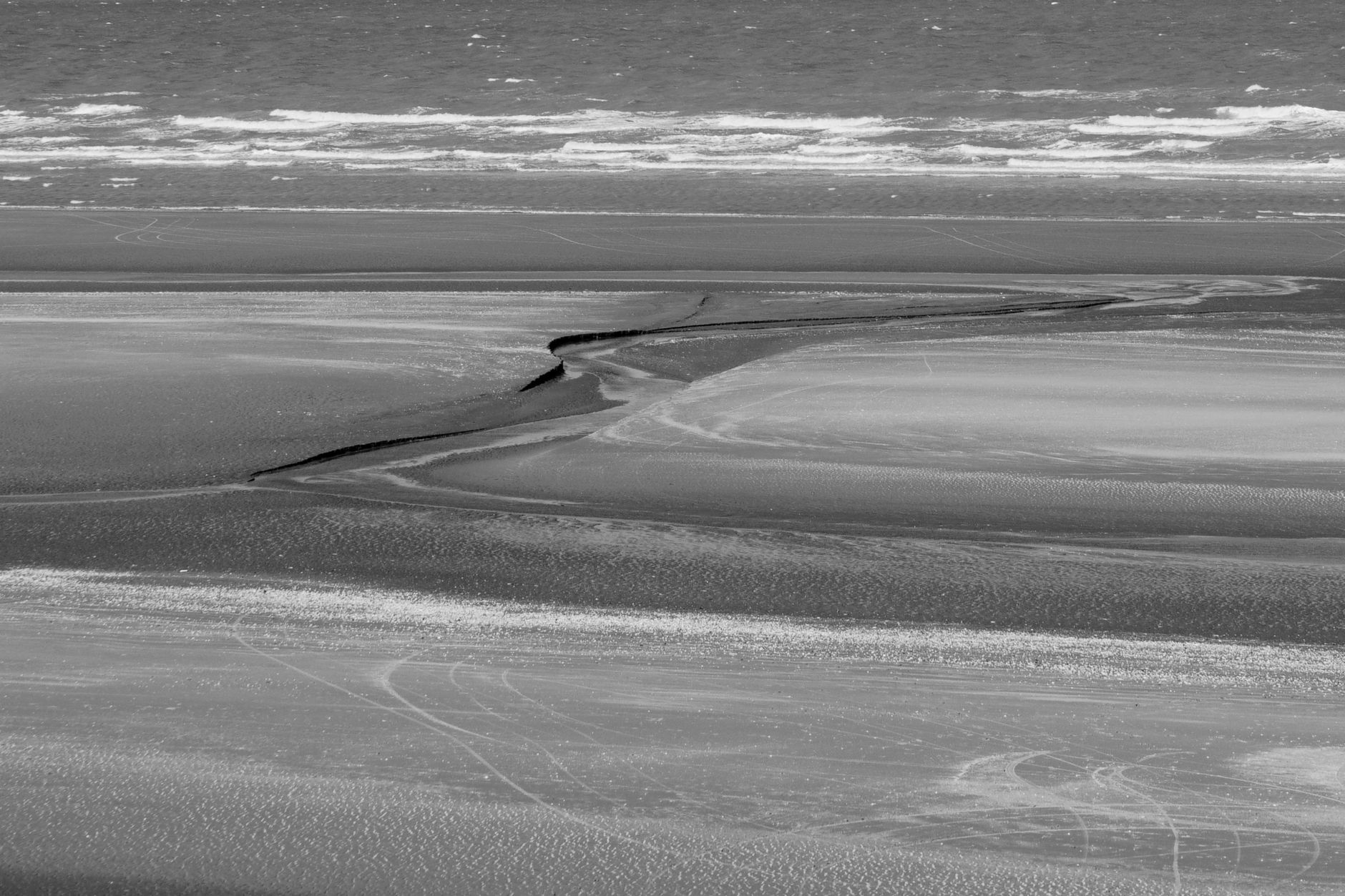
Unlike on the Baltic, the North Sea has ebb and flood, and they change the spot completely. At low water, shallow channels lie exposed where beginners can practise. At high water the water stands higher and there is surf. That means: check the tide calendar before you head out and plan your session around the water. Anyone who ignores this can end up standing in front of a mudflat instead of the sea.
Only in the marked zones
SPO sits in the middle of the Wadden Sea National Park, and that means clear rules. Kiting is only allowed in the designated zones marked with buoys. The lagoon and the protected areas are off-limits, this is where birds breed and seals rest. Stick to it, then the spot stays open and you avoid trouble. The schools on site know exactly which zone applies at any given time.
St. Peter-Ording is big, varied and a highlight for kiters and wave riders alike. With the knowledge of tide and zones, the wide beach becomes your playground. Factor in the water, stay within the buoys, and enjoy one of the most beautiful spots on the North Sea coast.