


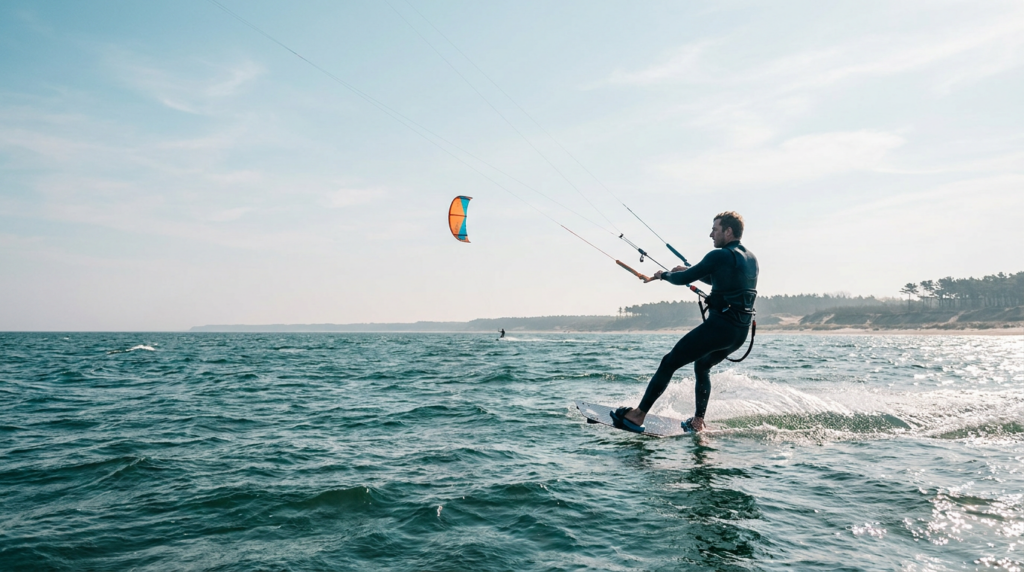
You want to learn kiting, or you just have, and now you are looking for your first own kite. Dozens of models, and every brand shouts “best beginner kite”. We keep it honest: this is a market overview and a buying guide, not a paid test. We tell you what really matters, which size you need, what it costs and which proven all-rounders have worked for years. So you do not pay for the lesson the hard way.
What a beginner kite really has to do
Forget jumps and tricks, they come later. A first kite has to do one thing above all: make learning easy for you and not frighten you. Four things decide that.
- Stable power. Steady pull, no sudden gust jumps. A nervous kite costs beginners their nerves.
- Easy relaunch. You will drop it into the water often, so it has to start again easily.
- Plenty of depower. When it gets to be too much, you let the power out right away. A large depower range means safety.
- A forgiving bar. Light steering force, otherwise your arms are wiped out after 20 minutes.
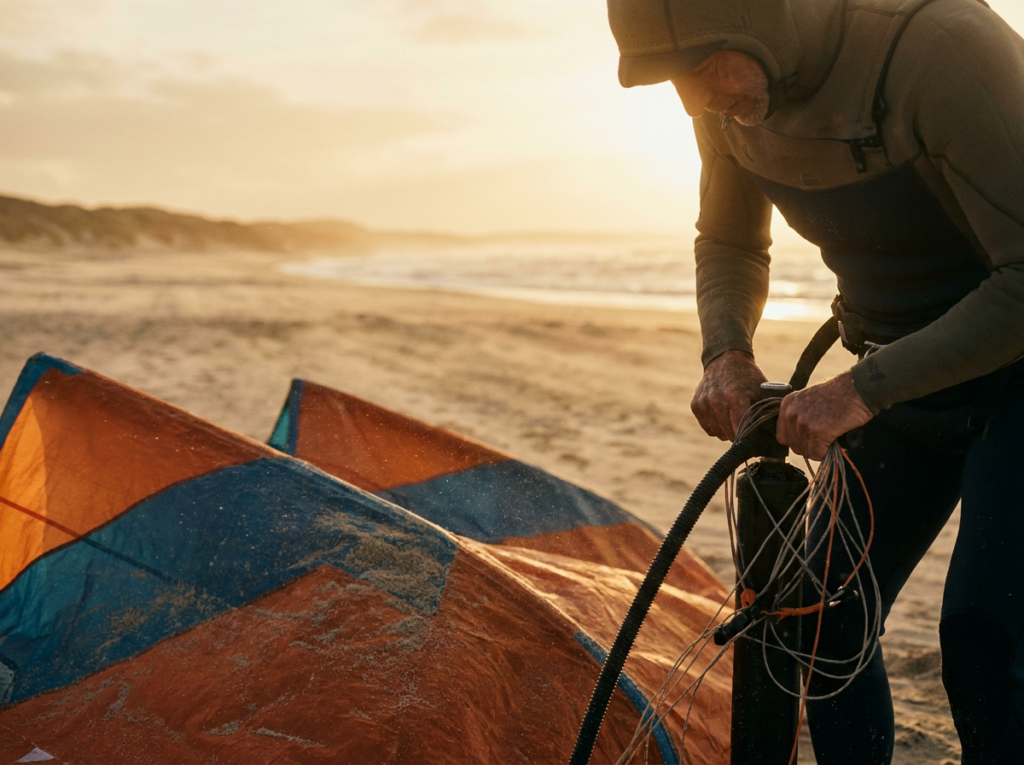
In plain terms: your first kite is an all-round freeride kite, usually with three struts. Every major brand has a model like this. Stay away from pure freestyle or wave kites, they are more temperamental than you need at the start and take the fun out of learning.
Which size do you need?
The size depends on your weight and on the wind. On the Baltic the wind is often in the 12 to 20 knot range, so a medium-sized kite is exactly right for you.
| Body weight | First kite (all-round) | Later as 2nd size |
|---|---|---|
| up to 60 kg | 8 to 9 m² | 11 to 12 m² |
| 60 to 75 kg | 9 to 11 m² | 12 to 13 m² |
| 75 to 90 kg | 11 to 12 m² | 13 to 14 m² |
| over 90 kg | 12 to 14 m² | 9 m² for more wind |
Which size suits today’s wind, our Wind Check works it out for you in seconds.
The proven all-rounders in a market overview
These model lines have shown up for years as forgiving all-rounders, in schools, in tests and out on the water. We have not ridden every model ourselves, so honestly this is an overview, not a hands-on test:
- Duotone Evo: the classic, plain and simple. Stable, forgiving, turns nicely. The safe bet, but no bargain.
- Core Nexus / XR: very smooth and beautifully built, lasts forever. A bit pricier, but many keep it for a long time.
- Cabrinha Switchblade / Moto: an all-round legend with solid power and a wide wind range, popular for learning.
- North Reach: modern, rather light and forgiving, with a pleasant bar feel.
- Ozone Catalyst: light, beginner-friendly and often a bit cheaper, a good value-for-money tip.
The F-One Bandit, Eleveight RS, Airush Lift or Naish all-rounders belong in the same league. Honestly, what often decides it in the end is what you can find used in your size and your budget, and which brand offers service near you.
What does the fun cost?
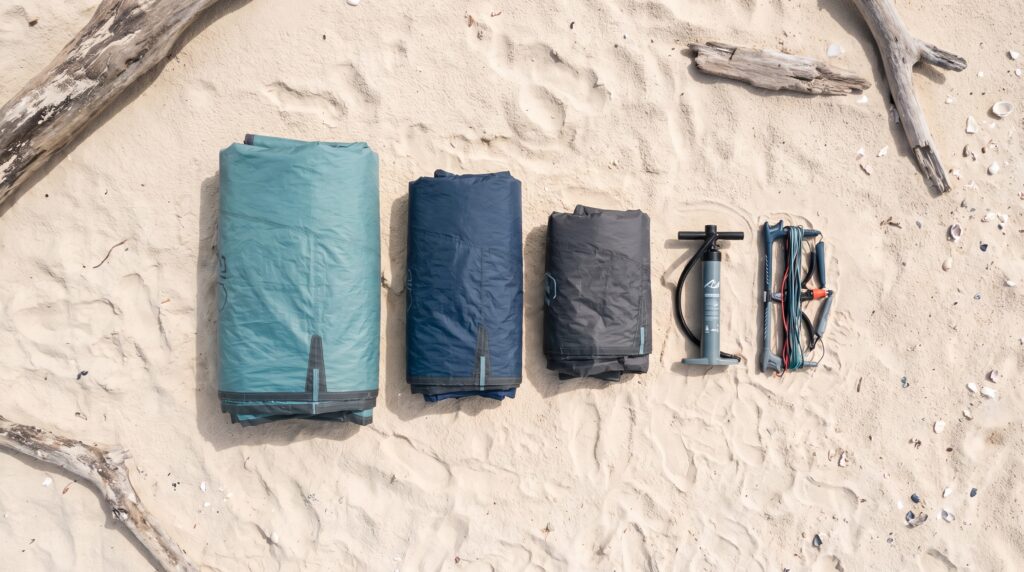
Budget around 800 to 1200 euros for a good new beginner kite, plus 300 to 500 euros for a bar. But you do not have to buy new: a well-kept last-year model easily saves 30 to 50 percent and rides just as well. When buying used, check the canopy for tears and UV damage, check the lines and bar, and have it pumped up once.
Our honest recommendation
Do not make it too complicated. A forgiving all-round freeride kite in the right size, from a brand with good service, ideally as a last-year model, and you are well set up. The “best” kite is the one that suits your weight, your spot and your wallet, not the one with the loudest marketing.
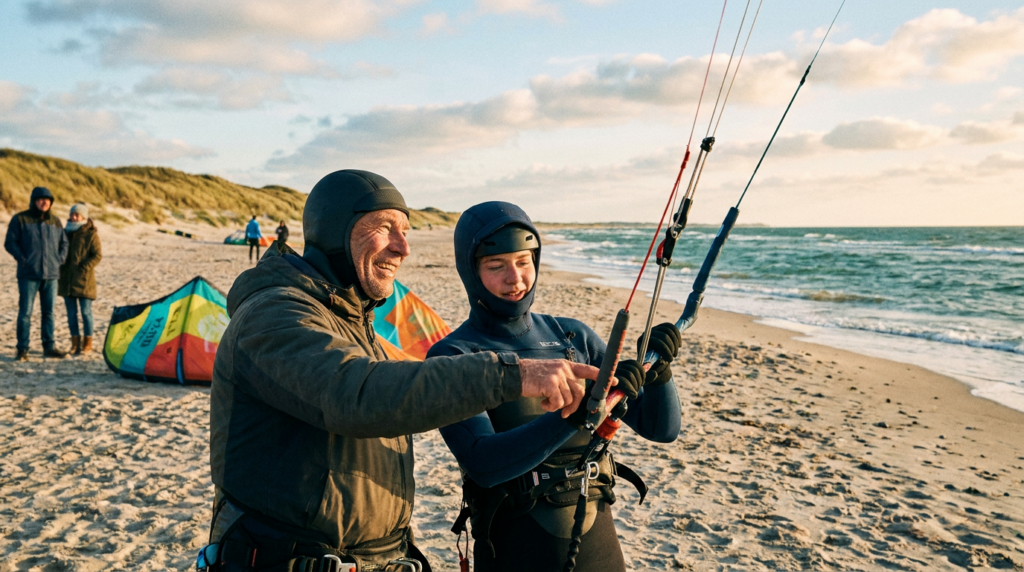
And the most important tip: the course first, then the kite. In a course you ride different sizes and feel for yourself what works well, that beats ten test reports. This is how you learn it properly, and then afterwards you buy exactly the right thing.
Note: As soon as our shop and partner links are live, you will find direct buying recommendations here. Until then: the content stands on its own, even without a single click.