


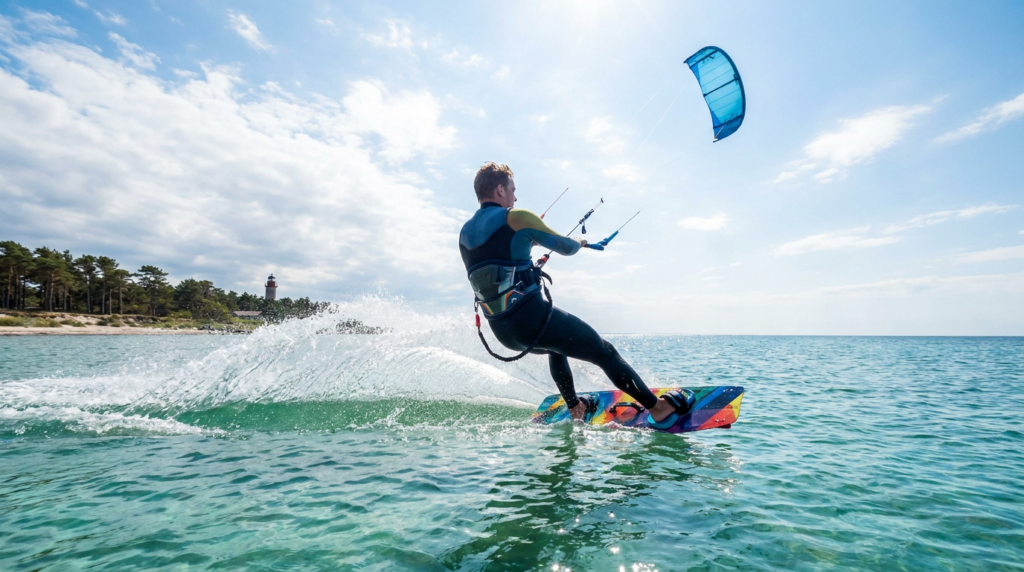
With their first own board, many people make it unnecessarily hard for themselves. Yet the question which kiteboard for beginners is quickly answered with two things: the right size and the right shape. Here comes the honest buying guide, without letting anyone talk you into a pro board that makes learning harder for you.
Twintip is the standard for getting started
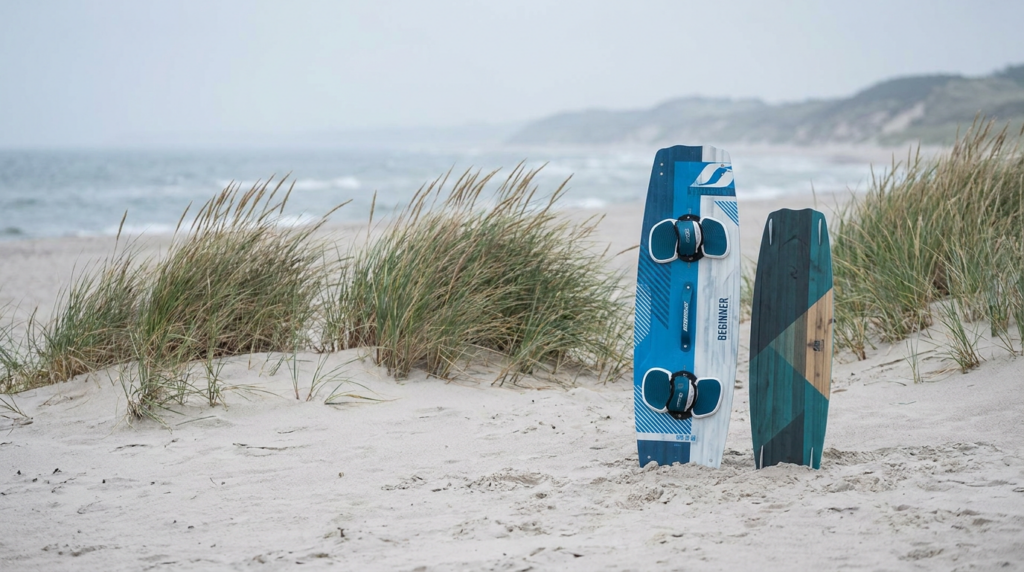
Your first board is a twintip, the board shaped identically on both ends that rides in both directions. You do not have to turn around, which makes learning easy. Directional boards (like a small surfboard) are something for later or for wave riding. Which one suits when, you can read in our comparison Twintip or Directional.
The right size
As a beginner you are better off riding a slightly larger board. More surface area means more buoyancy, earlier planing in light wind and a much easier water start. Small and sporty comes later. Guide values for a beginner twintip by body weight:
| Body weight | Board length (beginner) |
|---|---|
| up to 60 kg | 134 to 138 cm |
| 60 to 75 kg | 138 to 142 cm |
| 75 to 90 kg | 142 to 145 cm |
| over 90 kg | 145 to 150 cm |
On the often moderately windy Baltic you can safely reach for a touch larger, that helps you onto the water on light days.
Shape and flex
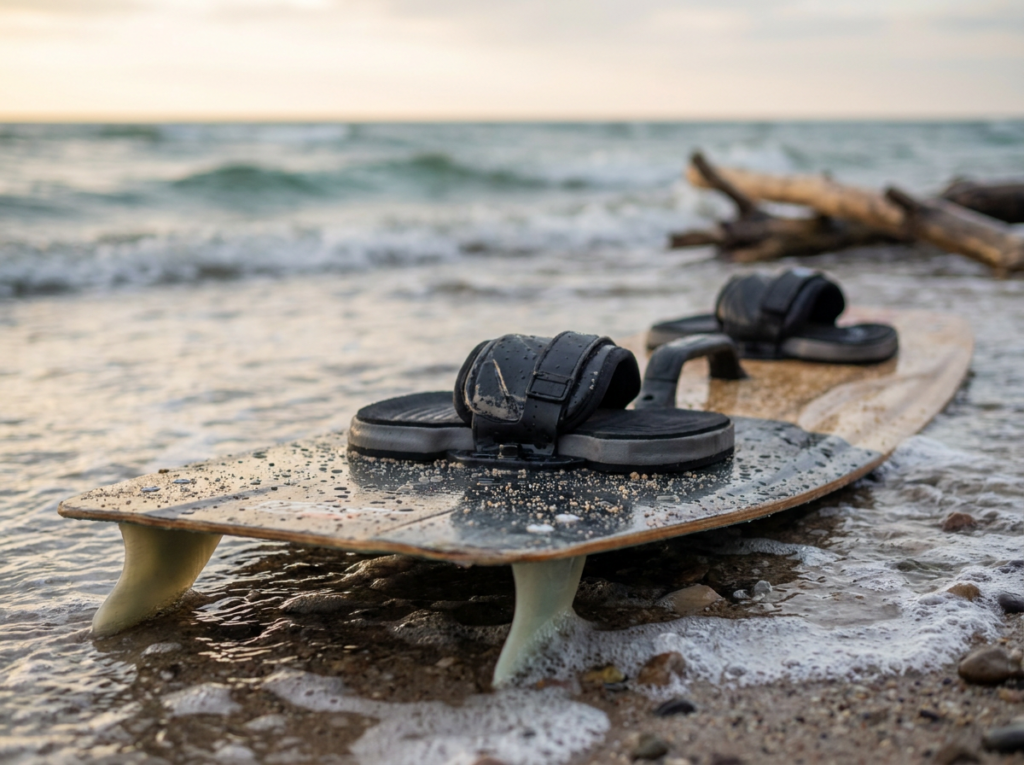
A good beginner board is rather soft (flexible) and evenly shaped. That forgives edge mistakes and dampens impacts in choppy water. Stiff, heavily rockered freestyle boards are poison for learning. The pads and straps that come with it are perfectly enough at the start, they just have to sit comfortably and be easy to adjust.
New or used?
Boards are ideal used purchases. A last-year model or a well-kept used board easily saves half and learns just as well. Just check for cracks at the edges, a firm seat of the fins, and screws that do not spin out. Pads and straps you can buy cheaply afterwards if need be.
Our tip
For learning, take a slightly larger, soft twintip in your weight class, used is fine, and treat yourself to the first lessons in a course. There you ride different boards and feel for yourself what fits. A basic course gets you safely onto the water, and which kite size goes with it, the Wind Check tells you.
Note: As soon as our shop and partner links are live, you will find direct board recommendations here. Until then: the content stands on its own, even without a single click.