



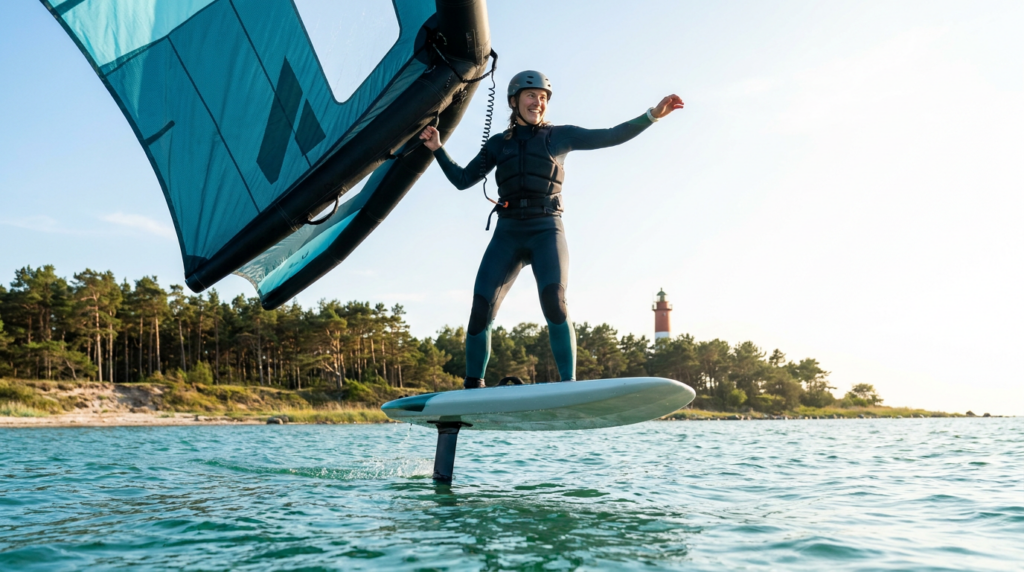
Learning to wingfoil goes surprisingly fast, and it is fun from the very first minute. Unlike kiting, you simply have the power in your hand and can let go of it at any time. Here come your first metres step by step: from the feel of the wing on land to the first lift-off onto the foil.
Why wingfoiling is such a good way to start
The wing is forgiving: if you let go, nothing wild happens, it simply flutters out. That takes the pressure off and makes the sport safe to learn. With the right gear (large board, large foil, 5-metre wing) you often stand and glide on the very first day, the first foiling usually follows after just a few sessions.
Prior experience helps, but is not a must. Anyone who can already windsurf knows the wind window and the feel for the sail; anyone coming from kitefoiling already has balance and foil feel built in. Both noticeably shorten the path to the first clean flight, because you only have to focus on one new thing instead of everything at once. But if you start with no watersport experience at all, that is just as fine, wingfoiling is one of the most rewarding ways to start there is.
Step 1: Wing handling on land
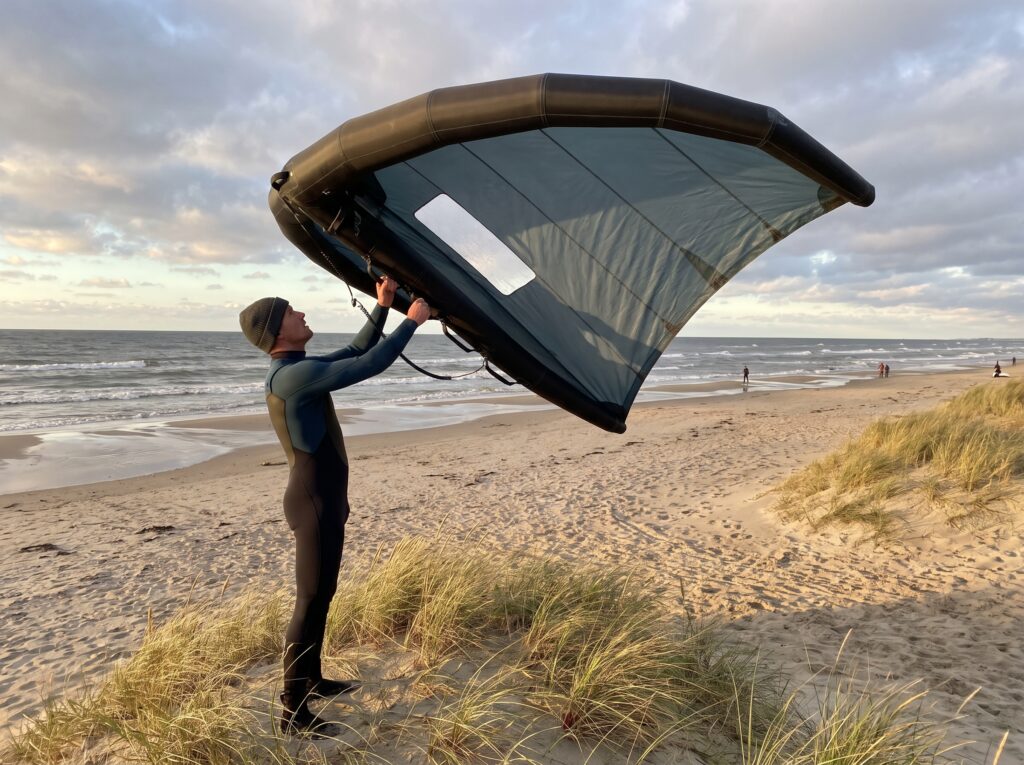
Before you go onto the water, get to know the wing on land. Hold it into the wind, feel where it develops power and where it is neutral. Practise tilting it from one side to the other. These five minutes on the beach save you half an hour of frustration on the water.
Step 2: Onto the board, first without flying
Now off into the shallow water. Kneel on the board first, grab the wing, find your balance, then slowly stand up. Ride the first metres very deliberately without lifting off, just glide and steer. That way you learn your stance and wing steering without having to worry about the foil.
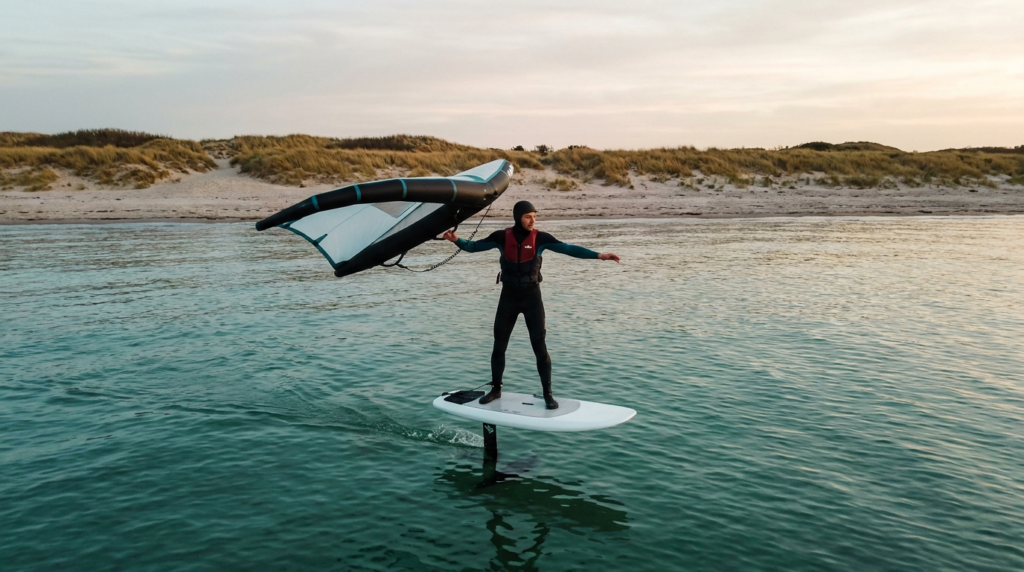
Step 3: The first lift-off
Once you have a bit of speed, you shift your weight gently onto the back foot, and the foil lifts you up. Important: stay calm and do not overreact. If the nose rises too high, weight slightly forward. The first flights last seconds, that is normal. With every attempt they get longer.
The most common beginner mistakes
- Wing too low: hold it up, otherwise it brakes and pushes you into the water.
- Looking down: look forward, the rest follows.
- Too little speed: no foil carries without pace. First pick up speed, then lift off.
- Standing stiffly: knees loose, let the board work beneath you.
Fastest with a course
Wingfoiling forgives a lot, but an instructor who provides the right gear and stands next to you easily halves your learning time. You also do not need to buy anything before you know what suits you. A course at a wing school gets you onto the foil, which gear suits afterwards is in our wingfoil buying guide, and you find the right day with the Wind Check.