


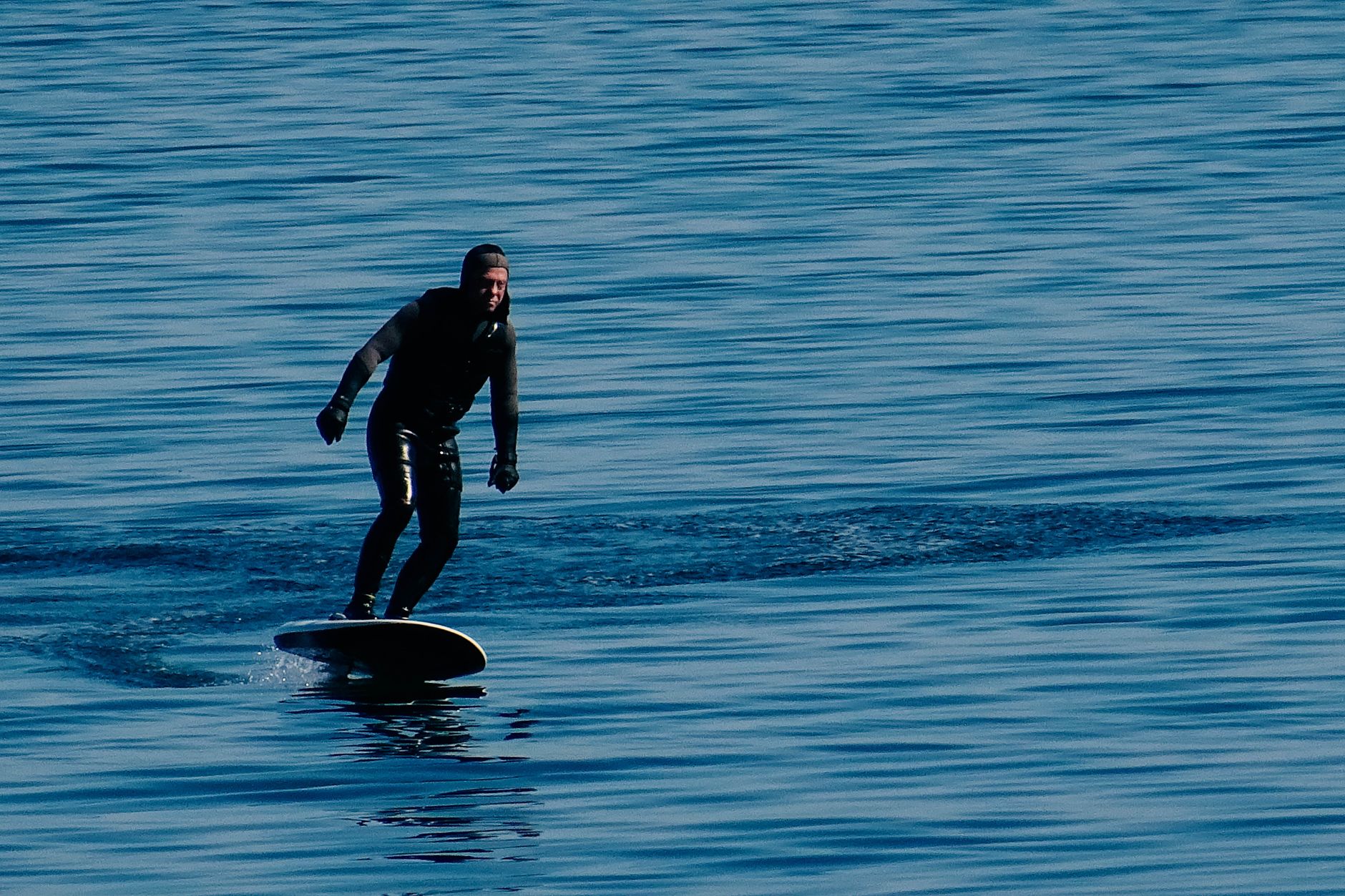
The wingboard carries you until the foil takes over , the more volume, the easier the start. Here’s an honest, curated selection of well-known, well-rated wingfoil boards , with level (beginner, advanced, pro), price orientation and features. Not an in-house test, but an orientation overview. As of the 2026 season. New to it? Learn wingfoiling; the matching wing is in the wing overview.
10 recommended wingboards (2026)
- Naish Hover , beginner best-seller. Lots of volume, stable, very forgiving , the learning classic. Mid-range to premium · beginner.
- Fanatic Sky Wing Air , inflatable entry board. Tough and travel-friendly, stable start. Mid-range · beginner.
- Starboard Wingboard , all-round (also as Air/inflatable). Versatile, easy-going. Mid-range to premium · beginner & advanced.
- F-One Rocket Wing , all-round classic. Balanced, grows with your skill. Mid-range to premium · beginner & advanced.
- JP Gravity , tough all-rounder. Easy and durable. Mid-range · beginner & advanced.
- Fanatic Sky Wing , performance all-round. Efficient, many sizes for the smallest board in light wind. Premium · advanced.
- KT Wing Drifter , popular mid-volume board. Easy to ride and high-performing. Premium · advanced.
- Armstrong Wing FG , compact and versatile. Lots of volume in small dimensions, reactive. Premium · advanced.
- Duotone Sky , performance all-round. Direct and efficient. Premium · advanced.
- Naish Chimera , performance/surfy. Versatile for wing, prone and downwind. Premium · pros.
Which size? By weight and skill
What matters is the volume relative to your weight , more volume = more stability and an easier start.
| Beginner | body weight in kg + approx. 30–40 litres (e.g. 80 kg → approx. 110–120 l) |
| Advanced | body weight + approx. 5–15 litres |
| Pros / sinkers | around body weight or below |
Features that make the difference
- Hardboard or inflatable: hardboards ride more directly and efficiently; inflatables are tough, travel-friendly and soft in a fall , ideal for learning.
- Dimensions: compact, short boards are more agile but need more skill.
- Foot straps & mast box: strap options and a well-placed mast box ease trim and progression.
- Weight: light carbon boards accelerate and foil more easily , usually premium.
Price orientation 2026
Rough direction: entry-level approx. €600–900, mid-range approx. €900–1200, premium/carbon approx. €1300–1800. Inflatable wingboards are around €700–1000.
Who suits what
- Beginners: Naish Hover, Fanatic Sky Wing Air, Starboard Wingboard , lots of volume, stable.
- Advanced: F-One Rocket Wing, KT Drifter, Fanatic Sky Wing , less volume, more performance.
- Pros: Armstrong Wing FG, Duotone Sky, Naish Chimera , compact and reactive.
Goes with this: the wing overview (10 wings) and , with a paddle instead of a wing , SUP foiling.
Note: this is a curated, independent overview of popular, well-rated boards (as of 2026) , not a paid in-house test, prices are rough orientation. For detailed tests, specialist magazines are worth a look. As soon as our shop and partner links are live, you’ll find concrete recommendations here. Until then: the content stands on its own, even without a single click.