



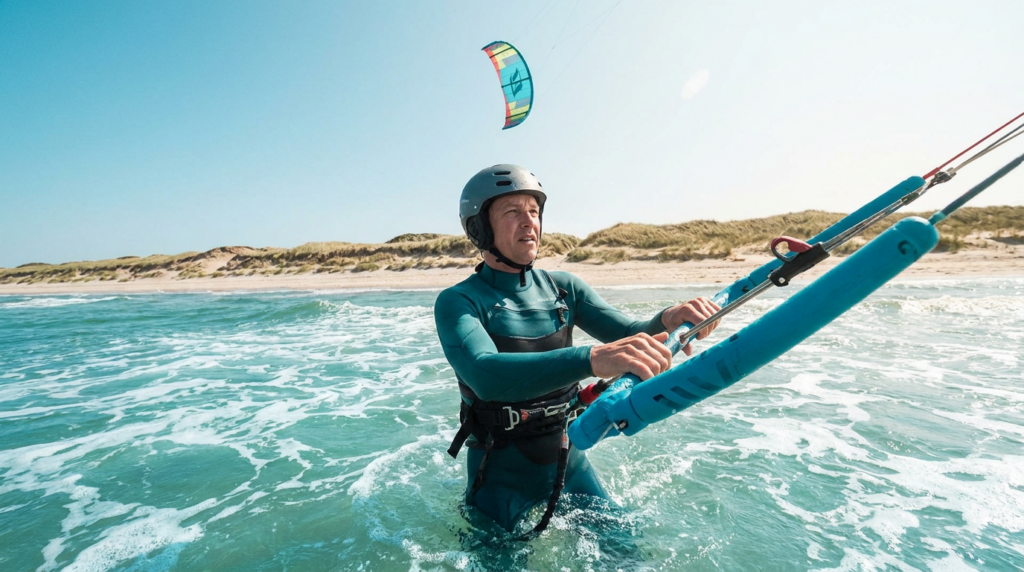
Learning to kitesurf goes faster than many think, as long as you do not keep making the same mistakes. We have gathered the five most common beginner mistakes in kitesurfing, the ones that cost learners time, nerves and sometimes gear. The good news: every single one is easy to avoid once you know it.
Mistake 1: Starting too big
The most common mistake is a kite that is too big or too much wind on the first day. More power does not mean learning faster, it means getting overwhelmed faster. Better to start slightly underpowered, then you have time to think. Which size suits your weight and wind today, the Wind Check tells you.
Mistake 2: Staring at the kite
Beginners glue their eyes to the kite and wonder why they are not getting anywhere. Pros look where they want to go and steer the kite by feel. Sounds odd, but it is the key: eyes forward, hands calm, the kite follows.
Mistake 3: Ignoring safety and depower
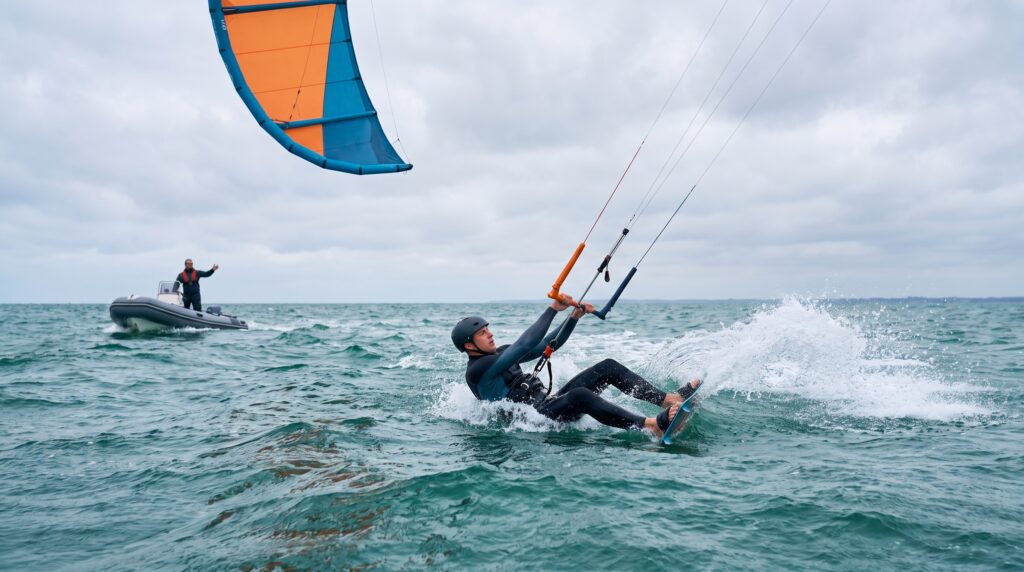
The most important move in kiting is not the jump, it is letting go. Anyone who cannot work the safety line and depower in their sleep gets nervous in the first gust. Practise the release on land until it sits. That is not a sign of fear, it is a sign of skill.
Mistake 4: The wrong spot and the wrong wind
Offshore wind (which drives you out to the open sea), gusty conditions or a crowded beach are poison for beginners. You need onshore or side-shore wind, plenty of space and ideally chest-deep water. The Baltic has plenty of that, you just have to choose the right spot.
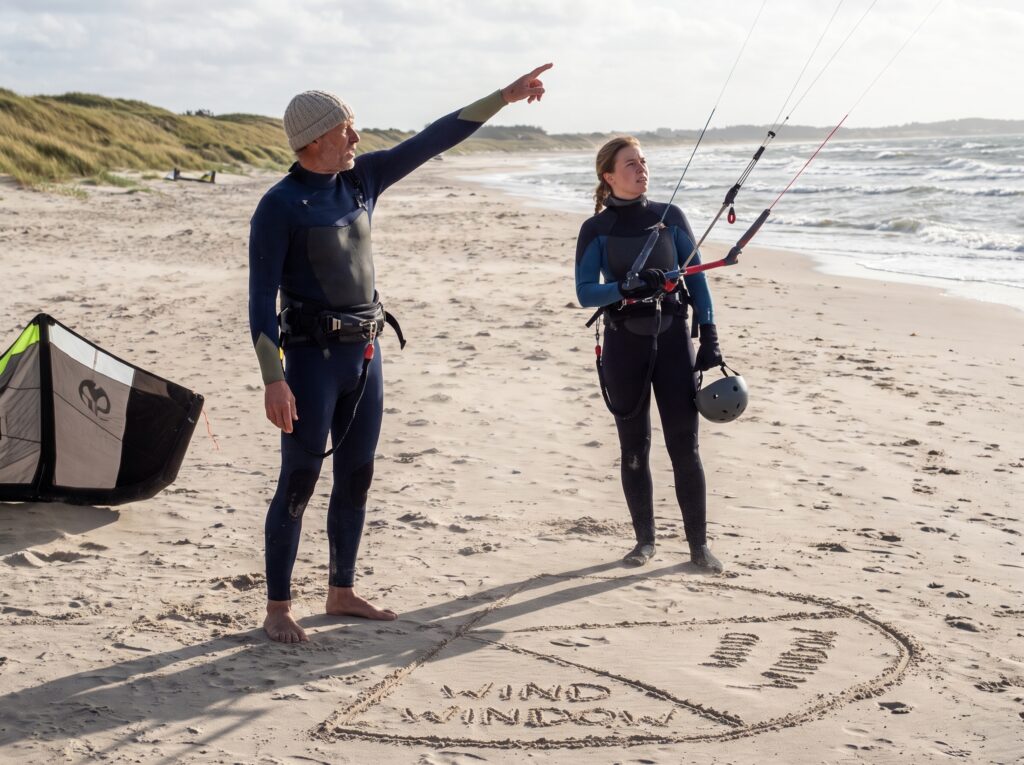
Part of this is understanding the wind window: the area in which the kite develops power. Anyone who knows where the kite pulls and where it rests steers ahead of time instead of frantically. That is exactly what you learn fastest at a sheltered learning area, not in the crowd. Our spot overview shows you where that works.
Mistake 5: Starting without a course
The most expensive mistake is wanting to teach yourself kiting alone. You put yourself and others at risk, you pick up mistakes that are hard to unlearn later, and in the end you take longer. In a few hours of course you learn safety, kite control and the water start in the right order, that saves weeks.
In short: start light, look forward, master safety, choose the right spot, and begin with a course. Do that, and you will be one of the fast learners. This is how you learn it properly and pick your first good day with the Wind Check.