



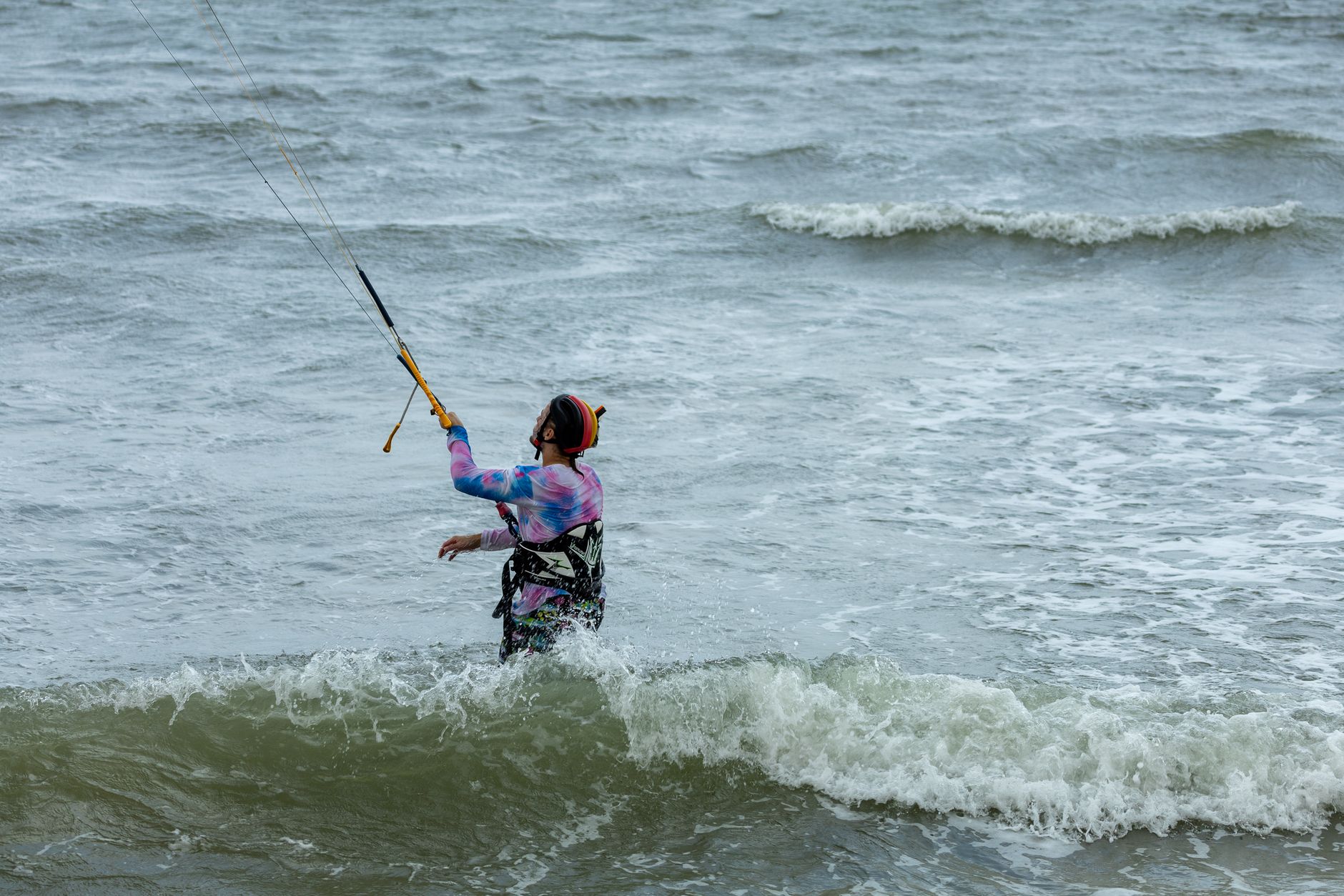
At some point it happens to everyone: the wind drops, a line breaks, or you have ventured out a bit too far. Self-rescue means helping yourself in such a situation and getting back to shore safely. You learn it in the course, and it is good to have the steps in your head long before you need them.
Staying calm is half the battle
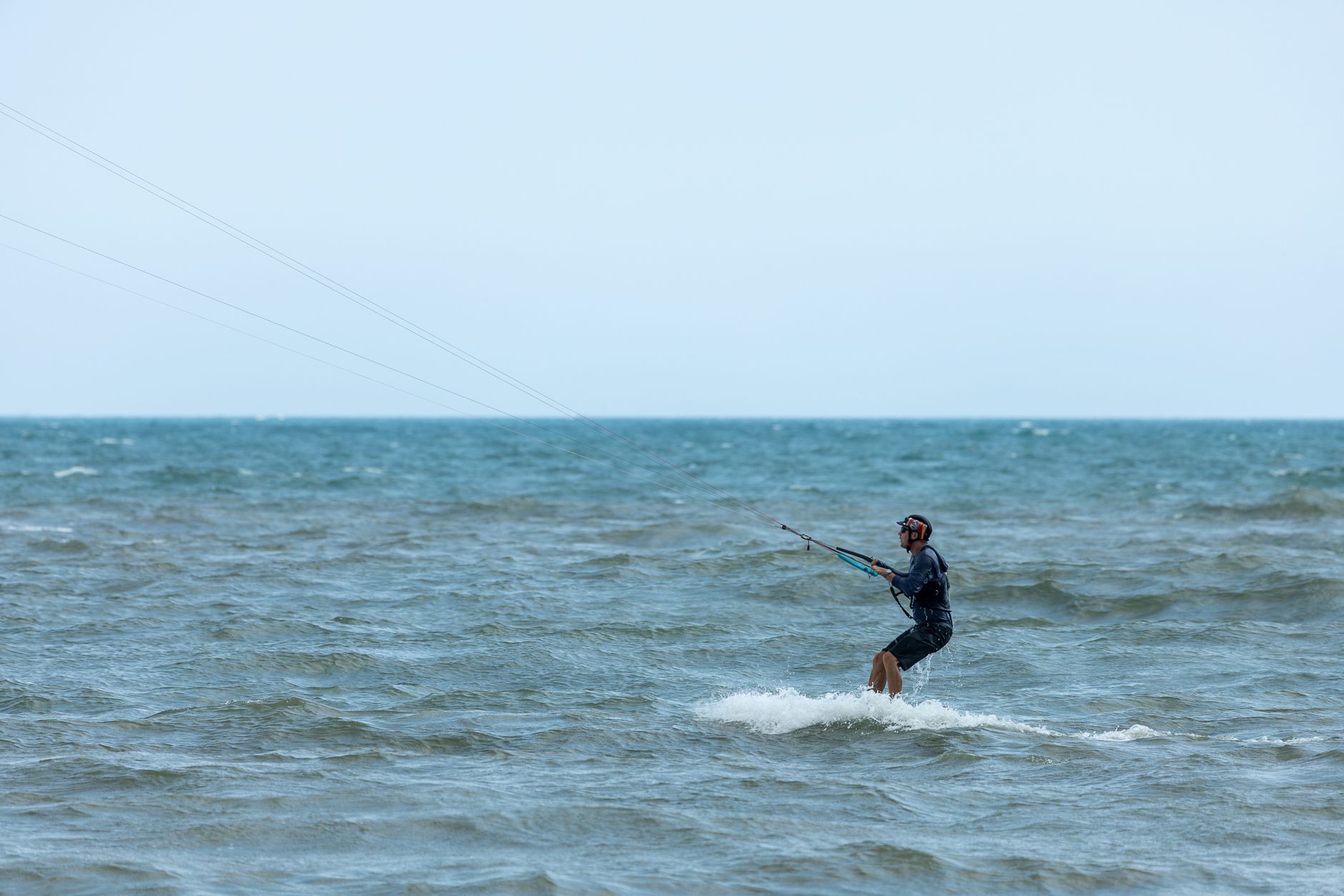
The most important thing first: stay calm. Panic costs strength, and you need that. Your gear is your friend, because the kite and board have buoyancy and carry you. As long as you stay attached to them, you do not simply drift away. Breathe, get an overview, and calmly think through the next step. You call for help by slowly waving with your arms stretched out.
How to pack up the kite in the water
If nothing works any more, you first secure the kite using the quick release, which lets off the pull. Then you pull yourself along the safety line to the kite, wind the lines neatly onto the bar and wrap them around one wingtip. With the rolled-up kite and a bit of wind in the cloth, you can let yourself be pulled towards shore, almost like with a small sail. You keep the board if you can, because it is your biggest buoyancy aid.
Prevention beats rescue
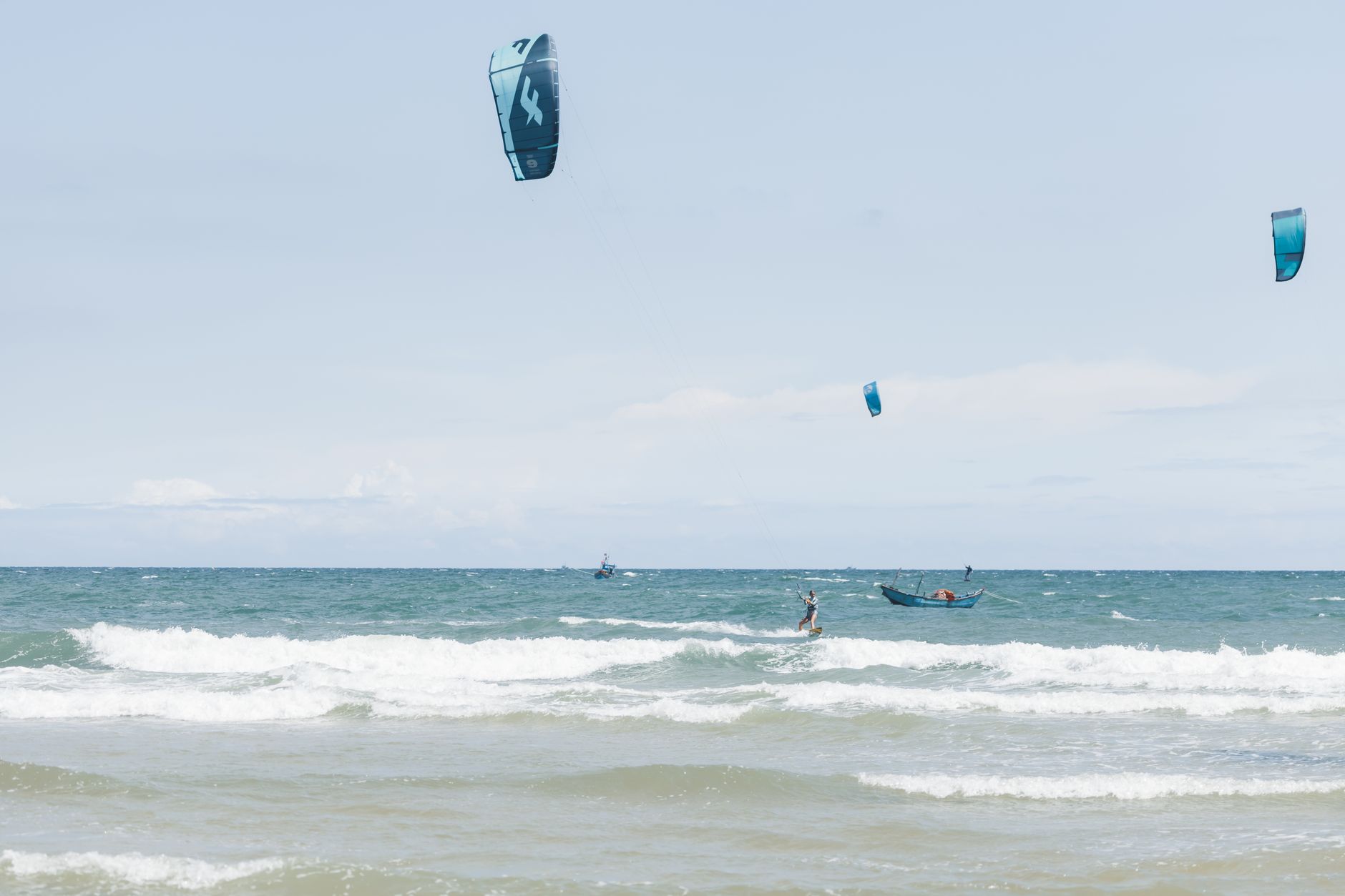
The best rescue is the one that never becomes necessary. Never go out alone in borderline conditions, tell someone where you are, and ride at busy spots where in an emergency someone is nearby. By far the most common reason for a self-rescue is offshore wind that drives you out onto the open sea. As a beginner you consistently leave that direction out, and then the worst case usually does not happen in the first place.
Self-rescue is not a topic of fear but a skill that gives you safety. Whoever has practised the steps once goes out more relaxed. We go through it calmly in the course, in shallow water, where you can try everything out without it getting serious.