


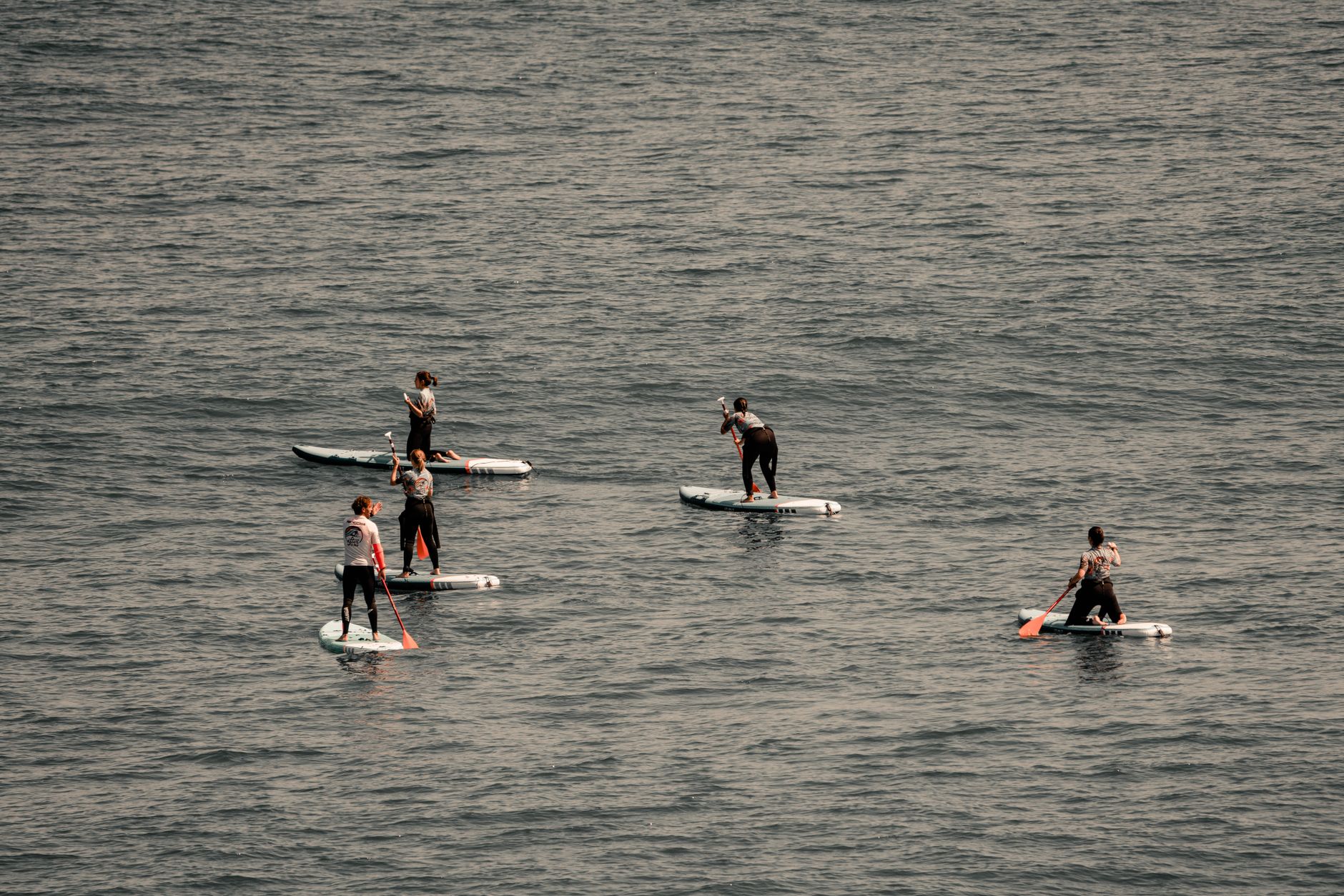
Stand-up paddling is the easiest way onto the water, and the SUP gear is manageable: a board, a paddle and two or three things that really matter. Even so, many shops will try to sell you the big package right away. Here you will read honestly what you need to get started, which size suits you and what it costs. This is a buying guide, not a paid test.
Inflatable or hardboard?
For getting started the answer is almost always the same: an inflatable board (iSUP). It is sturdy, fits in a backpack, does not hurt when you fall and is cheaper. Hard boards glide faster and more directly, but you only notice that once you have long been hooked.
| Pros | Cons | |
|---|---|---|
| Inflatable (iSUP) | Packs small, easy to transport, sturdy, soft falls, cheaper | Slightly less glide and directness than a hardboard |
| Hardboard | Glides faster, more directly and more precisely | More expensive, bulky to transport, more fragile, harder falls |
First purchases with examples based on body weight
The heavier you are, the more length, width and volume you need for a stable stance. More width (from 32 inches) gives tip stability, and that is exactly what makes the start easy. Honest guide values for an all-round board:
| Body weight | Length × width | Volume |
|---|---|---|
| approx. 45 kg | approx. 9’6–10’6 × 30–32″ | approx. 240–280 L |
| approx. 65 kg | approx. 10’6 × 32″ | approx. 280–300 L |
| approx. 85 kg | approx. 10’6–11′ × 32–33″ | approx. 300–330 L |
| approx. 100 kg | approx. 11’–12′ × 33–34″ | approx. 340–380 L |
Pay attention to the stated load capacity, it should be clearly above your body weight plus luggage. A longer board tracks straight better, a shorter one turns more easily.
The paddle
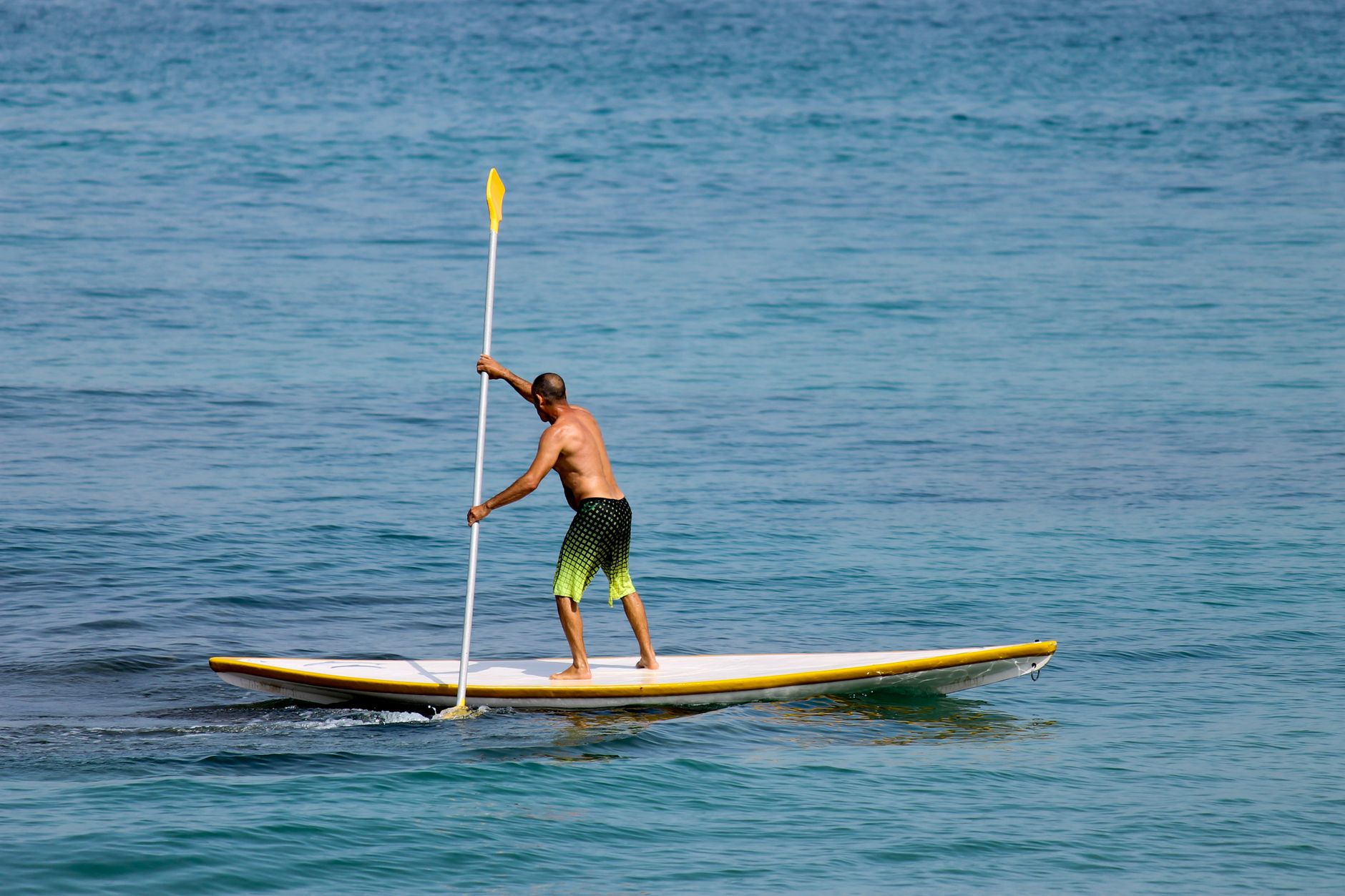
The right paddle length is roughly 15 to 25 cm above your height, adjustable paddles take the maths off your hands and are ideal when several people share the same paddle. As for the material: aluminium is cheap and sturdy, carbon is lighter and transfers power better, which makes itself felt on long tours. For the start a solid aluminium or hybrid paddle is easily enough.
What else belongs to it
- Leash , the connection between you and the board. The board is your biggest float, on the leash you always stay attached to it. On moving water a different leash than on still water, when in doubt ask for advice.
- Buoyancy aid , on the Baltic Sea especially a must in your head, even if it is not required everywhere.
- Pump , with an iSUP almost always included, a double-action pump saves sweat. Electric pumps are convenient.
- Wetsuit according to water temperature , in summer swimwear is often enough, in spring and autumn a suit belongs to it.
- Dry bag , for phone, keys and a change of clothes.
What it costs
| Package | Price | For whom |
|---|---|---|
| Beginner complete set (iSUP, paddle, pump, leash, bag) | approx. 300 to 500 € | The uncomplicated start, completely sufficient |
| Solid mid-range | approx. 500 to 900 € | Better stiffness, lighter paddle, lasts longer |
| Premium / hardboard | from approx. 900 € | When you know you will stick with it and want glide |
For the vast majority the beginner complete set is the right choice, it has everything you need. Spending more only makes sense once you paddle regularly or plan longer tours.
Money-saving tip: rent first, then buy
Before you buy, rent a board for a day or take a short briefing at the rental. That way you find out whether SUP is your thing and which board size feels good, then you buy exactly the right one instead of paying expensive lessons in hindsight.
You will find more about getting started under learning to SUP, and what SUP costs overall we work out for you in What does a SUP cost?
Safety: vest & leash
In some countries a buoyancy or life vest is mandatory for SUP , in Denmark a SUP counts as a vessel depending on the water, and a vest is expected on open water. Check the local rules before your tour. A leash is always part of the kit anyway , it keeps you together with the board when the wind picks up.
Note: As soon as our shop and partner links are in place, you will find direct recommendations here for boards, paddles and accessories. Until then: the content stands on its own, even without a click.
Downwind , the 2026 trend
A fast-growing trend is downwind: gliding open stretches on wave and swell, driven by your paddle , increasingly on the foil (SUP foiling). There are special long, narrow downwind boards , a selection is in the hardboard overview. For advanced riders and pros.