



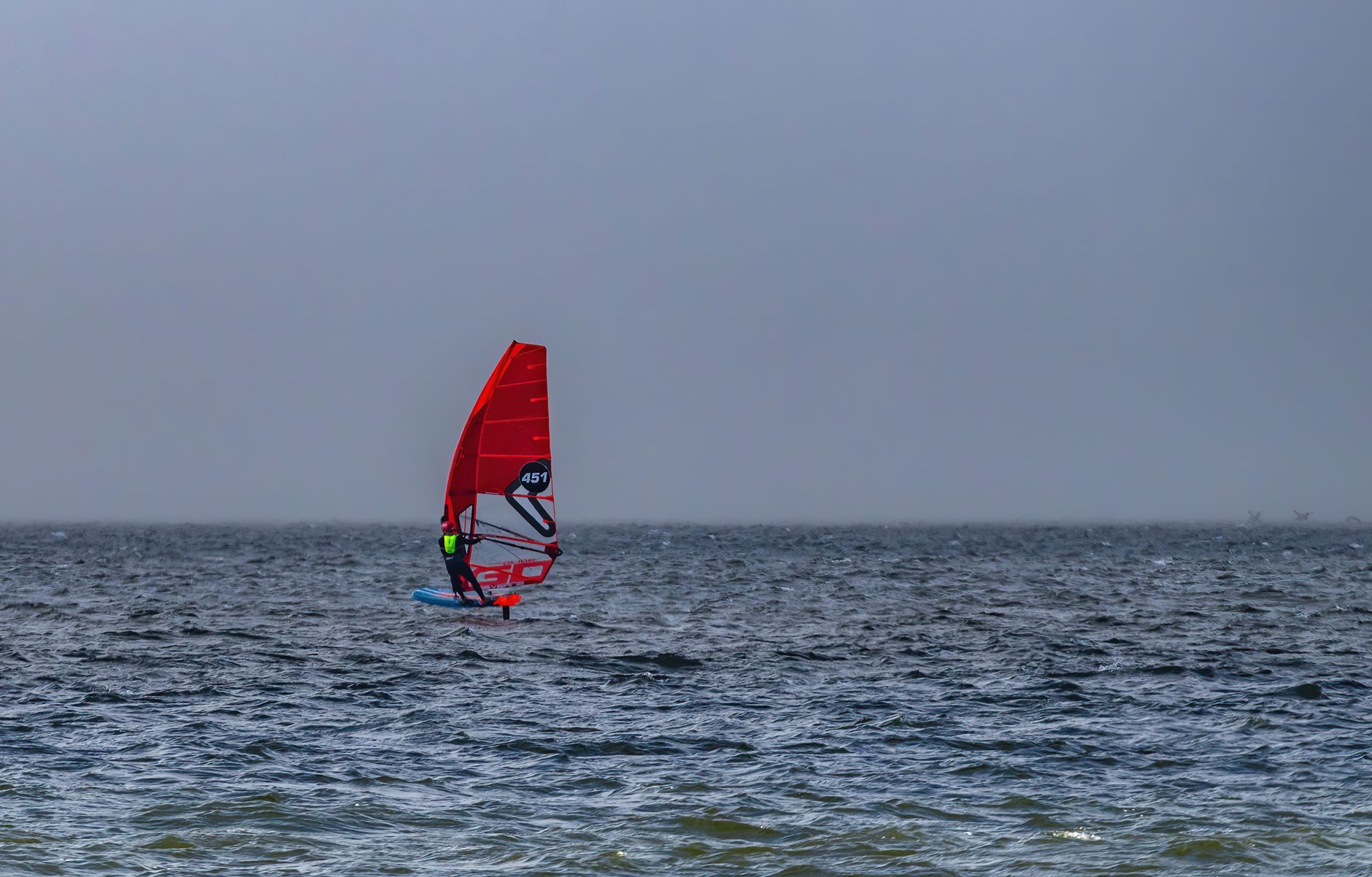
Learning to windsurf is quicker than many think. On a large, tip-stable beginner board you are usually standing on day one and pulling your first metres. Here come the first steps in the right order, from the gear on land to your first turn.
Step 1: understand the gear on land
Before you go on the water, look at the rig on land. Learn where front and back are, how you hold the sail by the boom and how it develops power in the wind. A few minutes on the beach save you a lot of frustration on the water. A large beginner board with a daggerboard (the fold-out keel) holds height and does not tip so easily, exactly right for the start.
Step 2: climb on and pull the sail out of the water
Kneel on the board first, find your balance, then stand in the centre, feet to the left and right of the mast foot. Now you slowly pull the sail out of the water with the uphaul line, back straight, legs working, not the back. The sail just flutters loosely in the wind at first while you stand stable. Practise this moment a few times, it is half the battle.
Step 3: basic stance and setting off
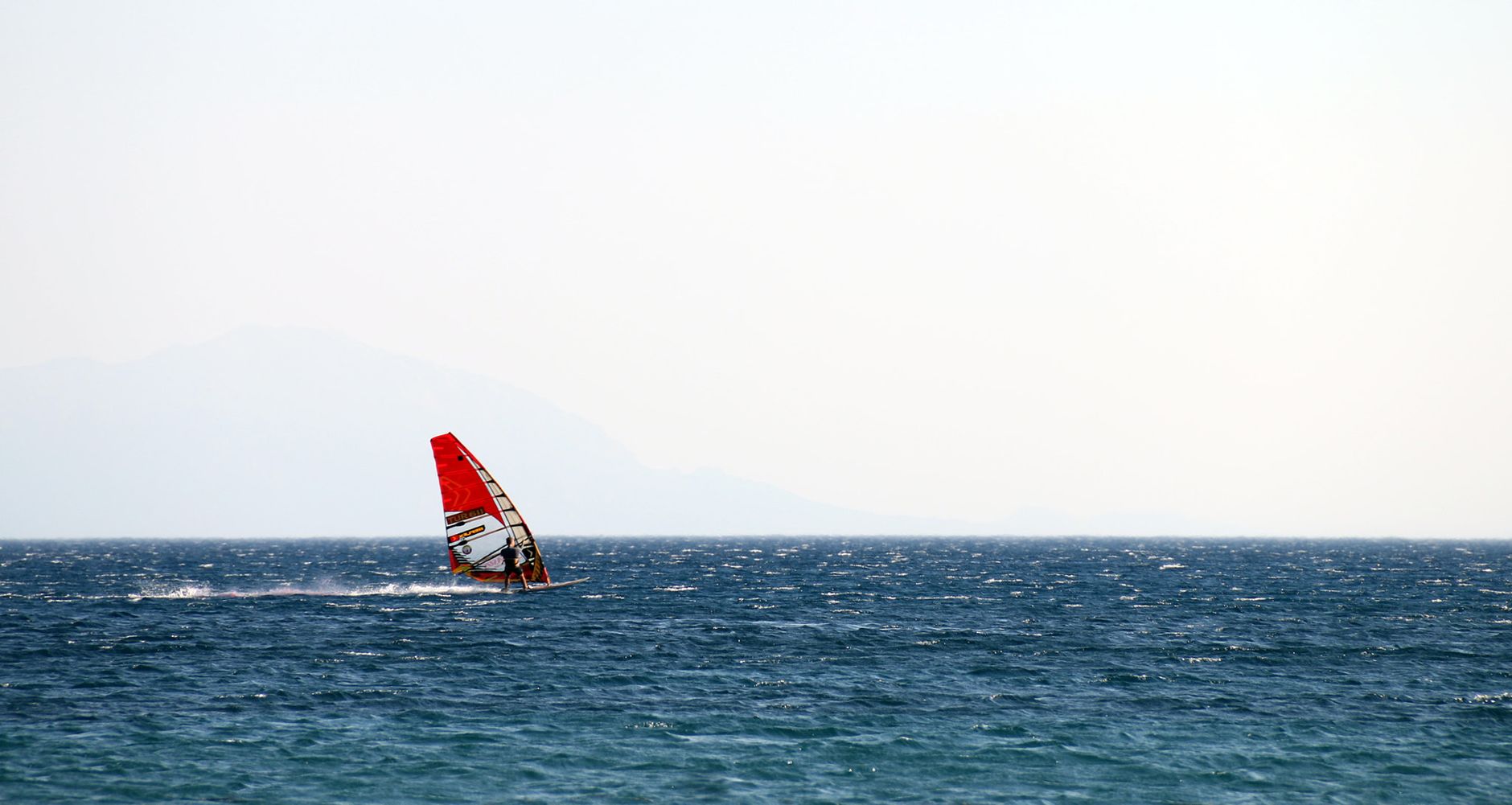
Grab the boom with your front hand just behind the mast, then with your back hand a little further back. As you slowly sheet the sail in (angle it), it picks up speed and you glide off. Important: look ahead, body upright, control the sail through the back hand. If it gets too much, simply open the back hand and the pressure eases.
Step 4: the turn, so you come back
So you do not only sail in one direction, you need the turn: you walk around the mast to the other side and sail back. Wobbly at first, routine after a few attempts. That way you stay near your starting point, which is a safety plus especially in offshore wind.
The most common beginner mistakes
- Board too small: A large, voluminous beginner board forgives everything. Sporty boards come later.
- Pulling with your back: You lift the sail from your legs, otherwise after ten minutes your back hurts.
- Looking down: Look where you want to go, the rest follows.
- Too much sail: Better one size smaller, then you have the rig under control.
- Offshore wind: Drives you out, and coming back becomes hard work. When in doubt, stay on land.
Where best to practise
Ideal is flat, waist-deep water in onshore, steady wind, such as the bodden and fjord bays on the Baltic Sea or the Danish fjord spots like Bork Havn and Thorsminde. Which board and sail suit you is in our windsurf gear for beginners.
Fastest with a course
Windsurfing forgives a lot, but an instructor standing next to you and providing the right gear halves your learning time. Best take a basic course at a school in your area, and use the wind check to find a calm day with steady wind.