Category: Unkategorisiert

  • Pump foiling: the new trend entirely without wind

    Pump foiling: the new trend entirely without wind

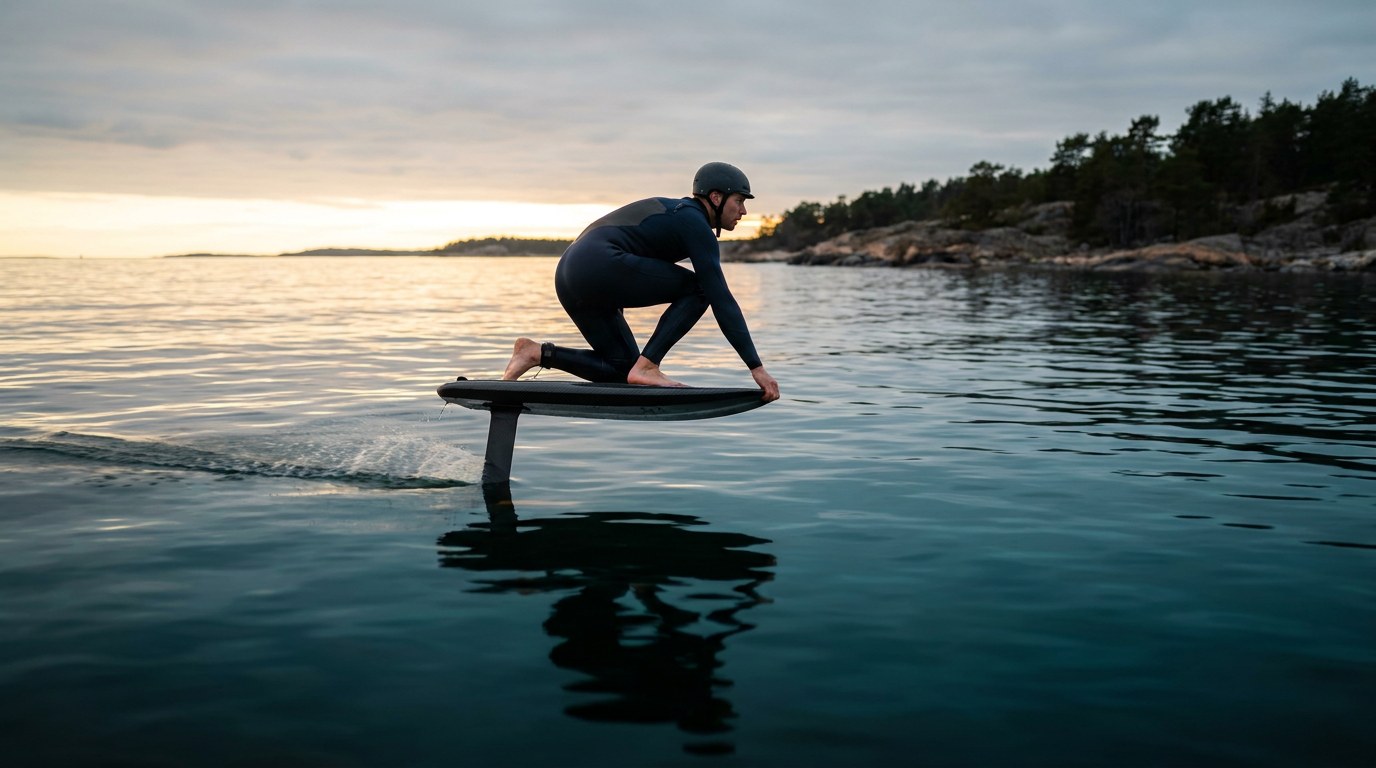
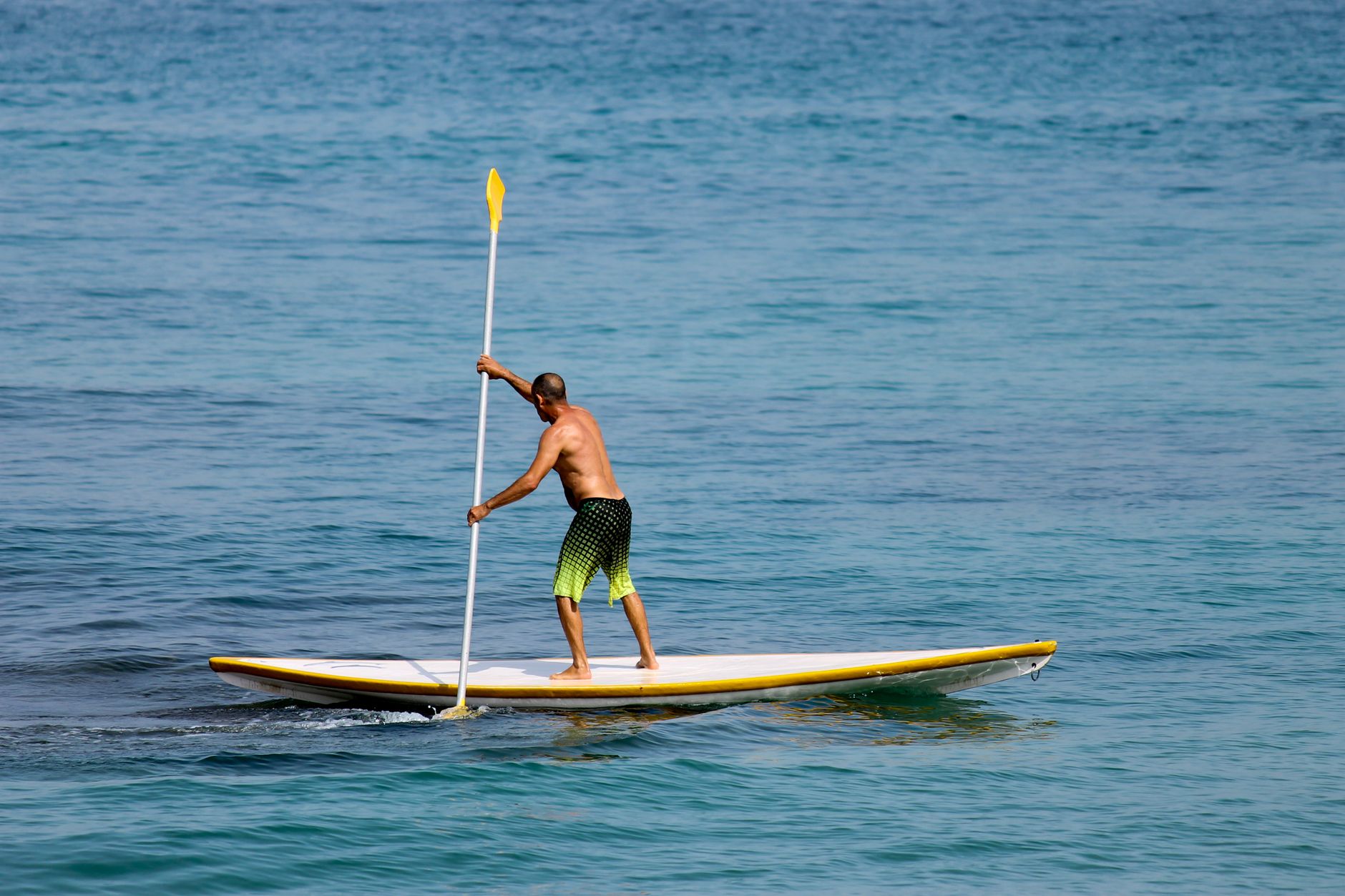
    Pumpfoiler glides over calm water without a sail

    Imagine gliding silently over mirror-smooth water, without wind, without waves, without a motor. The drive is you alone: a few rhythmic movements from the legs, and the foil carries you onward. That is exactly what Pumpfoilen is, perhaps the most puristic trend in water sports. What lies behind it, why it is so addictive and how you get into it, we clarify here.

    What Pumpfoilen actually is
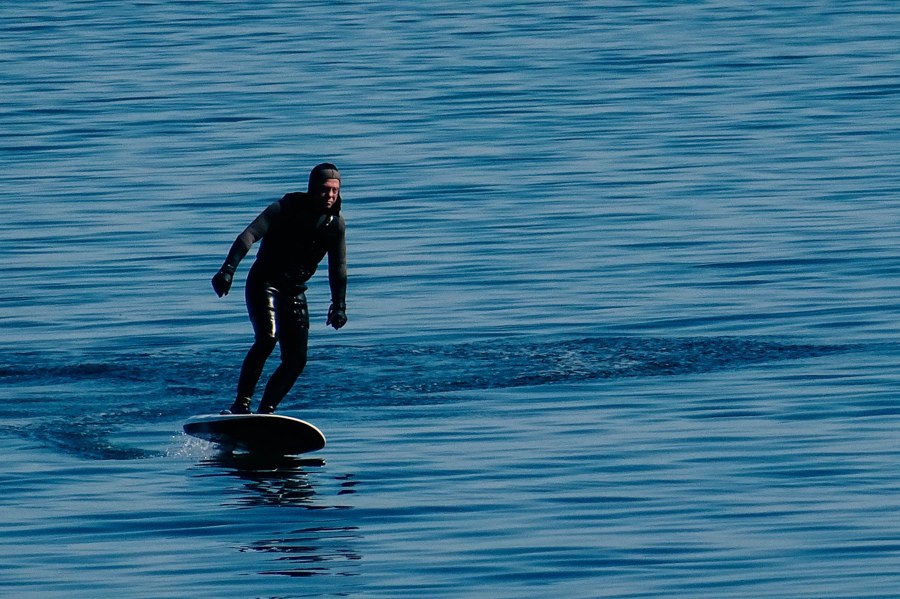
    Foiler without a sail on the hydrofoil
    No sail, no motor, the lift comes solely from your movement.

    When Pumpfoilen you stand on a foilboard and keep the hydrofoil wing flying solely through your own movement. You bend slightly into your knees and stretch back up, a pumping from the whole body that gives the foil new lift again and again. No sail, no kite, no drive. It all started with the Dock-Start: you jump from a jetty directly onto the flying foil and then keep it alive by pumping. Today many also pump off from the wave or in the slipstream behind a boat. The appeal stays the same: pure movement, absolute silence.

    Why it grips so many

    Pumpfoilen needs almost nothing: a board, a foil, calm water. No waiting for wind, no dependence on the perfect wave. That makes it ideal for the many windless days on which otherwise everything stands still, and for sheltered spots like harbours, bays and the shallow Bodden of the Baltic Sea. On top of that comes the fitness factor: Pumpfoilen really goes into the legs and is a true full-body workout. Honestly, the start is tough, the first metres cost sweat and patience. But whoever feels the flow once, finds it hard to get away from it again.

    How to get started
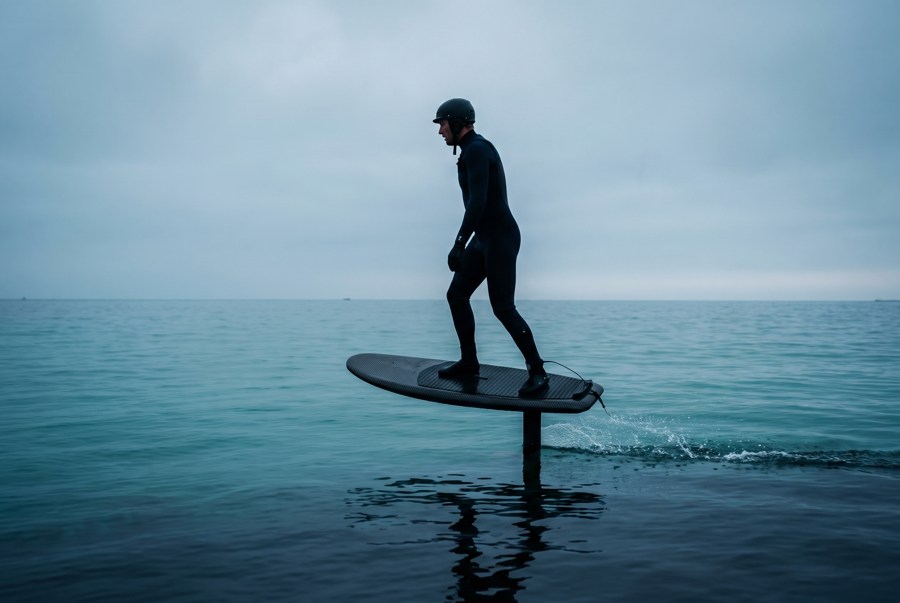
    Foiler glides in the twilight
    Calm water and a bit of perseverance, that is all it takes.

    You have the easiest time if you already have a foil foundation, for example from Wingfoiling or SUP foiling. The feeling for height and balance you take with you directly. Important is the right gear: a large, buoyant Frontwing forgives more and keeps you up longer, exactly such models you will find in our Frontwing overview. Look for mirror-smooth, shallow water, wear a helmet and impact vest, and practise the Dock-Start at a low jetty. What the flight actually feels like, you can read under Learning to foil.

    Pumpfoilen is water sport boiled down to the essentials: you, a foil and your own strength. No noise, no technology interfering in between, only the gliding. Start small, stay patient, and enjoy the silence above the water. Where along the coast calm spots lend themselves to it, we are glad to tell you.
  • Hardboard SUPs: 10 recommended models (2026)

    Hardboard SUPs: 10 recommended models (2026)

    Hardboard SUPs overview

    Hardboards sit more directly in the water, glide faster and are more fun in waves , but they need space and a roof rack. Here’s an honest, curated selection of well-known, well-rated hardboard SUPs , with a clear note on which level (beginner, advanced, pro) each board suits. Not an in-house test, but an orientation overview. As of the 2026 season , based on current 2026 models and tests. Whether a hardboard or an inflatable suits you at all is covered in the SUP comparison.

    10 recommended hardboard SUPs (2026)

    • Starboard Go , all-round. The stable classic, versatile. Mid-range to premium · beginner & advanced.
    • Starboard Whopper , extra wide. Super stable , for heavier paddlers, yoga and a relaxed start. Mid-range to premium · beginner.
    • Fanatic Fly (HRS) , all-round. Robust, balanced, forgiving. Mid-range to premium · beginner & advanced.
    • JP-Australia Fun / Longboard , all-round. Versatile, at home in small waves too. Premium · advanced.
    • Naish Nalu , all-round/wave. A classic with wave genes. Premium · advanced.
    • SIC Maui Tao Surf , all-round & wave. Lively, direct ride feel. Premium · advanced.
    • Tahe (formerly BIC Sport) Beach , beginner. Extremely tough ASA build, near indestructible , top for learning and rental. Entry-level · beginner.
    • NSP Cruise / Elements , all-round. Solid and easy, good value. Entry-level to mid-range · beginner & advanced.
    • RRD Cosmo , all-round. Cleanly built, pleasant glide. Mid-range to premium · beginner & advanced.
    • Fanatic Ray , touring. Slimmer and faster, for long distances and fitness. Premium · advanced to pro.

    Downwind , the 2026 trend

    The big SUP trend of 2026 is downwind , long, narrow boards for fast runs with the wind, increasingly as downwind-foil boards. Popular and well-rated are, among others, Starboard All Star and SIC RS (classic downwind race shapes) plus Fanatic Falcon, Sunova Faast, KT and Armstrong in the downwind-foil space. Clear message: this is for advanced riders and pros, not for day one , and it needs the right conditions.

    What to look for when buying

    • Construction: tough models (e.g. ASA/plastic) forgive a lot and suit learning; light composite boards are faster but more delicate.
    • Volume/width by body weight: as a beginner, wider and more stable , guide values in the SUP comparison.
    • Transport & storage: plan for a roof rack, a board bag and a dry, shaded spot (heat/UV harms it).
    • Safety: always a leash; in some countries (e.g. Denmark) a buoyancy/life vest is mandatory.

    In short

    For an easy start, the Starboard Go/Whopper, Tahe Beach or NSP are great. If you want quality and ride feel, go for Fanatic, JP-Australia, Naish, SIC or RRD , for long distances a touring shape like the Fanatic Ray, and for downwind the specialist boards (advanced/pro).

    🏄
    The basics first?Board, paddle and accessories , the complete SUP buying guide.
    To the SUP buying guide

    Note: this is a curated, independent overview of popular, well-rated boards (as of 2026) , not a paid in-house test. For detailed lab tests, consumer test institutes are worth a look. As soon as our shop and partner links are live, you’ll find concrete board recommendations here. Until then: the content stands on its own, even without a single click.

  • Inflatable SUP boards: 10 recommended models (2026)

    Inflatable SUP boards: 10 recommended models (2026)

    Inflatable SUP boards overview

    Inflatable SUPs (iSUP) are the practical choice for most people , they fit in a backpack, are tough and ideal for the car. Here’s an honest, curated selection of well-known and consistently well-rated models , with a clear note on which level (beginner, advanced, pro) each board suits. This is not an in-house lab test, but an orientation overview. As of the 2026 season , the selection reflects current 2026 models and tests (a current value test winner for 2026 is, for example, the Bluefin Cruise). Whether inflatable or hardboard is right for you at all is covered in the SUP comparison.

    10 recommended inflatable SUPs (2026)

    • Bluefin Cruise , all-round. Stiff double-layer material, complete set, excellent value , near the top in 2026. Mid-range · beginner & advanced.
    • Red Paddle Co Ride , all-round premium. Extremely stiff and durable, for many the reference. Premium · beginner to pro.
    • Fanatic Fly Air , all-round. High-quality, balanced and forgiving. Mid-range to premium · beginner & advanced.
    • Starboard iGO Deluxe , all-round premium. Light, stiff, well-thought-out accessories. Premium · beginner to advanced.
    • Aqua Marina Fusion , entry all-round. Affordable start with a decent set. Entry-level · beginner.
    • Naish Nalu , all-round. Cleanly built, pleasant glide. Mid-range to premium · beginner & advanced.
    • iRocker All-Around / Cruiser , all-round. Very stable, lots of accessories, family-friendly. Mid-range · beginner.
    • Thurso Surf Waterwalker , all-round. Stiff material, good paddle , value pick. Mid-range · beginner & advanced.
    • Gladiator Pro , all-round. Surprisingly stiff for the money. Entry-level to mid-range · beginner.
    • Red Paddle Co Voyager , touring. Longer and faster for long distances and luggage. Premium · advanced.

    Downwind , the 2026 trend

    Downwind (paddling open stretches with the wind) is the trend topic of 2026. As an iSUP there are long, slim race/touring shapes , e.g. the Red Paddle Co Elite or the Starboard All Star Airline. The big downwind trend, though, runs on rigid downwind and downwind-foil boards , you’ll find those in the hardboard overview. Clear message: this is for advanced riders and pros, not for day one.

    What to look for when buying

    • Stiffness: double-layer or fusion material and at least 15 psi , that decides the ride.
    • Size by body weight: as a beginner, more volume and width , guide values in the SUP comparison.
    • Set: a good paddle (light, adjustable), double-action pump, leash, fin and backpack should be included.
    • Safety: always a leash, and in some countries (e.g. Denmark) a buoyancy/life vest is mandatory.

    In short

    Beginners and families do well with the Bluefin Cruise, Aqua Marina Fusion, iRocker or Gladiator. Want more? Go for Red Paddle Co, Starboard or Fanatic. For long tours a touring shape like the Red Paddle Voyager pays off, and for downwind the rigid boards.

    🏄
    The basics first?Board, paddle and accessories , the complete SUP buying guide.
    To the SUP buying guide

    Note: this is a curated, independent overview of popular, well-rated boards (as of 2026) , not a paid in-house test. For detailed lab tests, consumer test institutes are worth a look. As soon as our shop and partner links are live, you’ll find concrete board recommendations here. Until then: the content stands on its own, even without a single click.

  • SUP board compared: inflatable or hardboard , and which size?

    SUP board compared: inflatable or hardboard , and which size?

    SUP boards compared on the Baltic Sea

    Before buying a SUP there are three questions: inflatable or hardboard, which size and which type? Here’s the honest comparison , no invented test badges, but clear recommendations on which board suits which use. If you then want to go deeper, the SUP buying guide helps.

    Inflatable (iSUP) or hardboard?

    Inflatable (iSUP)Hardboard
    Transport & storagein a backpack, fits anywhereneeds space & roof rack
    Durabilityvery tough, bounces offmore delicate (dings)
    Ride feelgreat all-rounder, a touch softermore direct, faster, better in waves
    Effortpumping up (5–10 min)ready to go instantly
    Entry pricecheaper, usually as a complete settends to be pricier
    For whom?the vast majority , beginners, family, touring, travelambitious riders, waves, if you have space

    Verdict: For the vast majority , and especially on the Baltic with changing spots , an inflatable iSUP is the more practical choice. A hardboard pays off mainly if you specifically want to ride waves or seek the direct ride feel and have the space.

    Which size? By body weight

    What matters is the volume (in litres) relative to your weight , the more volume, the more stable. Guide values for an all-round iSUP:

    Body weightVolume (guide)Length (all-round)
    up to 70 kgfrom approx. 240 lapprox. 10’0″ – 10’6″
    70–90 kgapprox. 260–290 lapprox. 10’6″ – 11’0″
    90–110 kgapprox. 290–320 lapprox. 11’0″ – 11’6″
    over 110 kgfrom approx. 320 l11’6″ and up, wider
    Rule of thumb: as a beginner, go for a bit more volume and width (from approx. 32″), that gives stability. If you’ll sometimes ride two-up or with a dog/child, plan in reserve.

    Which type , which board for what?

    • All-round: the beginner classic , wide, stable, for flat water, touring and family. The best first choice.
    • Touring: longer and pointier, tracks better in a straight line , for longer distances and calm bay tours.
    • Wave/surf SUP: shorter and more manoeuvrable , for the Baltic wave on good days, but wobblier on the flat.
    • Race: narrow and fast , only for the ambitious, too tippy for beginners.

    What to look for in an iSUP

    • Stiffness: double-layer or fusion drop-stitch material is much stiffer (and lasts longer) than simple single-layer.
    • Pressure: it should take at least 15 psi , the stiffer, the better the ride.
    • Set accessories: a good iSUP comes with a paddle, double-action pump, leash, fin and backpack. Look for an adjustable, not-too-heavy paddle.
    • Fin system: a click or US box beats a screw fin for convenience.
    • Weight limit: mind the maximum load, especially if a dog or child comes along.

    What should it cost?

    Rough guide: beginner sets start at around 250–350 €, a solid mid-range with better material and accessories is about 400–700 €, premium above that. Steer clear of the very cheap offers under 200 € , wobbly material spoils the fun. More on renting, buying and saving in What does a SUP cost?.

    Safety: vest & leash

    In some countries a buoyancy or life vest is mandatory for SUP , in Denmark a SUP counts as a vessel depending on the water, and a vest is expected on open water. Check the local rules before your tour. A leash is always part of the kit anyway , it keeps you together with the board when the wind picks up.

    In short: the right SUP

    • For most: an inflatable all-round iSUP.
    • Size by body weight , as a beginner, more volume and width.
    • Look for stiff material (double-layer/fusion), a good paddle and set accessories.
    • Hardboard or wave SUP only if you specifically want waves.
    • Avoid bargain-basement boards under 200 €.
    🏄
    Everything for your first SUPBoard, paddle and accessories , the complete buying guide.
    To the SUP buying guide

    Note: as soon as our shop and partner links are live, you’ll find concrete board recommendations per category here. Until then: the content stands on its own, even without a single click.

    Downwind , the 2026 trend

    A fast-growing trend is downwind: gliding open stretches on wave and swell, driven by your paddle , increasingly on the foil (SUP foiling). There are special long, narrow downwind boards , a selection is in the hardboard overview. For advanced riders and pros.

  • Camping: accessories and tech , light, power and drying line

    Camping: accessories and tech , light, power and drying line

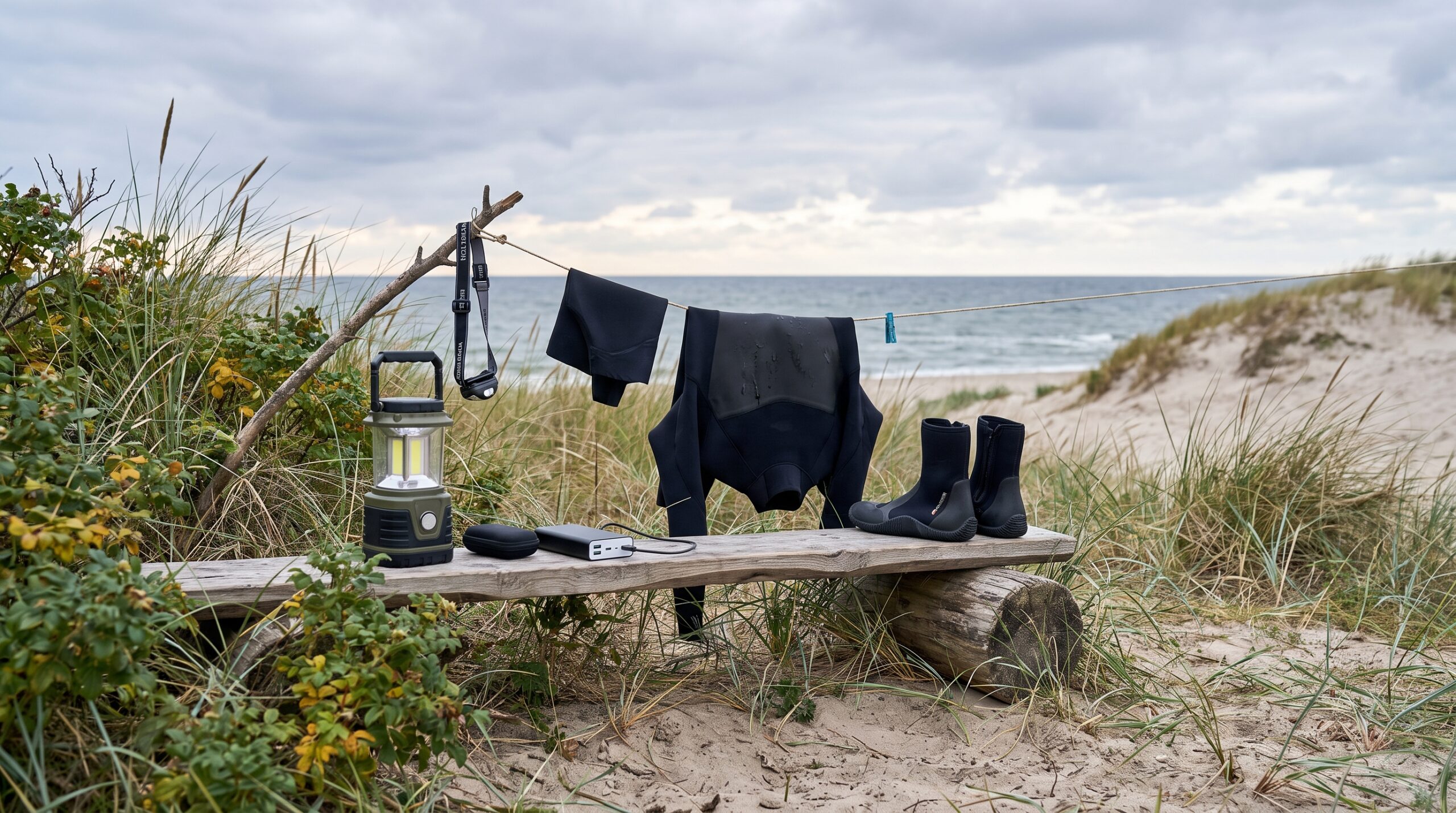
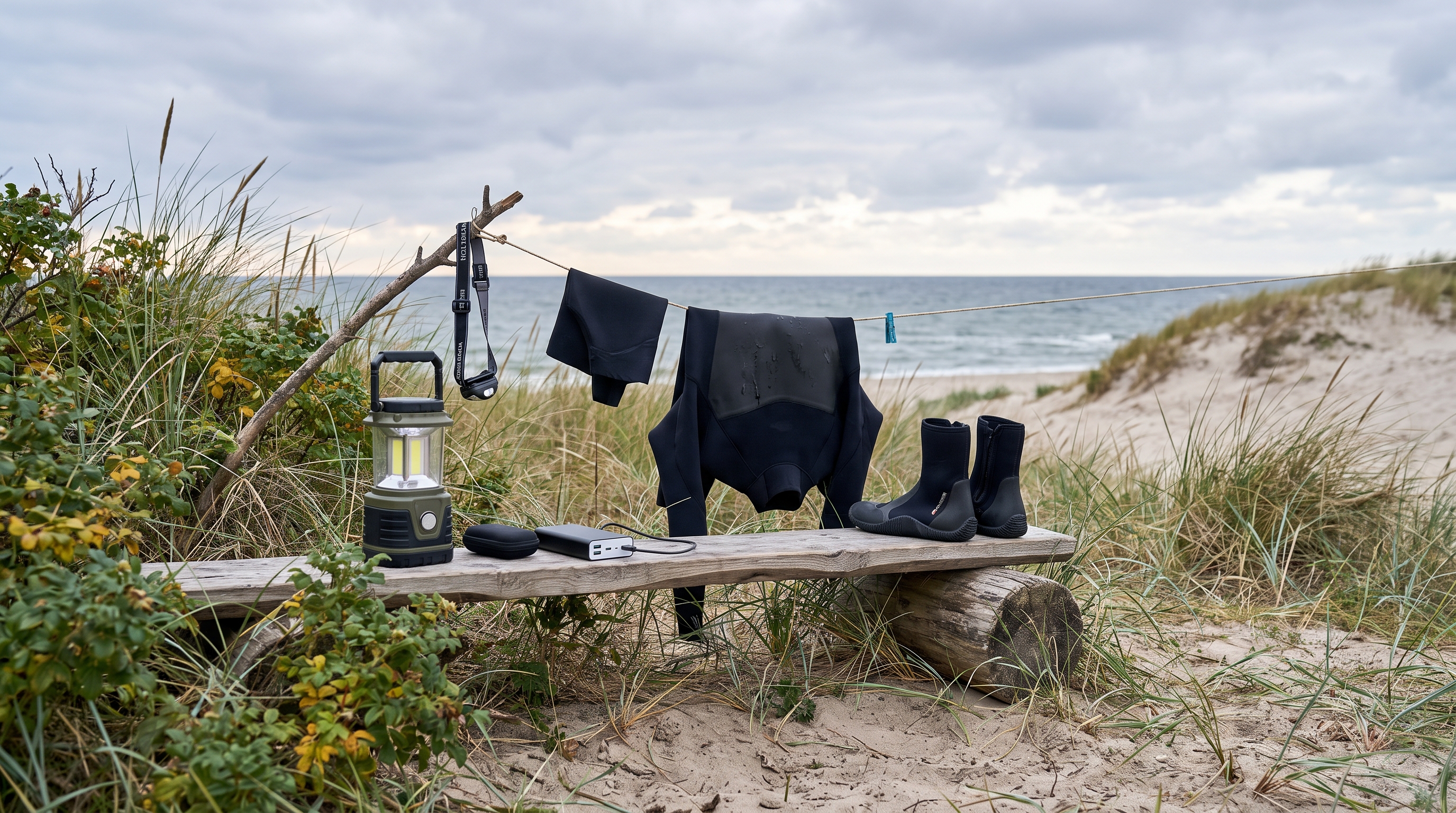
    Camping accessories: LED lantern, power bank and a drying line with a wetsuit on the Baltic

    It’s the little things that turn a pitch into a cosy home: light that doesn’t dazzle, power without a socket, and a place for the wet wetsuit. Here’s the gear that really makes the difference for watersports camping.

    Light

    • LED lantern: warm white (around 2700 K) is homely and attracts fewer insects than cool white. A dimmable lantern is enough for the whole tent.
    • String light: instant living-room mood on the porch, run off a battery or USB.
    • Head torch: hands free for pitching, cooking and the walk to the washhouse , the most underrated item.

    Power without a socket

    • Power bank: a large power bank (20,000 mAh and up) charges phone, lamp and action cam for days.
    • Power station: the comfort solution for the van , it also runs the cool box and 12 V gear, and recharges from the car or by solar.
    • Solar: a folding panel helps, but on the Baltic it’s hit and miss , good as a top-up, risky as the only source.

    Mum says: Charge everything at home and pack one more cable than you need. The one missing cable is always the one you’re after.

    Wet gear under control

    • Drying line & pegs: strung between car and tree, the wetsuit hangs to dry , never wet into the tent.
    • Wide hanger: for the suit, so it doesn’t lie in the sand or get crease folds.
    • Wet bag: a waterproof bag for wet things keeps the car and tent dry.
    • Sand mat: in front of the tent door it keeps half the beach outside.

    Order & odds and ends

    A few storage boxes keep the pitch tidy. The emergency kit wants duct tape, a multi-tool, a lighter, a small first-aid pouch and bin bags (for sorting too). It sounds unspectacular, but it saves many an evening.

    Mum says: A drying line and a sand mat are the two cheapest things with the biggest effect , they keep the tent dry and sand-free, and the holiday cosy.

    In short: accessories and tech

    • Warm-white LED lantern, string light and definitely a head torch.
    • Large power bank, a power station in the van, solar only as a top-up.
    • Drying line, wide hanger and wet bag for the wetsuit.
    • Sand mat in front of the tent against the endless sand.
    • Tape, multi-tool, first aid and bin bags in the emergency kit.
    🛏
    The overview first?All the camping gear for watersports at a glance.
    To the overview

    Note: as soon as our shop and partner links are live, you’ll find concrete recommendations for the lamp, power bank, drying line and the rest here. Until then: the content stands on its own, even without a single click.

  • Camping: drinking at the spot , water, thermos and coffee

    Camping: drinking at the spot , water, thermos and coffee

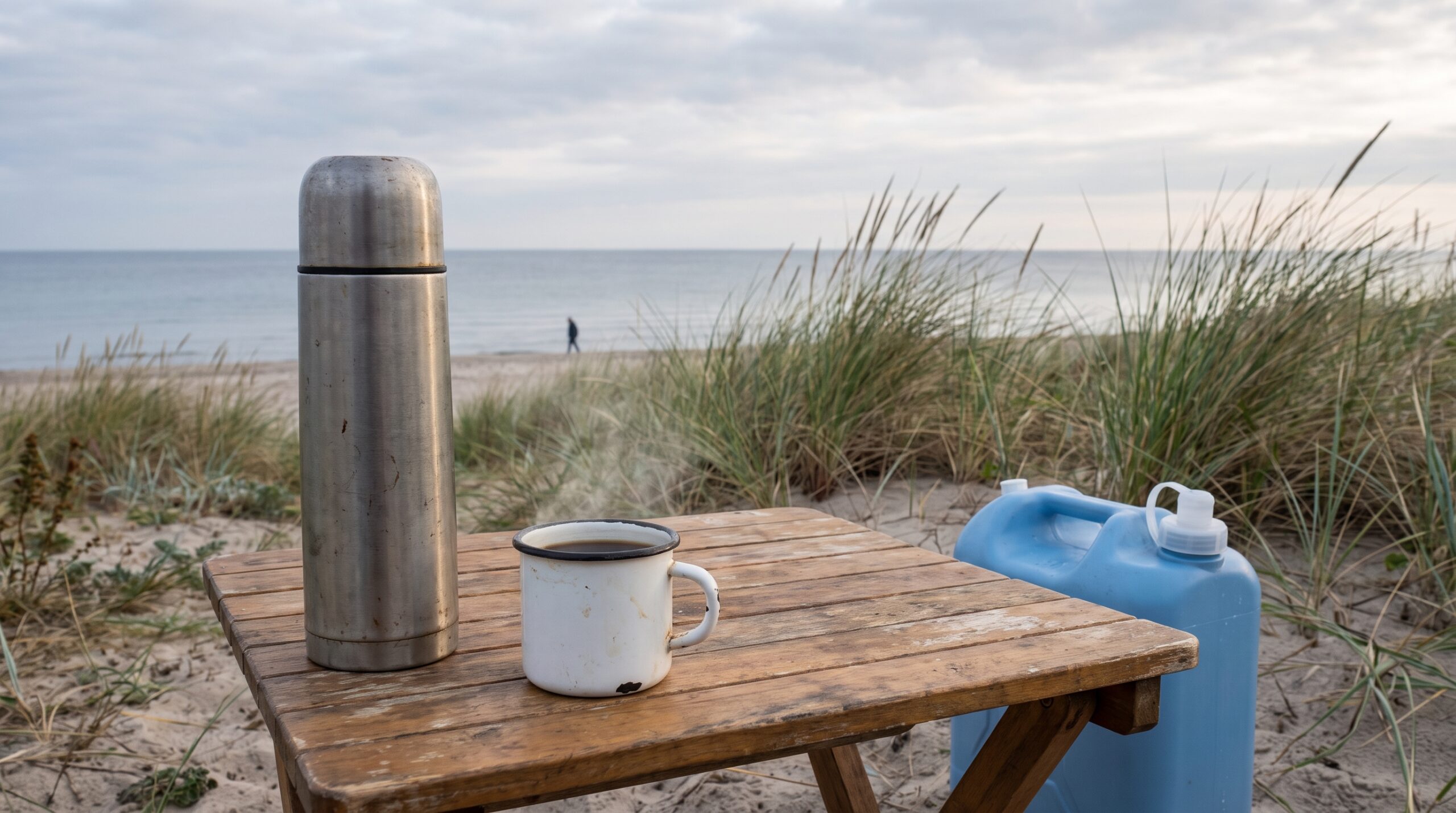
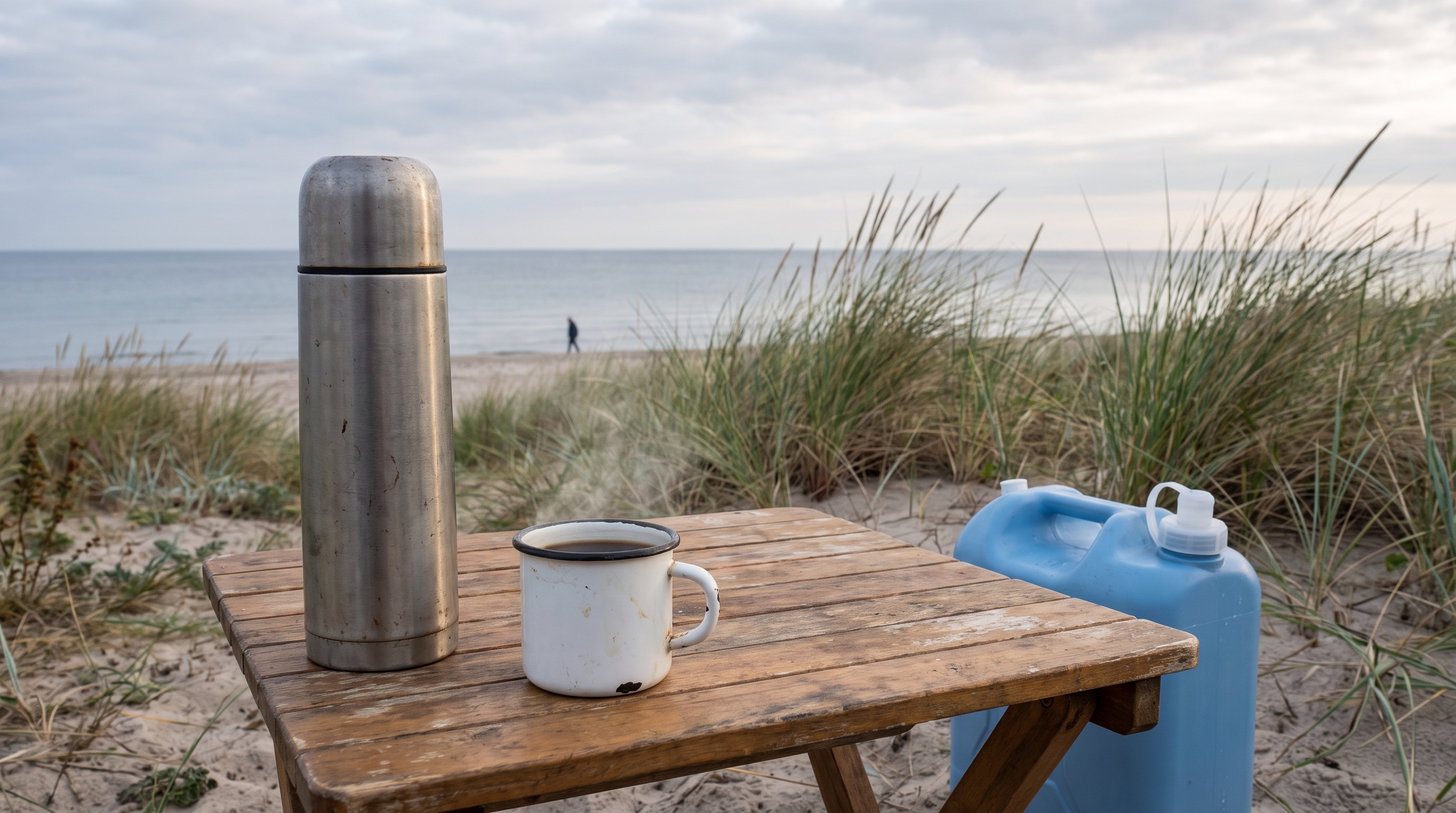
    Thermos flask and enamel mug with coffee at a Baltic campsite

    Wind and sun dry you out more than you think , drink too little and you go weak and unfocused on the water. And a hot coffee belongs to every good camping morning. Here’s everything about drinking at the spot: organising water, the right bottle, and hot drinks that warm you up.

    Water at the pitch

    • Canister: a collapsible water canister (10 litres) saves trips to the tap and space in the car, a rigid one lasts longer.
    • Amount: plan generously , you need water for drinking, cooking and washing up. Several litres per person per day add up fast.
    • On the move: for trips away from the pitch a water filter helps. Important: the Baltic is salt water, so always bring drinking water or fill up at the site.

    Bottle & hydration system

    • Reusable bottle: stainless steel or tough Tritan instead of single-use , lasts forever, saves rubbish and money.
    • Insulated bottle: keeps cold drinks cold and hot drinks hot , worth its weight in summer and autumn alike.
    • Hydration bladder: handy for the long session or tour, because you drink on the go without stopping.

    Coffee & hot drinks

    • Thermos flask: the most important buy. Filled with hot coffee or tea once in the morning, you have something warm all day, without firing up the stove again.
    • Brewing: a French press, a moka pot or a simple pour-over filter , all work at the camping table.
    • After the session: a hot tea or broth warms you from inside when you come out of the water frozen.

    Mum says: Fill the thermos right to the top in the morning. Then there’s hot coffee after every session, without you, cold and tired, hunting for the stove again.

    Drink enough , especially with watersports

    In the wind you notice thirst late. Put the bottle in plain sight at the spot and drink regularly, not only when you’re thirsty. On long, hot days electrolytes help (a pinch of salt and some juice will do), so you don’t end up with a headache and cramps.

    In short: drinking at the spot

    • Collapsible canister, generous water for drinking, cooking and washing up.
    • Reusable and insulated bottle instead of single-use.
    • Fill the thermos in the morning, French press or pour-over for the coffee.
    • Drink regularly, think of electrolytes in the heat.
    • The Baltic is salt water , bring drinking water or fill up at the site.
    🍽️
    And the food to go with it?The little camp kitchen at the spot, simply explained.
    To the camp kitchen

    Note: as soon as our shop and partner links are live, you’ll find concrete recommendations for the canister, thermos and the rest here. Until then: the content stands on its own, even without a single click.

  • Camping: relaxing at the spot , chair, hammock and cosy light

    Camping: relaxing at the spot , chair, hammock and cosy light

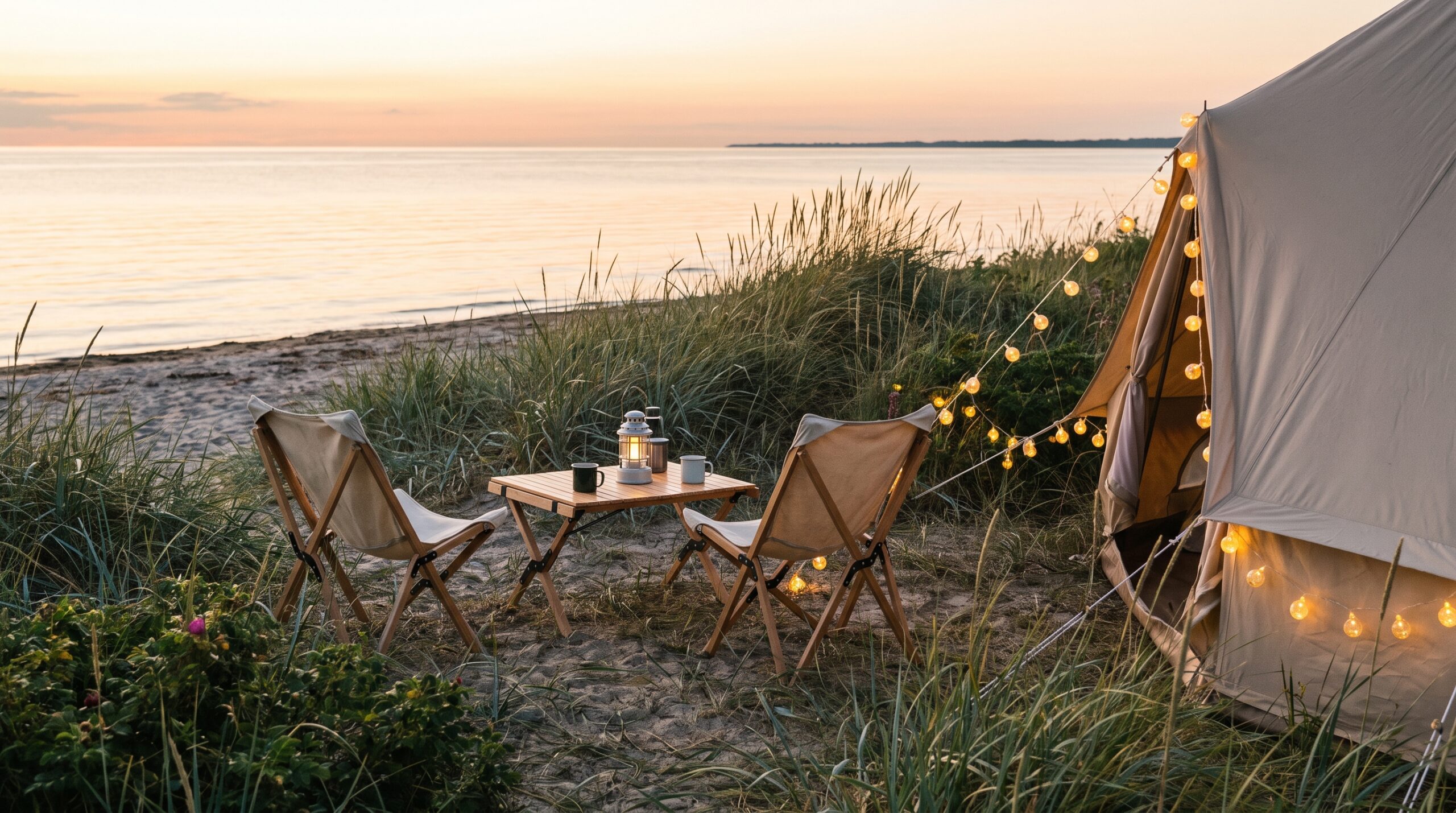
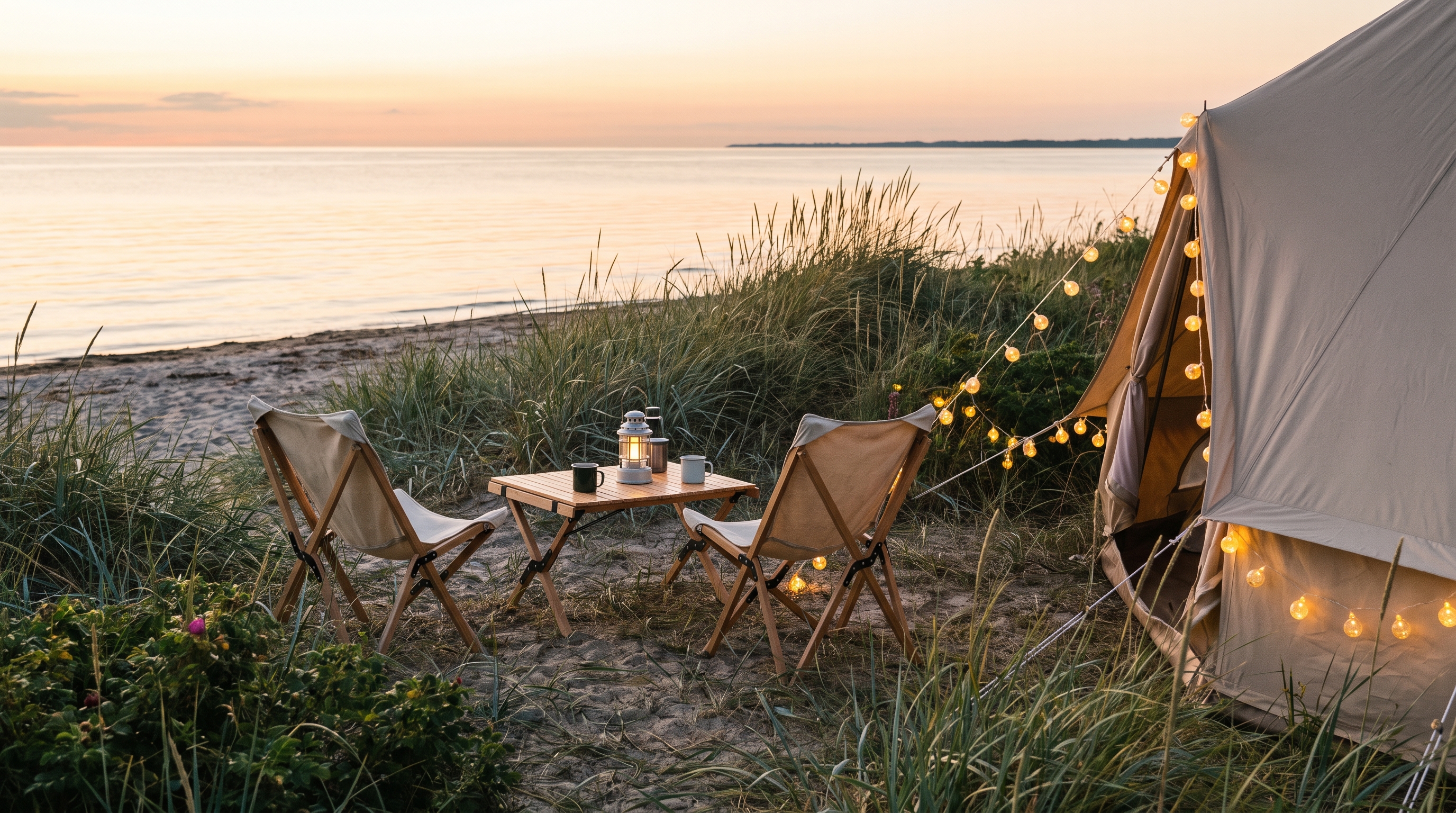
    Camping chairs and string lights by the tent at sunset on the Baltic

    After the last run on the water comes the best part: winding down, resting tired muscles, watching the sun set over the Baltic. With a little comfort, the pitch becomes a living room under the open sky. Here’s everything about relaxing at the spot.

    Sitting & lounging

    • Camping chair: the key comfort item. Look for a stable stance in sand (wide feet), an armrest and a packed size that fits the car. A slightly higher seat is comfier and easier to get up from.
    • Small table: a folding table for coffee, a book and bits , it’s surprising how much cosier that is.
    • Hammock: lovely where there are trees or the van to hang it from. On the treeless Baltic coast a stand does the job , or you settle into a beach shelter.

    Shade & windbreak

    It’s the windbreak that makes the pitch cosy. A sun sail or tarp gives shade and keeps off drizzle, a fabric windbreak or a beach shelter tames the stiff breeze. Suddenly you’re sitting wind-still in the sun instead of getting sand blown in your face.

    Cosy light

    Once the sun is gone, warm light makes the evening. A warm-white string light on the porch, a small lantern on the table , and you’re sitting as if in the living room. More on that (LED, power bank, head torch) in the dedicated guide Accessories & tech.

    Mum says: A windbreak and a warm blanket add hours to the evening outside. Wrapped up with a tea in hand, you happily stay out longer.

    The little things

    • Blanket & cushion: a snug blanket for the evening, a seat cushion for the chair.
    • Book & games: a book, cards or a small game for the rainy afternoon.
    • Music quietly: a Bluetooth speaker is fine, but considerately , the neighbour wants to hear the wind, not your playlist.
    • Fire: a fire bowl only where it’s expressly allowed, at a distance and with water to hand.

    Consideration at the site

    Cosy also means considerate: keep quiet hours, keep the noise down, leave the pitch clean. That keeps it nice for everyone , and watersports people have the best reason to turn in early anyway: the wind waits in the morning.

    In short: relaxing at the spot

    • A stable camping chair with wide feet, a small folding table.
    • Hammock where possible, otherwise a stand or beach shelter.
    • Sun sail and windbreak are what make the pitch cosy.
    • Warm-white string light and a lantern for the living-room feel.
    • Blanket, book, quiet music , and consideration for the neighbours.
    🛏
    The overview first?All the camping gear for watersports at a glance.
    To the overview

    Note: as soon as our shop and partner links are live, you’ll find concrete recommendations for the chair, sun sail and the rest here. Until then: the content stands on its own, even without a single click.

  • Camping: the right tent , choice, pitching in wind and insulating

    Camping: the right tent , choice, pitching in wind and insulating

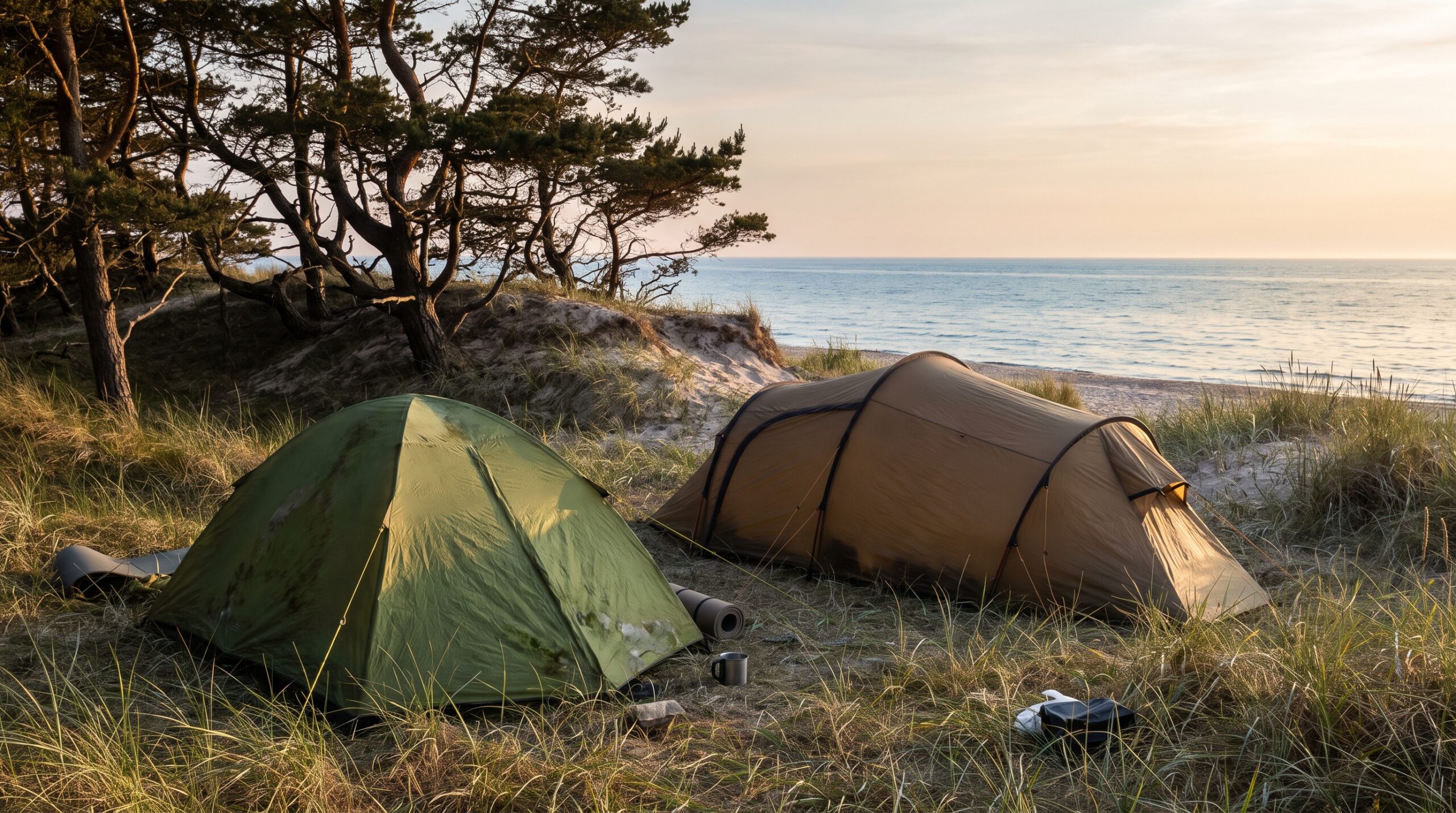
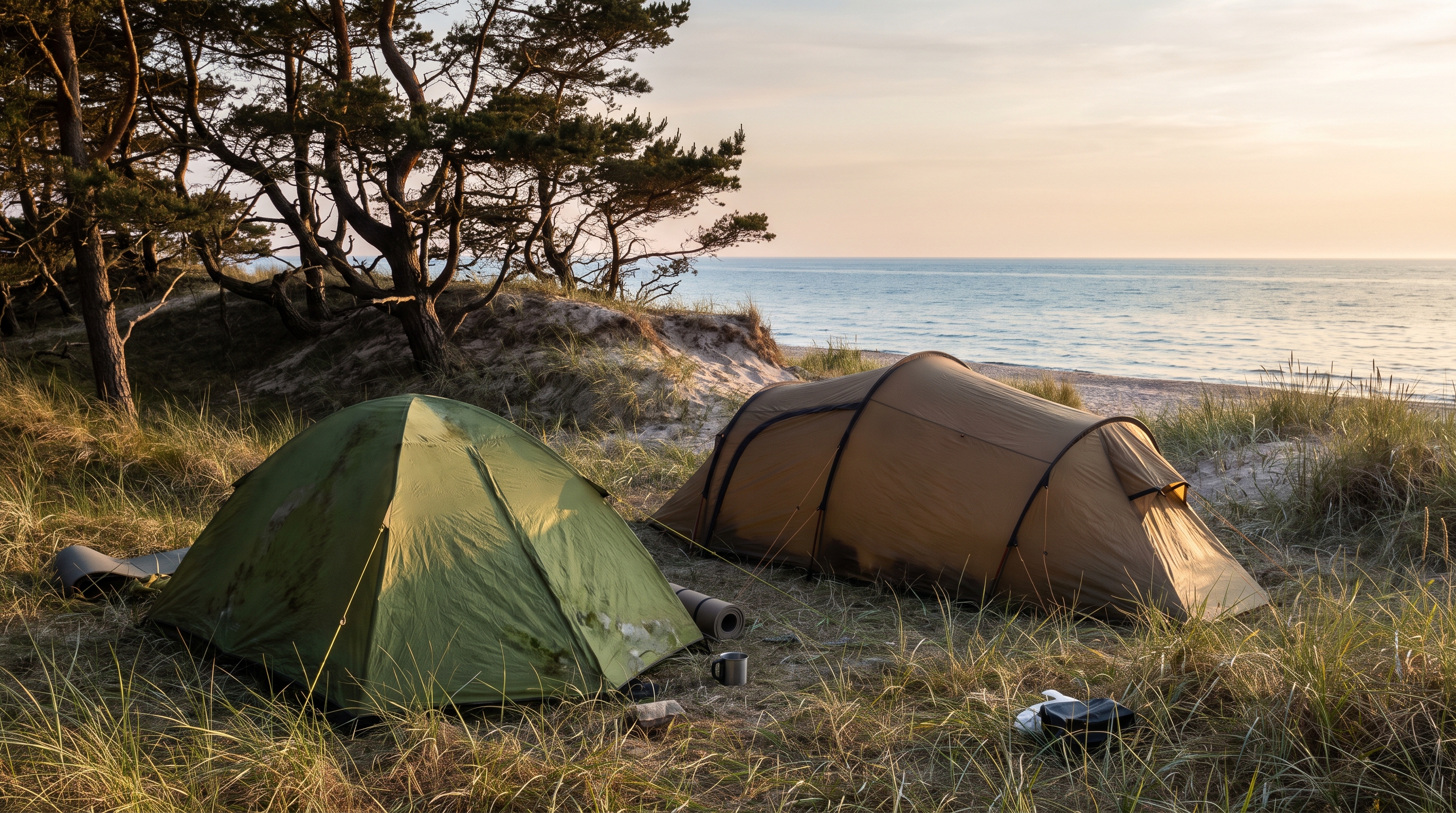
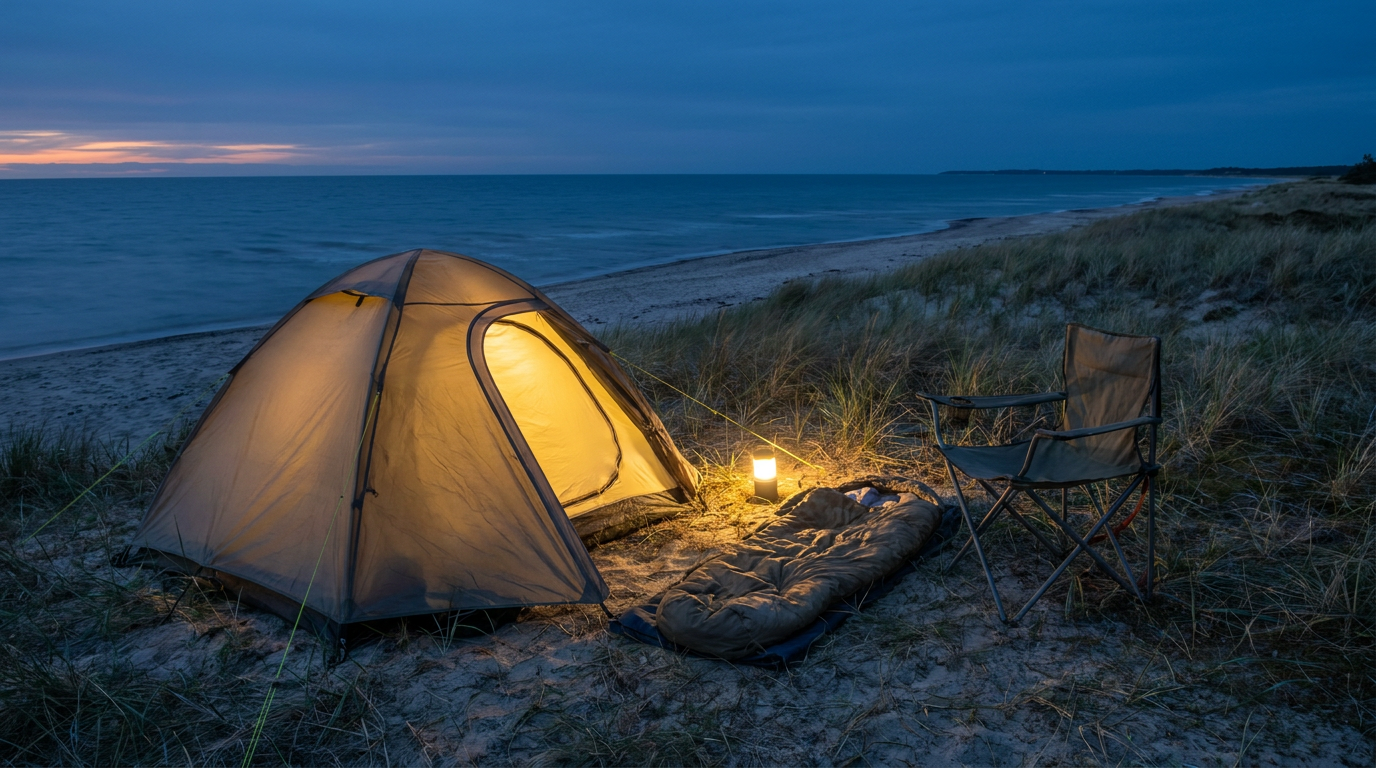
    Tents in dune grass on the Baltic coast, sheltered behind the dunes

    On the Baltic, wind comes with the territory , and it’s exactly what puts your tent to the test. A good, well-pitched tent is the difference between restful nights and drama at three in the morning. Here’s everything: choosing the right tent, pitching it in wind, and staying warm and dry inside.

    Which tent suits you?

    • Dome tent: free-standing, quick to pitch, low and therefore wind-friendly , the easy all-rounder for weekends and spot camping.
    • Tunnel tent: lots of space and a big porch for wet gear, but it needs good guying. Great for families and longer stays.
    • Pop-up tent: up in seconds, but delicate in wind and hard to guy , more for the calm fair-weather day.
    • Geodesic / multi-pole dome: very storm-stable, but pricier and heavier , when it really blows, the safest choice.

    Look at the water column (rain protection), a porch for wet kit, and good vents against condensation.

    Pitching in wind

    • Spot: behind a dune, hedge or windbreak, not out in the gust. Point the door away from the wind, the low rounded side into it.
    • Pegs: normal pegs hold badly in sand , use wide sand pegs or beach stakes and angle them against the pull.
    • Guying: use all the storm lines, one more rather than one fewer, and pitch early before the wind picks up.
    • Extra hold: in sand, buried pegs (laid crossways) or a sand-filled bag as an anchor help.

    Mum says: Buy a set of proper sand pegs straight away. The thin wire hooks from the packet are often useless in Baltic sand.

    Warm & dry: insulation and condensation

    • Floor: a footprint under the tent protects the floor, inside a tent carpet or blanket keeps the cold out.
    • Airing: leave the vents open and air it briefly in the morning , this prevents the condensation that otherwise drips from the inner wall.
    • Keep a gap: don’t push the inner tent against the flysheet, or moisture wicks through.
    • Wet stuff out: wetsuit and wet things belong in the porch, never in the inner tent.

    Care: so the tent lasts

    The big one: never pack it away wet. If there’s no choice on departure day, dry the tent fully at home right away, or you get mildew stains and the coating suffers. Clear sand from the zips, check seams and poles, re-proof when needed.

    Mum says: Pack a bit of duct tape and a pole repair sleeve just in case , a kinked pole on a Friday evening otherwise ruins the whole weekend.

    In short: the right tent

    • Dome for easy, tunnel for space, geodesic for real wind.
    • Mind the water column, porch and ventilation.
    • Pitch sheltered, door away from the wind, use proper sand pegs.
    • Footprint and tent carpet against cold, air it against condensation.
    • Never pack it wet, keep repair tape and a pole sleeve with you.
    🛏
    The overview first?All the camping gear for watersports at a glance.
    To the overview

    Note: as soon as our shop and partner links are live, you’ll find concrete recommendations for the tent, sand pegs and the rest here. Until then: the content stands on its own, even without a single click.

  • Camping: sleeping well by the water , sleeping bag, pillow and warm nights

    Camping: sleeping well by the water , sleeping bag, pillow and warm nights

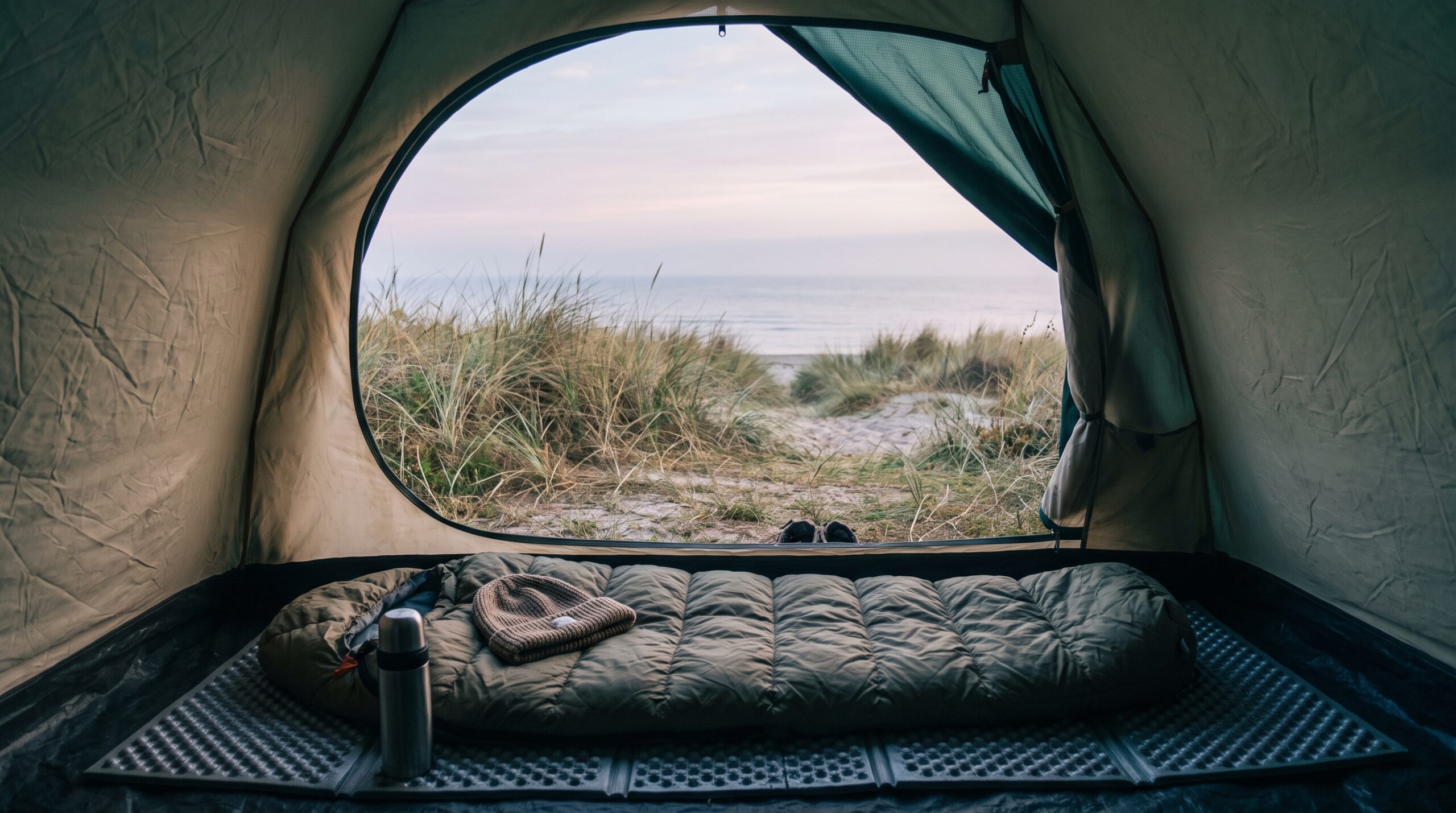
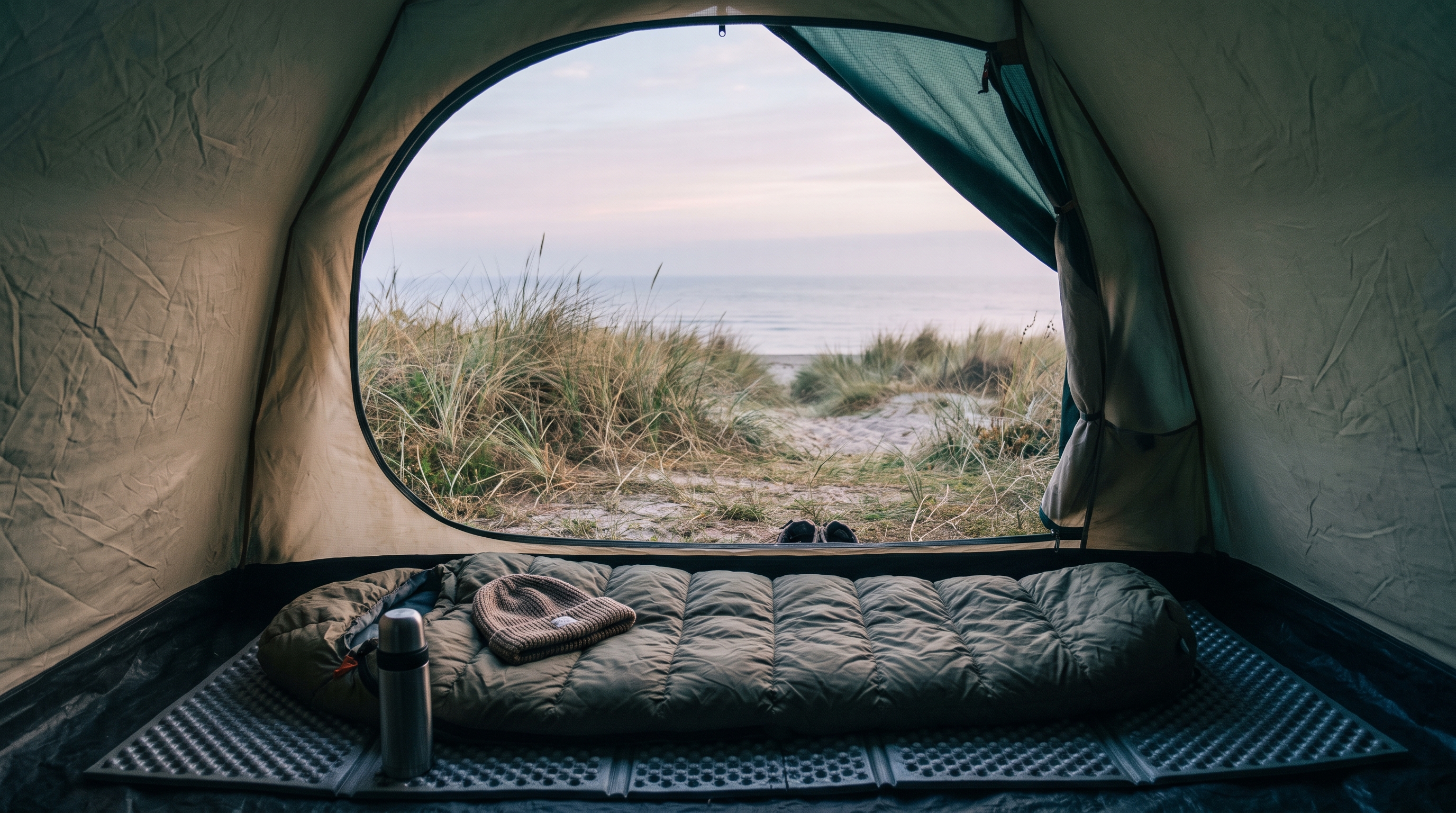
    View from the tent onto dune grass and the Baltic Sea, with sleeping bag and beanie

    Sleep well by the water and you’ll have the energy for the wind the next day. The Baltic gets chilly at night even in summer, and certainly in autumn , and nothing ruins your mood like a frozen night. Here’s everything for a good night’s sleep: the right sleeping bag, the right pillow and the little tricks for warm nights. (The cold from below , sleeping mat and R-value , we cover separately under Lying.)

    The sleeping bag: what matters

    • Temperature: look at the comfort temperature, not the optimistic limit rating. It tells you down to which temperature you sleep comfortably warm.
    • Filling: down is light, packs small and is very warm, but dislikes damp. Synthetic is heavier but tougher and still warms in a clammy tent , often the more honest choice in the damp Baltic air.
    • Shape: the mummy bag is warmest (snug, with a hood), the rectangular bag is comfier and airier for mild nights.
    • Season: spring and autumn need a lot more reserve than high summer.

    Mum says: Pick the sleeping bag a touch warmer rather than too thin. You can always open a warm one , you can’t conjure warmth into one that’s too thin.

    Which comfort temperature suits your travel season will be worked out by our sleeping bag calculator (travel season and how cold you feel in, recommendation out) , it’s in the works.

    Pillow & sleeping comfort

    • Pillow: an inflatable or compressible camping pillow weighs almost nothing and makes a huge difference compared to a balled-up jumper.
    • Liner: a thin liner keeps the bag clean inside (less washing) and adds another degree or two.
    • Blanket: a small extra blanket is worth its weight in gold , over the feet or as a neck pad.

    Warm through the night

    • Hat on: you lose most of your warmth through your head, a thin hat works wonders.
    • Sleep dry: never in damp watersports gear, always dry sleepwear, ideally packed just for that.
    • Heat from inside: something warm to eat and a hot tea before bed, so you go into the bag warm.
    • Hot water bottle: a small hot water bottle or a Nalgene with hot water at your feet , the secret tip for cold nights.

    Mum says: Keep a pair of thick socks just for sleeping, they never touch the water and stay cosy and dry.

    In short: sleeping well by the water

    • Choose the sleeping bag by comfort temperature, a touch warmer rather than too thin.
    • Down for the weight, synthetic for the damp Baltic climate.
    • A camping pillow and a liner raise comfort enormously.
    • Hat, dry sleepwear, something warm to eat, hot water bottle at your feet.
    • The cold comes from below , don’t forget a good mat (see Lying).
    🛏
    The overview first?All the camping gear for watersports at a glance.
    To the overview

    Note: as soon as our shop and partner links are live, you’ll find concrete recommendations for the sleeping bag, pillow and the rest here. Until then: the content stands on its own, even without a single click.

  • Camping for watersports: the gear that really helps

    Camping for watersports: the gear that really helps

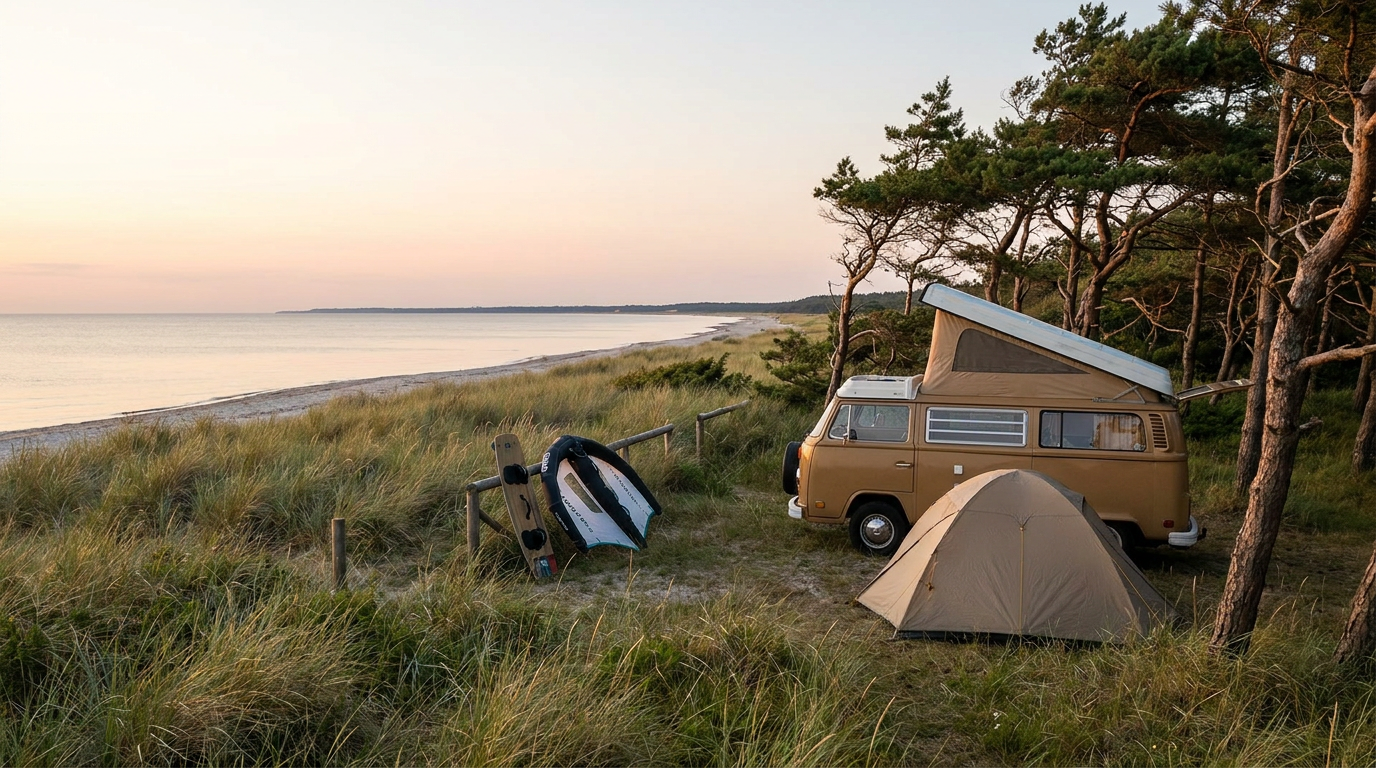
    Camper by the Baltic Sea

    Sleeping right at the spot, checking the wind in the morning and standing in the water three steps later , camping and watersports simply belong together. To keep it cosy even in wind, rain and cool Baltic nights, a few things really make the difference. Here’s the honest overview, thought through from head to toe, with the odd “Mum says” tip from experience.

    Sleeping well: sleeping bag & mat

    Sleep badly and you’ll have no energy for the water the next day. With the sleeping bag, the comfort temperature matters (not the optimistic limit rating): the Baltic gets chilly at night even in summer, and certainly in autumn. Down is light and warm but dislikes damp, synthetic is tougher and forgives a clammy tent. Just as important is the sleeping mat: the cold comes from below, so look at the R-value (insulation), not just the thickness.

    Mum says: Pick the sleeping bag a touch warmer rather than too thin. You can always open a warm one , you can’t conjure warmth into one that’s too thin.

    Which sleeping bag suits your travel season will soon be worked out by our sleeping bag calculator (temperature in, recommendation out). The detailed guides on choosing a sleeping bag and mat & R-value are coming shortly.

    Warm & dry: insulating the tent

    A cool tent turns cosy once the floor is insulated: a tent carpet or a picnic blanket under the mat keeps the ground cold out. Air it briefly in the morning to save yourself the condensation that otherwise drips from the inner wall. And never put wet things in the inner tent , more on that in a moment.

    Campervans on the coast
    An insulated floor and a quick airing turn the tent into a warm home.

    Mum says: A warm hat in the sleeping bag works wonders , you lose most of your warmth through your head.

    Light & power in the tent

    • Tent lamp: a small LED lantern or an LED string light makes the tent cosy in the evening. Choose warm white light (around 2700 K), it’s homelier and attracts fewer insects than cool white.
    • Head torch: priceless for the walk to the washhouse and for pitching and packing in the dark.
    • Power bank: a large power bank charges lamp, phone and the action cam, no mains needed. Solar works, but on the Baltic it’s hit and miss.

    Mum says: Charge the power bank fully at home and pack one more charging cable than you think you’ll need.

    Sitting, cooking, comfort

    • Camping chair: worth its weight in gold after a long day on the water. Look for a stable stance in sand and a packed size that fits the car.
    • Small table: for the stove, coffee and bits and bobs, a folding table is enough.
    • Stove & cool box: a gas stove and a cool box turn the pitch into a little kitchen. Hot tea after kiting warms you from the inside.

    Watersports at the pitch: wet stays outside

    This is where ordinary camping tips end and watersports begin: your wetsuit, harness and wet things must not go in the tent, or everything inside turns clammy. String a drying line between car and tree or use a small rotary dryer, and hang the suit on a wide hanger (never on wire, that creases it). A second towel and a wet bag for damp gear are worth their weight in gold.

    Mum says: A drying line and a few pegs weigh nothing and save your mood , nothing’s as grim as a clammy wetsuit the next morning.

    The extras: mosquito protection & co.

    On mild evenings and especially in late summer and autumn, the mosquitoes by the water are a nuisance. Much can be done naturally: essential oils like citronella or lavender, long airy clothing at dusk, a mosquito net over your sleeping spot and the warm-white light from above. The detailed guide on natural mosquito protection is coming , just right for autumn camping on the Baltic.

    In short: the camping checklist

    • Sleeping bag (right comfort temperature) + mat with a good R-value.
    • Tent carpet/blanket for the floor, a quick airing in the morning against condensation.
    • LED lantern (warm white), head torch, large power bank.
    • Camping chair, small table, stove and cool box.
    • Drying line, hanger, wet bag for the wetsuit.
    • Natural mosquito protection and a net for autumn.
    🏖️
    Where to pitch?Our campsites right at the spot, to wake up and get going.
    Pitches at the spot

    Note: as soon as our shop and partner links are live, you’ll find concrete recommendations for the sleeping bag, lamp, drying line and the rest here. Until then: the content stands on its own, even without a single click.