


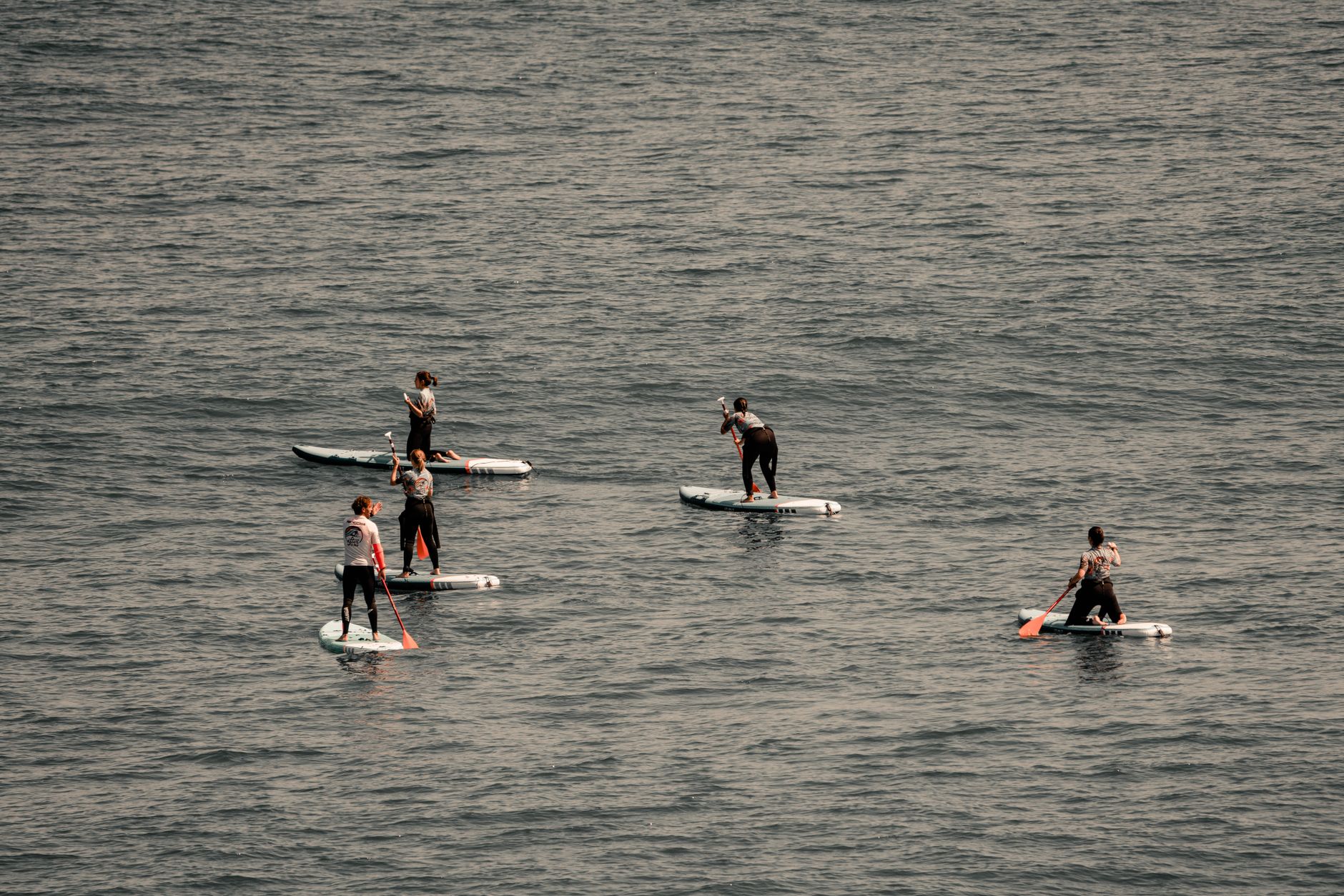
Stand on the board, dip the paddle in, and after a few minutes you are standing. That is how easy getting started with stand-up paddling is, and that is exactly why everyone on the Baltic Sea is falling in love with it right now. The shallow bays and bodden lagoons are made for it. There are still a few things you should know before you paddle out for the first time.
Why SUP comes so easily
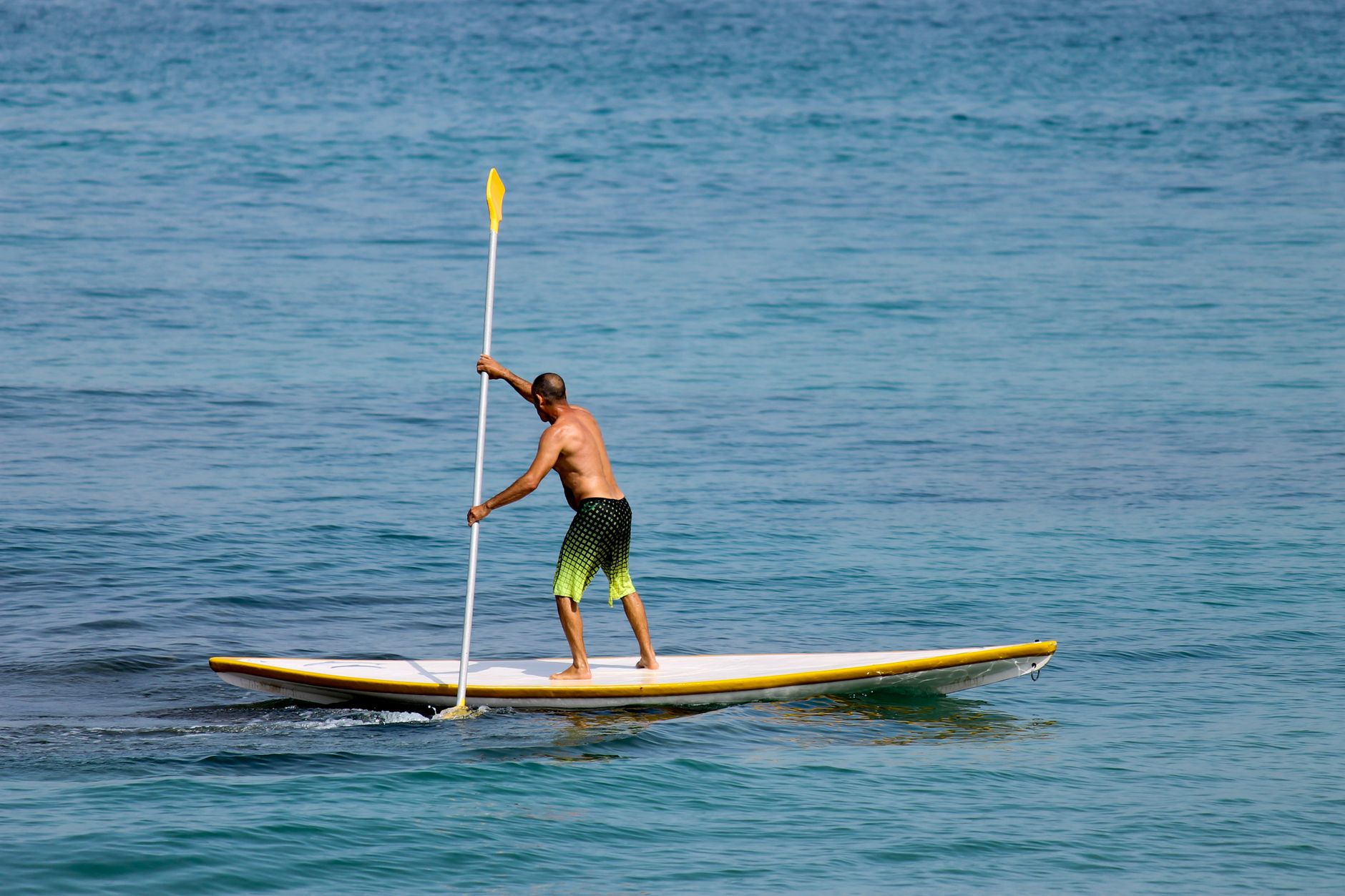
SUP is probably the most accessible way to get out on the water. On calm, shallow water most people are standing within the first half hour. You start on your knees, find your balance and then stand up. If you fall in, you simply climb back up. On the Baltic Sea, with its sheltered bays, the location takes away a lot of the nervousness you would have on the open sea.
Inflatable or hard? For getting started, almost always inflatable. These boards are sturdy, fit into a backpack and don’t hurt when you fall. Hard boards glide faster, but you only notice that once you have long since caught the bug.
When the wind becomes dangerous for you
Here comes the most important sentence of the whole text. Because you stand upright while paddling, you offer the wind a large surface, and it pushes you faster than you think. A good rule of thumb: from about wind force four, you belong back on the shore.
Even more important than the strength is the direction. Offshore wind, blowing from the land out to sea, feels harmless on the beach and still drives you out. Paddling back against the wind is exhausting to impossible. The rule of the sea rescuers is clear: with offshore wind you stay on land. Before every trip, check the wind direction and strength, and tell someone where you are going.
What you really need
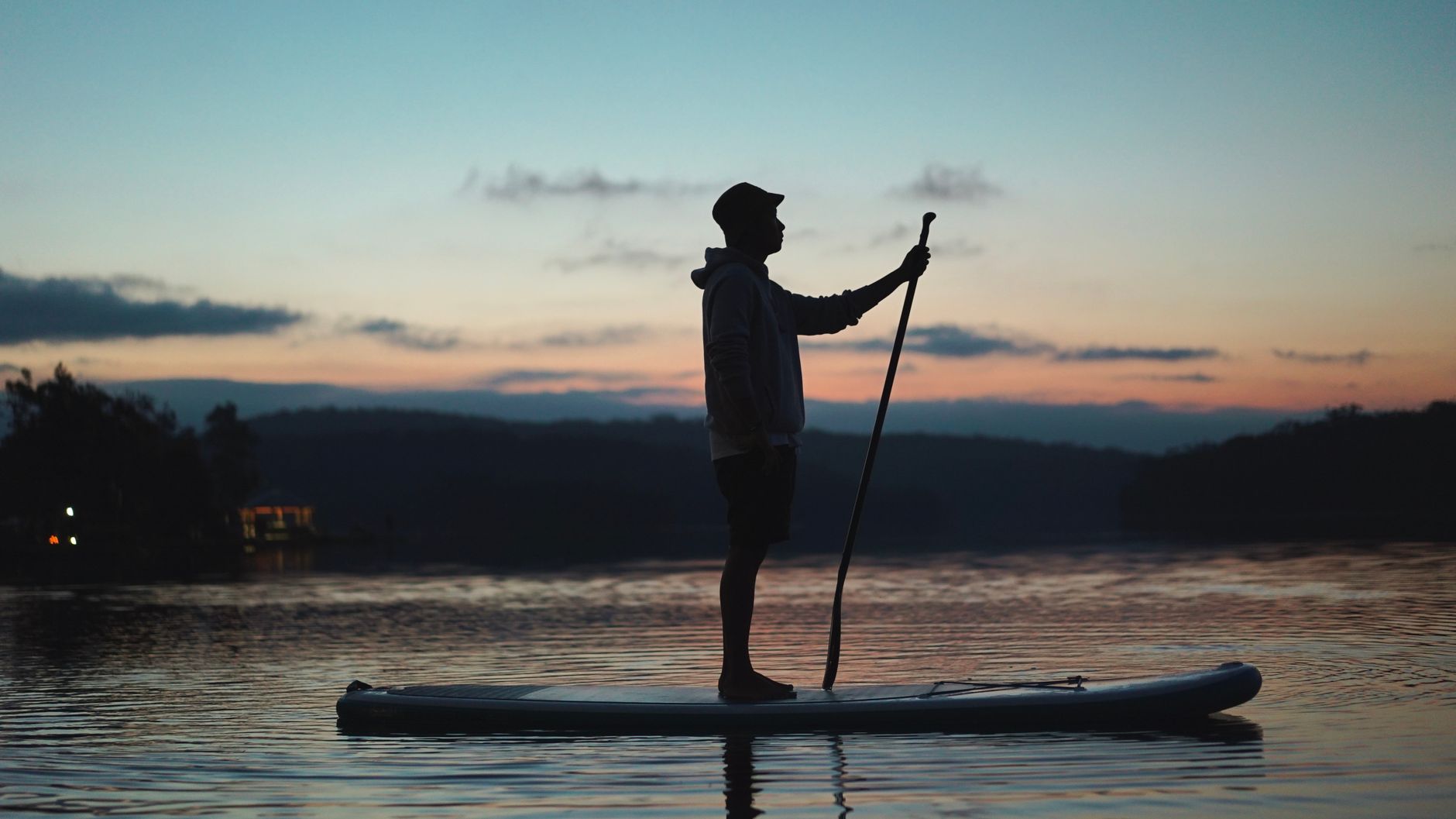
Far less than the online shop wants to push on you. A borrowed board, a paddle of the right length and two things that really count: the leash that connects you to the board, and a buoyancy aid. The board is your biggest floating body, and the leash keeps you attached to it at all times.
On top of that, clothing chosen by water temperature, not by sunshine. In summer swimwear is often enough, in spring and autumn a wetsuit is part of the kit. The start needs no more than that.
First purchases with examples by body weight
For getting started, an inflatable all-round board is ideal: stable, sturdy and quickly stowed away. The heavier you are, the more length, width and volume you need for a secure stand. Guideline values:
| Body weight | Length × width | Volume |
|---|---|---|
| approx. 45 kg | approx. 9’6–10’6 × 30–32″ | approx. 240–280 L |
| approx. 65 kg | approx. 10’6 × 32″ | approx. 280–300 L |
| approx. 85 kg | approx. 10’6–11′ × 32–33″ | approx. 300–330 L |
| approx. 100 kg | approx. 11’–12′ × 33–34″ | approx. 340–380 L |
More width (from 32 inches) gives you tip stability, exactly what makes the start easy. Pay attention to the stated load capacity, it should be clearly above your body weight plus luggage. A longer board tracks straight better, a shorter one turns more easily.
Our advice: pick a calm day, a sheltered bay and a rental shop with a short briefing. Then you will have the hang of it within an hour and have found your new favourite sport for the rest of the summer.